
Do congregations prefer the contemporary slop?
-
One never knows though. I filled in for our Saturday Vigil and had to make a face and cup an ear before "At the Lamb's high Feast" finally got going.Thanked by 1CHGiffen
-
One never knows though. I filled in for our Saturday Vigil and had to make a face and cup an ear before "At the Lamb's high Feast" finally got going.
At my previous parish I served at a university parish Catholic campus ministry. I had recurring issues with students being unfamiliar with even the most basic of hymns.
My suburban parish growing up did not play At the Lamb's High Feast and did not play several other standards, that I had to discover on my own. And that's coming from a parish that was probably above average for its time in terms of the amount of traditional music they sung.
At this university parish I directed a contemporary choir that sometimes also sang hymns and chants. It often took way longer than anticipated for students to learn fairly basic hymns that apparently their home parishes never sang. -
At the Lamb’s High Feast really gets the congregation going.
At my current parish, this was an unfamiliar song to a significant percentage of the congregation. I even got a complaint once for playing too much unfamiliar music at Easter, with this listed as one of the "unfamiliar songs."
I view "At the Lamb’s High Feast" as a critically important hymn for everyone to know. I've programmed it many times and now the congregation knows it. Now they sing it very well! -
Also program Songs of Thankfulness and Praise to SALZBURG in early January to reinforce the tune.
-
At my current parish, this was an unfamiliar song to a significant percentage of the congregation. I even got a complaint once for playing too much unfamiliar music at Easter, with this listed as one of the "unfamiliar songs."
Sounds like a suggestion to sing it every Sunday of Easter in order to make it familiar. Maybe that’s why our MD has programmed JCIRT at every Easter Mass this year...or because it’s trending on social media this year. -
Sounds like a suggestion to sing it every Sunday of Easter in order to make it familiar. Maybe that’s why our MD has programmed JCIRT at every Easter Mass this year...or because it’s trending on social media this year.
I programmed At the Lamb's High Feast four Sundays in a row when I first started at my current parish when the 2nd reading was hitting the "Christ the Victim, Christ the Priest" theme hard for a month. I think that was towards the end of Ordinary Time in Cycle B.
I realized after the fact that ... this did not mean that the congregation for Easter morning would know it.
This year I've programmed At the Lamb's High Feast for Easter Vigil, Easter Morning, Easter 2, and Easter 3. That's probably the end of it for this Easter season although I don't have Easter 5 and Easter 6 all the way planned yet. -
I've never had the cahones to do the same hymn multiple weeks in a row, although I've done a few hymns every other, or every third week for 2 or 3 cycles.
-
We sing one hymn weekly. They get a second hymn at Vespers now.
The upshot is that this will allow for rotation of every two weeks and therefore more hymns, not accounting for feasts where we do interrupt the cycle as needed.
Except for things like LAMBILLOTTE and other unusual meters and therefore melodies or Christmas carols (sorry, I won’t reuse FOREST GREEN) I like having two texts per tune when possible. -
I've never had the cahones to do the same hymn multiple weeks in a row, although I've done a few hymns every other, or every third week for 2 or 3 cycles.
Back when I sang in parish’s Latin Mass Community’s choir and schola, I somehow ended up taking over choosing the hymns for Mass. There was one month or so where I got caught up on a Hyfrydol hyperfixation (in fairness, our MD plays it better than everyone else I’ve heard play it. Not like a slow dirge.), but didn’t think I could get away with the same hymn every week, so instead I picked a different hymn that was also set to Hyfrydol.
There are a lot of hymns in Breaking Bread that are set to Hyfrydol. The only one I didn’t choose was the marriage one that after reading the words, I was certain it had a “molto fromaggio” marking. I prefer the original Welsh version, which is about Jesus, swords, and terrorizing demons, fighting temptation, etc.Send Us Thine Asteroid, O Lord
A prayer I quote often.
For the sake of clarification, I was referring to that great eschatological hymn set to Old Hundredth, https://youtu.be/hkTgYiMDRHY?si=AJ_nHpJ35eb4U2_8. I won’t be trying to sing All People That On Earth Do Dwell from memory during Mass anymore.Thanked by 1Chant_Supremacist -
Big news. This thread, and specifically the contribution of @Don9of11, has spurred me to reduce the number of Credo settings we use in the year from 4 to 3 (one of which will only be used 3 times per year, so basically 2), and the number of mass settings from 6 to 4, with the occasional polyphonic splurge. Earlier this evening I got the priest's sign off on it.
I know it could sound like a step backwards, but I've been convinced that in my circumstances this is just more conducive to congregational singing. And having heard some fantastic congregational singing in my life, I'm willing to forego a bit of the symbolic tooling of extra settings to try and have that at my parish.
Like @ServiamScores I'm just psychologically not able to program the same hymn twice in a row, but I have rejigged my vernacular hymn plans to include more repetition, and modestly pruned down the overall quantity. -
I think your decision is prudent. Better to sing 2 or 3 really well, then 4 really poorly. This is why the only gloria we are singing in Latin right now is de Angelis. It's easy, happy sounding, and just as importantly: the only one we are singing, so people can learn it really well.I know it could sound like a step backwards, but I've been convinced that in my circumstances this is just more conducive to congregational singing. -
We sing I, IV, VIII, IX, XI, XVII, and XVIII. I’m going to add XII in the fall. So I’m moving in the opposite direction; they sing some things so well and others hardly at all, but that’s also fine. They are very active when they do know something; last night we did IV which they know less well, but they can do the Kyrie and Ite. They love the Regina Caeli. We run back “Great St Joseph Son of David” to IN BABILONE each year for his two feasts. I’ll probably reuse that tune for Ascensiontide instead of REX GLORIAE, and for the Faber text if we ever add that: two to three pairings is really solid for me, and it makes life easy if I can copy the file, delete voice 1 lyrics (voice 2 is verse numbers!), and add the new words. Boom, new hymn.
Speaking of HYFRYDOL: I need an 87.87D tune for Wordsworth’s “Alleluia, Alleluia”. LUX EOI and HYMN TO JOY are not going to work here (the first is too hard, and the people with say dislike the latter). HYFRYDOL already has multiple texts for it. PLEADING SAVIOR works and would give me a second text for a tune that they get once a year right now (actually eight days: we do it for the Assumption novena that ends with Vespers on night nine, hence only eight days).
But I don’t know, something feels off. Maybe I’m just too in my head over the pairing.Thanked by 1Chant_Supremacist -
We're going to be using:
Credos 1, 3, and 4. 4 is the 3x/year one, where I just won't expect congregational participation, and 2 is the one removed.
Masses 1, 8, 11 and 18. 4 and 9 have been removed.
@MatthewRoth I would like to be moving in the opposite direction as well, but there needs to be a culture shift here first or it would only further reduce congregational singing. I view this consolidation as like an environmental modification to support a culture shift.
With hymnody it's hard. When reworking my plans, everything I already had felt like a must-have, and I almost couldn't make any priority distinctions between them. Removing any of them felt a bit like torture. -
We hardly do IX now that we do polyphony which is a shame, but they don’t sing at 6 AM anyway (Rorate Mass) so it wouldn’t matter what Gregorian ordinary we sing. Immaculate Heart will also always be a chant Mass, more often than not Annunciation too.
We either do IV sparingly (3 to 4 times a year: the two St Josephs, Holy Thursday, Exaltation of the Cross if it isn’t polyphonic) or a lot (if we don’t have polyphony for the feasts in May/June that usually fall on weekdays: Ascension, Corpus, etc.)
VIII comes out for weddings and for want of something better.
We use Credo I so much that I am willing to use III when we do Mass XII, and we use III when we have a polyphonic setting. -
-
Some many years ago my wife and I were working for a fairly good sized parish and had planned "Let us Break Bread Together on Our Knees" as a communion hymn. We did it straight and reverently. Apparently we didn't get the memo because this was the Sunday that our pastor had decided to stand during the Communion. This brought laughter (subdued) and we found it very difficult to convince anyone that this was not an open protest on our part. Father never said a word to us about it.
On a more serious note, the cultural decay in our country, and throughout the West generally, is more to blame for the erosion of taste and appreciation for any of what used to be called "high art". Between 1974 and 1997 I taught a general education music "appreciation" course something over 100 times. My classes were large, 35 to 70 students (mostly 40 or so). The students were college students and seldom did I have more than 3 or 4 students who had ever heard a live orchestra, a legitimate singer apart from a parody, or any of the classical orchestral literature except when they were watching cartoons on TV when they were children. Some of them had a whole fascinating world of options open up to them in that class. Most remained where they were. I always told them that I did not want to take anything from them, but I did want them to be aware of a world of great things to listen to if they wanted it. Some did, some didn't. Our parishes are filled with people like them whose schools, churches, homes, and the incredible mass media that we have at our disposal have allowed the bar to drop awfully low. Raising it has become a ponderous task. -
On a more serious note, the cultural decay in our country, and throughout the West generally, is more to blame for the erosion of taste and appreciation for any of what used to be called "high art". Between 1974 and 1997 I taught a general education music "appreciation" course something over 100 times. My classes were large, 35 to 70 students (mostly 40 or so). The students were college students and seldom did I have more than 3 or 4 students who had ever heard a live orchestra, a legitimate singer apart from a parody, or any of the classical orchestral literature except when they were watching cartoons on TV when they were children. Some of them had a whole fascinating world of options open up to them in that class. Most remained where they were. I always told them that I did not want to take anything from them, but I did want them to be aware of a world of great things to listen to if they wanted it. Some did, some didn't. Our parishes are filled with people like them whose schools, churches, homes, and the incredible mass media that we have at our disposal have allowed the bar to drop awfully low. Raising it has become a ponderous task.
This is why I don't think your typical suburban parish can just hit the "RETVRN TO TRADITION" button and expect it to make everything better.
Classical music is in deep trouble right now in the USA, and I would guess the rest of the Western world. The overlap between Classical music and traditional Sacred Music means means that much of this trouble is going to arise if you attempt to force exclusively traditional Sacred Music on a congregation that hasn't already self-sorted into the one destination trad parish in your local area.
Classical music is facing the predictable consequences of destructive decisions made in the 1960s. The avant-garde embraced atonal music and orchestras started playing large chunks of music that charitably can be said to inspire the mind, not the heart (to borrow a from this amazing parody video: https://www.youtube.com/watch?v=gzodB0Sp6ZI).
Consequently, the general public stopped going to orchestra concerts. According to a friend of mine who plays in orchestras, in this time frame orchestras became dependent on money from donors who had political motivation for wanting atonal music played but often didn't attend the concerts their donations were supporting. I remember as a kid struggling to understand why our local orchestra programmed so much music from modern composers that I just couldn't bring myself to enjoy (I was blessed to have parents that frequently took me to orchestra concerts). I also remember hearing second hand weird comments that orchestra musicians thought Beethoven and the other old masters were passe, and viewed it as slumming it to program the stuff that brought in big audiences, like Beethoven's 9th.
The generation that donated big money to orchestras is currently dying off. Their children haven't continued the habit of donating to orchestras to subsidize 20th century atonal music. And orchestras have destroyed their ability to generate revenue from ticket sales, for the reasons outlined above. Orchestras everywhere are in budget crises, are slashing paid positions, and are desperate for more donors. Most orchestras would not be anywhere close to profitable on ticket sales alone and are forced to operate as charities, not for-profit businesses.
Meanwhile, artists like Taylor Swift make money hand over fist selling out concert venues sometimes hours after ticket sales open.
It's between difficult and impossible to solve a society-wide cultural challenge by changing what music you program.
Music ministry requires some amount of meeting people where they are at. Many of our local churches are facing the downstream consequences of the above. It's progressively harder to find classically trained people to participate in the music ministry. Most of the congregation doesn't listen to classical music and won't appreciate traditional sounding music replacing their beloved standards. And I hear the shortage of trained organ players is becoming acute.
Christian music is in a similar situation to classical music. Matt Maher, Chris Tomlin, Hillsong, and many others make significant money as touring musicians singing for large crowds who chose to pay to attend. It's much more challenging to get a big crowd for Bach's sacred works, or for Renaissance polyphony.
The two main requests I get at my parish are for more folk music and more praise and worship music. Very few if any parishioners ask me to play more traditional music. That's coming from an audience that's already used to hearing a mix of traditional and contemporary. My two immediate predecessors forced English chanted antiphons on the congregation, and I have not had a single member of the congregation ask for more of these (we still do some of them, and some members of the choir are fond of them). Many members of the congregation have complained that they found the large volume of this repertoire to be dreary and that significant numbers of people left for other parishes over it. -
It's not as bad in Europe because the various states and the EU invest in music, both performance and study and where it overlaps; the Université de Montpellier-Paul Valéry houses a center for medieval musical performance. Daniel Saulnier became a researcher in Tours; there are subsidies for baroque and classical groups and performers, and that's before touching scholarship in later early and classical music.
Louisville, in general, has better musical institutions than Nashville with the exception of the Blair School of Music, although UofL and Bellarmine combined put up a fight, and down the road in Lexington there are some mean choral forces (in the best way). And it was a bigger place for a long time than Nashville, but what holds Nashville back now is that the symphony was explicitly founded to perform new, at the time, works in various twentieth-century styles that contrast greatly with ("real") classical music. It's miserable. We have some excellent early-music ensembles and performers, and Belmont also produces excellent vocalists, but it's dreary.Their children haven't continued the habit of donating to orchestras to subsidize 20th century atonal music.
And contrast this to Norfolk and Virginia Beach, which also has a nice modern symphony hall thanks to the Virginia Symphony's success—but JoAnn Falletta is a unique gem, and Norfolk/Virginia, Buffalo, and Ulster have been extraordinarily blessed. I love listening to her present on SiriusXM as well.Thanked by 1CHGiffen -
I've always thought there was a double movement here, in that as our culture continues down this route a subset grows that can be engaged by the radically different soundscape found in the liturgy of a musically traditional parish.
And I think we tend to assume that people who appreciate old music carry certain aesthetic standards across the board, but I find that millennials and zoomers are more apt to compartmentalize. What they "want to hear" at a friday night concert and what they "want to hear" at mass can be radically different. At the bar they can appreciate a live band doing 90s pop rock, in the parish hall a youth night featuring praise and worship music, and at Sunday mass an orderly provision of organ, chant and polyphony.
In my experience this compartmentalization difference is very real, and difficult for anyone with a classic "high art" sensibility to grasp. Strange as it may seem, at least some of the people at the pop concert also want masses with traditional music.
None of this is a refutation of @contemporaryworship92, just some nuances I've noticed. -
this, my dear compadres, is why we will not have a “successful” program of sacred music. As long as we Kowtow to the masses (pun intended) we will always be scraping the bottom of the music barrel… and it’s not pleasant to live down there… especially when we know better.The two main “requests” I get at my parish… That's coming from an “audience”…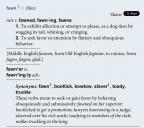 1157 x 1030 - 196K
 -
In my experience this compartmentalization difference is very real, and difficult for anyone with a classic "high art" sensibility to grasp. As strange as it may sound, at least some of the people at the pop concert also want masses with traditional music.
I play pop and rock precisely as a distraction. I'm just not gonna fuss about it. I know a lot of trads (Gen X and elder millennial down to closer to my age—Millennial, but on the younger side) who love metal, the rest hate it. It's not like I don't listen to baroque or renaissance and classical music. I do, far more than I did as a child and younger adult, but I really can't do it for everything like some trads would want to be the case. -
This is why I don't think your typical suburban parish can just hit the "RETVRN TO TRADITION" button and expect it to make everything better.
Classical music is in deep trouble right now in the USA, and I would guess the rest of the Western world. The overlap between Classical music and traditional Sacred Music means means that much of this trouble is going to arise if you attempt to force exclusively traditional Sacred Music on a congregation that hasn't already self-sorted into the one destination trad parish in your local area.
No...simply NO.As one who has changed 3 parishes from crap folk music to tradition (Im on no.4 now) three things have occured.
1) The clergy have been on board and have preached relentlessly for a "return to tradition." People have followed.
2) Children have participated in this project. And therein lies the future. Time and time again this has been proven.
3)Three orchestras that I have some familiarity with in terms of their internal workings have seen an uptick in young people attending and giving money from young entrepeneurs.
Sorry but I have been hearing the decline of classical music now for 60 years. Meanwhile i attend a major orchestra concert and the place is packed. And the opera...O my the operas I have seen are filled with young attendees and full houses. Consider Tristan and Isolde in NYC of late. Could not get tickets because it was sold out.
Please return to your strumming and yodeling and let the rest of us get on with the work at hand. The era of folk music is DEAD and guitars are dying along with the amateurs who play them. The biological solution is at work.
I have VERY little tolerance from guitar strummers and swooning singers of folk music long ago. If I sound harsh it is because I am. Too much goodwill was given to bad music and bad theology. We have to clean up from the Sh-t shoveled out from the last years and I am tired of standing it. Fortunately I do not have to but for many years I was forced to live in it.
Go shovel it somewhere else. I am old and don't wish to hear it. -
Came here to say what @kevinf already said...
The future of church music is with the children. The vast majority of the progress I have made in the three parishes where I have worked has been with the children. The amount of progress has a pretty direct correlation to how much time (and principal/pastoral support) I have to work with the students. I currently teach K-12 music and am a parish music director/organist. My parish choir is intergenerational (but over half are students in Grades 3-8). I live in a smallish town and it is not a destination parish. There is so much hope here. -
Please return to your strumming and yodeling and let the rest of us get on with the work at hand. The era of folk music is DEAD and guitars are dying along with the amateurs who play them. The biological solution is at work.
If you want to make convincing arguments to people outside your subculture, be aware that framing all music that isn't chant or hymns like this won't work.
Also if the only alternative you know to chants and hymns is "strumming and yodeling" you are not qualified to participate in this discussion.
I'd be happy to DM you some examples of the repertoire at my parish. We play a mix of hymns, chant, folk, and praise and worship. We don't have a guitar player and accompaniment is typically just me on the piano/organ. -
If you want to make convincing arguments to people outside your subculture, be aware that framing all music that isn't chant or hymns like this won't work
I don't speak like my writing outside of here. But I tire of arrogance like yours in this context. I have written more about this than you will ever know. Your myopia is a reminder to me of the indignities I have have suffered because of people like yourself. 4 degrees and 42 years of experience.
Folk music and its like, contemporary crap are dying. Little by little we are returning to sanity. But occasionally I have to rail at folks like yourself who have the audacity to tell us what to do. In my town are 5 parishes, 4 of which do ad-orientem, chant and good hymnody. One parish stil shovels the crap. Touche!
Termine! I will return to my little place of sanity. Keep shoveling your arrogant attitudes for the rest who wish to visit. As for me, i have no need. -
No...simply NO.As one who has changed 3 parishes from crap folk music to tradition (Im on no.4 now) three things have occured.
Not to discount your life experience. But please consider the following data:
At my current parish, the previous two music directors replaced music primarily from the old 1st edition of GIA's RitualSong to chanted English propers with some hymns. Both of my predecessors were capable musicians.
Now I grant you, they did not have a children's choir at the time (I have started one). But the parish was extremely unhappy with this change. Attendance went down with people switching to neighboring parishes. Choir participation declined. I have brought back some folk and praise and worship music while keeping some of the hymns and chants. Attendance in the pews and participation in the choir has gone up.
At my previous parish, a university Catholic Campus ministry, I was told that several years back, one of the choir directors implemented English chanted propers for all the songs. Fully half the congregation left over this. They went back to singing hymns.
In my hometown, a new pastor and music director replaced Gather hymnal repertoire with English chanted propers. This, along with other decisions the parish was unhappy about, led to the pastor being reassigned and a new music director being hired with more diverse tastes.
I have heard many other cases of this sequence of events occuring at various parishes.
There is little to no support for English chanted antiphons from the people in the pews in every parish I have ever served in.In my experience this compartmentalization difference is very real, and difficult for anyone with a classic "high art" sensibility to grasp. Strange as it may seem, at least some of the people at the pop concert also want masses with traditional music.
I've seen this too. It depends on what is meant by "traditional music." There is a large percentage of the population who want traditional hymnody at Mass, regardless of their other tastes in music. This is often what people mean when the say they want "traditional music."
People who say they want "traditional music" frequently mean "traditional for our parish" in the sense that they want to sing the hymns they used to sing. Far fewer people are interested in a reclamation project of reintroducing a large corpus of English and Latin chants to a parish with no living memory of this music.
I particularly object to the replacement of hymns with English chanted propers. This corpus of music is not mature. The effort to create such music largely started in the pontificate of Pope Benedict XVI. It's had a similar amount of time to grow as the folk music had in circa 1975. A very large amount of the English chanted antiphons that are currently being marketed are drek. If you want to convert your parish to liking superior quality music, you need to have superior quality music, and many of these English chanted propers are absolutely not. Far too many of them are "Traditional Slop." -
Addendum: I think the music of ServiamScores is of high compositional quality. I would have difficulty implementing most of it in my parish, but I respect your craft.
My comments are directed at publishers whose marketing, graphics design, and software exceed the quality of their music. -
I particularly object to the replacement of hymns with English chanted propers. This corpus of music is not mature. The effort to create such music largely started in the pontificate of Pope Benedict XVI. It's had a similar amount of time to grow as the folk music had in circa 1975. A very large amount of the English chanted antiphons that are currently being marketed are drek.
You're correct to frame this as - I would qualify "in ways" - novel and not yet mature. I think that's extremely insightful, where many uncritically accept that it's just Gregorian chant but in English. I think in your case it shoots your own foot, since parts of your preferred repertoire are no better off, but that's neither here nor there.
From what I have personally seen (limited), not only is the musical form itself immature but so is its implementation, what we might call the ars liturgica of it. For instance, the mindset of keeping it to solo cantors when a larger choir is available; of switching around between cantors in a single mass; the lack of any training of these cantors in chant performance practice; the quirk of shoehorning in both the entrance antiphon AND a hymn during the procession. Not sure if things like these are consistent with others' experiences, but in some locales there are real problems in implementation that I'm sure do a transition no favours. -
I venture to guess that said implementation is done by people who would have trouble implementing anything. Let’s face it, musicians are often not talented in the people skills department.
-
I have found that the people who like informal church music also start with the presupposition that the Mass is primarily for them subjectively, not primarily an objective sacrifice in which the Son offers himself to the Father. With this level of theological confusion, it is difficult to persuade people to embrace formal church music.
I also have come over to Kevin’s mindset. I have sympathy for grandmothers who want the YooHoo song at their funerals, and twenty-something’s who want city of god at their weddings because both were taught to identify these as the sounds of their faith.
But on Sunday mornings, absolutely not. The line has to be drawn and the tide turned, the sooner the better. -
@davido
Probably, but more specifically it's done by people who, afaik, have not been formed by the TLM. Maybe I'm setting myself up for vehement disagreement here but I think that even now a discriminating internalization of Latin Rite reverence is unlikely to be formed outside substantial exposure to the TLM. -
There is little to no support for English chanted antiphons from the people in the pews in every parish I have ever served in.
Apparently one parish here does them but I’m hoping that they do more propers when the DM gets more experience with the repertoire.
I was asked recently to help with a funeral where bottom line it was too much in the wrong place. But the deal is that those parishes leave us alone, and if the families are unhappy with the music and such, they can come to us for the Requiem Mass.
Like, these places have frequent adoration and the daily rosary. It is suburban Catholicism but not exactly what I remember (it’s even more pious and recognizable to past generations).
Thanked by 1tomjaw -
I think some of the unfamiliarity with the more classical music among the younger set comes from not hearing it. After one of my 4 retirements - yes really, I have retired 4 times - I taught a public middle school music course in a rural county. I was told this would never work, but I showed the kids a good video of "Carmen" over a period of days. We discussed the plot and the music as we went along. The kids really got into the story and associated the music with what was happening on screen. In short, they loved it. Some were crushed when Carmen was murdered at the end. They didn't want it to end there. I have said for some time the cutbacks in funding and support for music education in the schools is responsible for the lack of musical knowledge that has bled over into church music. If you want the kids to understand and like that music, you have to teach it and have the funding and materials necessary to do so.
-
Fifteen years ago, I taught music appreciation to middle schoolers. I started with almost NO materials as it was a developing school and this was only the second year this course was offered, and the budget was spent by the time I arrived (the person who taught it the first year didn't have any materials and didn't really teach). I was the first dedicated choir/guitar/music appreciation teacher. I had much fewer problems with the choirs and guitars, but I struggled to find any kind of curriculum for music appreciation. I remember finding articles online about music appreciation and specifically what it meant to build appreciation. I have since lost those articles, but the principles stayed with me. I think these principles are applicable to the goal of developing congregational singing. 1) Exposure. Students can't appreciate mere descriptions of music. They need to hear the music and even see it performed. This has the effect of presenting them with new schema. They may not have the mental framework yet to understand what they are hearing for the first time, unless they heard it at home. So, all music is "new" if the listener never heard it before. This is important for exposing prejudices and correcting misconceptions. 2) Study. Students can at least learn to respect a thing if they come to some understanding of it. This can get tricky but meter, harmony, voice leading, instrumentation, subject matter, historical context, contrasting style, and trivia are all important in coming to understand, respect, and eventually appreciate a genre of music or a particular song. 3) Application. Students can and should absolutely experiment with making music of the kind that is proposed for study. This could mean compositing a short hymn, harmonizing a familiar melody, singing a standard harmonization in parts, or taking part in a practice planning session. They may sweat, make mistakes, get shy, or feel otherwise inhibited by the act of performance. But the goal is for the students to begin to take real "ownership" of the music being studied by trying to do it. The most important thing at the time of an actual performance is that they be taught to perform well. 4) Evaluation. Having studied and performed a piece, or pieces from a particular genre, and having done it well, according to established standards, the students should be able to determine not only how well they did, but how well someone else might do. Their higher order thinking skills and their training should enable them to determine which performance practices are poor, which are mediocre, and which are excellent. The students should empathize with any performer attempting to execute the music they struggled with and appreciate the final presentation. Moreover, the students should be able to evaluate the music they have made their own in contrast to other types of music or even other pieces from the same genre they studied. All this takes lots of time and real effort, not merely setting a video on during music class and maybe a poorly formed quiz or test months later. I agree with CharlesW, lack of support for music education in schools is a terrible thing. But I am not convinced lack of funding is the root of the problem. Regarding congregational singing, I would refer back to Musicam Sacram and exhort you to get the priest singing and then having the people sing the responses. Then work on singing the Ordinary, piece by piece. If you work with enough of the congregation, they will learn confidence and to trust in you. If you can get the congregation to "own" the responses and 1-2 good Mass settings, the hymns won't really matter as much. Think of a choir volunteer who joined for just a short time, but in that time was exposed to Gregorian chant, or polyphony, or traditional hymnody, and came away with a bit more respect and appreciation for the work it takes to learn and perform traditional sacred music. Now they sit in the pew but are grateful for all the work the music ministry does, whether they sing or just listen and appreciate. Not everyone will sing hymns. Those in the congregation who do sing will be very audible and will be already singing the more important parts of the Mass anyway. A legit tradition will be developed, and your pastor will notice if you prioritize what you sing. This has been my experience. I hope this helps.


Welcome to the MusicaSacra Forum!
To participate in the discussions on Catholic church music, sign in or register as a forum member, The forum is a project of the Church Music Association of America.
Categories
- All Discussions21,824
- General Music Discussion8,540
- Job Openings291
- Management of Music Programs862
- Choral Matters539
- Church Documents and Rubrics540
- CMAA Notes307
- Events758
- For Newcomers: Read First26
- Sacred Polyphony566
- Hymnody897
- Gregorian Chant: General2,747
- ↳ Graduale Romanum and Liber Usualis372
- ↳ Graduale Simplex61
- ↳ Semiology65
- Vernacular Plainsong704
- Anglican Use and Anglican Chant73
- Organ, Other Instruments and Repertoire451
- New Composition/Works in Progress1,339
- Recordings238
- Music for Hispanic Ministry163
- Music Education: Children217
- Music Education: General223
- News Items246
- Positions Wanted3
- General Discussion: Catholicism742
- Amusements185
- General Discussion1,048
- Opinions119