
St. Ambrose's Hymn to St. Agnes
-
Agnes beatae virginis (att. St. Ambrose)
The blessed virgin Agnes flies
back to her home above the skies,
and she is born in heav'n above
because she gave her blood in love.
Mature enough to give her life,
though still too young to be a wife,
what joy she shows when death appears
that one would think: her bridegroom nears!
Her captors lead her to the fire
but she refuses their desire,
"For it is not such smold'ring brands
Christ's virgins take into their hands."
"This flaming fire of pagan rite
extinguishes all faith and light.
Then stab me here, so that the flood
may overcome this hearth in blood."
And she was stabbed, and she was brave,
and dying, further witness gave,
for as she fell on bended knee
she wrapped her robes in modesty.
O Virgin-born, all praises be
to You throughout eternity.
and unto everlasting days
to Father and the Spirit, praise.
Translation c. 2010 Kathleen Pluth. Permission is given for parish use during January 2011. All other rights reserved.
Agnes beatæ virginis
natalis est, quo spiritum
cælo refudit debitum
pio sacrata sanguine.
Matura martyrio fuit
matura nondum nuptiis;
prodire quis nuptum putet,
sic læta vultu ducitur.
Aras nefandi numinis
adolere tædis cogitur;
respondet: «Haud tales faces
sumpsere Christi virgines.
Hic ignis exstinguit fidem,
hæc flamma lumen eripit;
hic, hic ferite, ut profluo
cruore restinguam focos».
Percussa quam pompam tulit!
Nam veste se totam tegens,
terram genu flexo petit
lapsu verecundo cadens.
Iesu, tibi sit gloria,
qui natus es de Virgine,
cum Patre et almo Spiritu,
in sempiterna sæcula. -
(Bumping)
-
There were a couple places here where I thought the image was odd or contrived or something- but then I looked at the Latin- and you were simply being faithful.
I'm really quite amazed at your ability to create rhymed, metered translations that keep so closely to the original. That's quite a skill. -
Thank you, Adam. I think it's what I have to offer. Tho I think it's stilted in some places.
What would you do with "stabbed" in line 5.1, for example?Thanked by 1Chris Garton-Zavesky -
That's tough. "Percussa" means hit or beaten, not stabbed- but stabbed is more poetic, and is related to the stanza prior.
What bothers me about that line isn't "Stabbed," it's the two-fold use of "and." Seems meter-driven- which is fine once, but twice gives the trick away.
What about:
So she was stabbed, yet was she brave.
OR
Then was she stabbed
(I love "And dying, further witness gave," BTW)
A line I find slightly more bothersome than "Stabbed" is the end of the first stanza:
"because she gave her blood in love."
This could be a taste issue, but I find similar-voweled, non-rhyming words in successive accented syllables to sound a little weird.
That could just be me, though. -
The blessed virgin Agnes flies
back to her home above the skies.
With love she gave her blood on earth
to gain a new celestial birth.
Mature enough to give her life,
though still too young to be a wife,
what joy she shows when death appears
that one would think: her bridegroom nears!
Her captors lead her to the fire
but she refuses their desire,
"For it is not such smold'ring brands
Christ's virgins take into their hands."
"This flaming fire of pagan rite
extinguishes all faith and light.
Then stab me here, so that the flood
may overcome this hearth in blood."
Courageous underneath the blows,
her death a further witness shows,
for as she falls she bends her knee
and wraps her robes in modesty.
O Virgin-born, all praises be
to You throughout eternity.
and unto everlasting days
to Father and the Spirit, praise.Thanked by 1Chant_Supremacist -
"And wraps her robes in modesty"
Ah. This explains why the Spanish girl martyrs, Ss. Nunilo and Alodia, were so careful about the same thing. Ya gotta keep up with your heroes. :)
Re: Agnes and Ambrose, he discusses the lives and martyrdoms of Agnes and a good many women in his book (for his sister and her nun household) on virgins. Sometimes he's a bit too classically Roman about it all (which is probably why St. Augustine definitely opposed the death before dishonor thing in The City of God). But tons of interesting info. Agnes was a fairly recent martyr, so of course he was very interested in her. -
"Struck"?
-
Here's another attempt at the first stanza:
1. The blessed Agnes, virgin maid, / is born today to Heav'n above,
the martyr's duty more than paid, / her blood and spirit poured from love. -
I like those revisions a lot. This went from really good to really great.
-
Thanks to all.
I can't believe I had used the expression "on bended knee." One really needs critique. -
(bumping, for the feast)
-
Thanks for bumping...my pastor mentioned St Ambrose's praise of St Agnes in his heartfelt homily this morning.
Interesting that the last verse--doxology--uses the Christmastide form to address Christ...O Virgin-born (Qui natus es de Virgine). This is specified for all the office hymns in Christmas/Epiphany. As years circle around, I'm growing to love more and more the extended Christmas season that lasts till Candlemas. I wonder if this doxology refers to the Christmas season, is a subtle tribute to the virgin Agnes (along with Christ's Mother, of course), or both? -
The Anglo-Catholic Fr John Hunwicke at Fr Hunwicke's Liturgical Notes (blog) has an interesting post on this hymn at http://liturgicalnotes.blogspot.com/2009/01/modesty-in-martyrdom.html
-
Chastity and faith are linked in the Scriptures, in which idolatry is like adultery. The virgin martyrs symbolize the link. No mention is made in the hymn of her refusal to marry, which is part of the story. Instead, the choice is between idolatry and death--by stabbing.
St. Thomas links chastity and faith together in several places in the Summa Theologiae II-IIae q. 151, for example here:
The word "chastity" is employed in two ways. First, properly; and thus it is a special virtue having a special matter, namely the concupiscences relating to venereal pleasures. Secondly, the word "chastity" is employed metaphorically: for just as a mingling of bodies conduces to venereal pleasure which is the proper matter of chastity and of lust its contrary vice, so too the spiritual union of the mind with certain things conduces to a pleasure which is the matter of a spiritual chastity metaphorically speaking, as well as of a spiritual fornication likewise metaphorically so called. For if the human mind delight in the spiritual union with that to which it behooves it to be united, namely God, and refrains from delighting in union with other things against the requirements of the order established by God, this may be called a spiritual chastity, according to 2 Corinthians 11:2, "I have espoused you to one husband, that I may present you as a chaste virgin to Christ." If, on the other hand, the mind be united to any other things whatsoever, against the prescription of the Divine order, it will be called spiritual fornication, according to Jeremiah 3:1, "But thou hast prostituted thyself to many lovers." Taking chastity in this sense, it is a general virtue, because every virtue withdraws the human mind from delighting in a union with unlawful things. Nevertheless, the essence of this chastity consists principally in charity and the other theological virtues, whereby the human mind is united to God. -
the extended Christmas season that lasts till Candlemas
A homeowner in my neighborhood has livingroom corner windows with drapes
open to reveal a large tree and multi-color lights still on every night.
I enjoy seeing it as I drive the street toward my boring apartment complex.
It reminds me of mid-Jan 1985 in Chicago (actually while sightseeing in Wilmette)
where the snow was deep and crisp and even, and many houses were still adorned.
Since then I have thought such behavior a very wise preventative to Seasonal Affective Disorder (SAD).Thanked by 1Elmar -
Kathy, you are gifted indeed.
I have no revisions to offer, just thanks for the moment of grace that reading this brought me today. How grateful I am to martyrs like Agnes, who uphold the true strength and dignity of women, as uniquely brought to fruition in their total love for Jesus.
I have to ask- got anything like this for
St. Teresa Benedicta or St. Clare or St. Mary Magdalene?
Greedy, I know.
And we still use your translation for the St. Anne text at the parish. Love it. -
Just making this available again prior to the feast. Cheers.
-
Happy feast day!
-
I applaud Kathy's use of 21st century English in her hymn texts. Brava. "Thee" "thou" "wouldst" and "shouldst" are appropriate in the hymns of Wesley, Watts, and other 18th century hymn writers, because that was the way folks spoke English when they were writing. It pains me to see that language in recently written hymns, as is often the case with posting on this Forum. No reputable 20th or 21st century hymn writer uses such language.
I do wish Kathy would address the cosmology expressed in stanza 1. "flies" "above the skies" "in heaven above" aren't in Ambrose's Latin text, so why use language from folk religion to replace Ambrose's authentic theology?
"wraps her robes" needs tweeking. It sounds like something a holiday-hire would do at Dillards. Perhaps something like "her robes arranged with modesty"
And with the previous references to virgin and virgins in the text, many may miss "Virgin-born" as referring to Christ Jesus. -
Fr. Ron, I have to disagree. Some archaisms are legitimately 18th century - but "thee" and "thou" still hold currency as the more intimate alternative to "you". I believe it makes sense to use that more personal language when referring to God.
-
Fellow Fan of Arnold, who among Daw, Idle, Troeger, Duck, Bringle, Stuempfle, Wren, Perry, Dudley-Smith, Dufner, Tice, Duncan, Pratt Green, Bell, Murray (among the most published 20th and 21st century hymn writers throughout the English-speaking world) use "thee" and "thou" in their hymns? Apparently none of them shares your opinion that "thee" and "thou" are "more personal language when referring to God." One may see "thee" and "thou" used by writers who put their works on the internet because no reputable publisher will publish it, but what does that prove?
-
I don't count being published as any great signifier of quality. Certain publishers have seen fit to pick up stuff like the Mass of Christ the Saviour Agnus Dei that runs counter to ICEL's own terms of use for MR3, and the kind of people that would recognize "thee" and "thou" as an actual linguistic distinction rather than "ew, old white people language" are not the kind of people writing for mass-market suburban Catholicism anyway. I like much of Perry's work, but I think there are legitimate variations in taste and style. My point was more in counter to yours that it isn't legitimate use in modern English - it absolutely is, even if modern publishers wouldn't pick it up.
Sorta like gendered language, both in general and in reference to God - OCP may not want to pick it up, but it is a legitimately allowable choice on linguistic grounds, and a matter of style and taste. -
Sometimes hymnal editors make weird choices.
-
"No reputable 20th or 21st century hymn writer uses such language."
Of course, "reputable" is not a self-evident qualifier, but I would note for the record that "thee" in particular ("thou" less so) happens to offer far more rhyming possibilities than "you" as a terminal syllable of a line. I don't mind that usage at all for that purpose, even if it means the text is a mild stylistic mash (that is, for example, not employing "wouldst" et cet. - which is awful for singing). I am mindful of Stephen Sondheim's helpful distinction between lyrics and poetry (the latter has a certain inherent musicality, while the former needs music to bring that dimension out) and his explanations of stylistic concessions to rhyme. -
It's hard to imagine a hymnal editor accepting a translation of "Heart of Christ Jesus, radiant and bright" for "Corazon Santo, Tu reinaras,"--but these unfortunate things do happen.Thanked by 1Liam
-
Gothic architecture is not a dead language. Latin is not a dead language. Tallis is not a dead language. Old Church English is certainly not a dead language. Etc., etc. From the hands of artists (as opposed to run-of-the-mill hacks and copy cats) these antique creative vocabularies may produce works of art that have as much cultural validity and artistic integrity as was had by them in the historical periods in which they originated (but to which they are not bound). We have on this forum and in the CMAA gifted composers who can and do give us renaissance-like polyphony that is true art, not the ridiculous warmed-over-Palestrina that was pawned off on the Church a century ago (which the Church swallowed, hook, line, and sinker). I should not want to live in a world in which antique language was thought of as inappropriate for modern creative endeavour. Why should language be any different from other creative vocabularies? Many of us pass Gothic or classical, or romanesque churches or museums, libraries or court houses every day. Some are indisputably fine art, some are the work of hacks. The problem is the artist or the hack, not the antique vocabulary. The same is true of language. If someone is inspired to write a literary work in Elizabethan or Chaucerian language hoorah for him or her. Let us judge the merits, or lack thereof, of the work, not the artist's choice of vocabulary.
In my judgment the two most profoundly holy sacred spaces in Houston are Walsingham and St Basil's Chapel at UST. One, Gothic in inspiration (an accomplishment of the successors of Ralph Adams Cram), the other a bare minimalist chapel (the work of none other than Philip Johnson). I am thankful that we have both and that there is no one telling us that we can only avail ourselves of a 'modern' architectural, musical, or literary vocabulary. We would be drastically impoverished were this so.
I do not want to be seen as denigrating modern English, or any of our modern arts. I hope that it is clear that all art, old and new, is on an equal, and timeless, plane. We are its heirs and may use any or all of it for our creative endeavours. As for Fr Krisman's list of contemporary literati, I can only say that we are unfortunate indeed that none of them was asked to give us the translation of the missal. -
Here is Kathy's translation set to my newly composed L.M. tune named (what else?): AGNES BEATAE VIRGINIS.
Once again (this is getting to annoying!), MP3 sound files are not uploading ("failed to write file to disk"), so I'm putting score & sound file in Dropbox:
https://www.dropbox.com/sh/5hp4zid5yqcck2q/AACLsI_u39BGWbLQkzxm2kWGa?dl=0
-
*bumping* for the Feast of St Agnes & St Joachim.
Oops, my bad!! This should have been for January 21st, but here's the sound file anyway.
Also, here (at last) is an .mp3 sound file of the tune.
-
I am just dropping by, and wanted to point out something I learned!
The "preserving modesty" bit? It was a real thing that many female martyrs did, as a deliberate visual reference to the injustice of their executions.
See, Euripides' play Hecuba (about the queen of Troy's sorrows as a slave) included a subplot about the death of Polyxena, one of her daughters, as a human sacrifice to Achilles' vengeful ghost.
Polyxena and her mom both speak and act in ways that seem to prefigure Mary, the Church, and the martyrs, and the Greeks describe Polyxena's brave facing of unjust death in terms that almost talk about Baptism (easier to see if you read it in Greek). And when Polyxena dies offstage, the Greek messenger describes how she put her knees together as a gesture of modesty and dignity.
So Ambrose and everybody else would have known this, because the play was read out loud a lot even to people who didn't go to theaters. Very famous, very obvious visual reference to educated pagans or converts. Very much a protest and condemnation, that would have jabbed at the very nature of Roman justice and religion.
So I thought this would be interesting to know! -
Oh, and I forgot to say that the Akathist Hymn line, "o bride unwedded," is also a quote from Euripides' Hecuba, as Hecuba laments Polyxena. The difference is that the Akathist line exhorts rejoicing instead of mourning, which is a nice turnaround.
-
Here's a translation from ICEL:
The virgin Agnes shed her blood
on this her day of heav’nly birth;
she paid her holy debt with love
and poured her spirit back to God.
Mature enough for martyrdom,
though still too young for marriage vows,
yet as a bride she comes, led forth
with joy upon her countenance.
Urged on to light with flaming torch
the altars of a heinous god,
she says “No virgin vowed to Christ,
shall take up torches meant for this.
“This fire stuffs out all faith in Christ,
these flames obscure and steal the light.
Strike here, yes here, that I may quench
these altars with my flowing blood.”
How nobly she endured the blow,
for as she wrapped her clothing round
she sank to earth on bended knee,
so pure and modest as she fell.
To you, Lord Jesus, glory be,
who are the Virgin Mary’s Son,
with God the Father, ever blest,
and loving Spirit, ever one. Amen. -
And one from Fr. Samuel Weber's Hymnal for the Hours:
Saint Agnes, model of the pure,
And of the brave who shed their blood,
Was born to heaven on this day,
Where her desires already dwelt.
Mature for dauntless martyr’s crown,
If not for human bridal joys,
Her youthful features seem to shine,
With happiness of marriage feast
When urged to set a lighted torch
Upon an altar of false god,
“The faithful brides of Christ,” she said,
“have never touched such evil flame.
That fire extinguishes all faith,
That faith destroys its fervent light.
Strike here, pray strike, that my young blood,
May swiftly quench it’s evil glare”
What glory she obtained by death!
Like fairest robe it wrapped her round,
As sinking to her knees in prayer
Her tender body fell to earth.
All glory, Jesus, be to you,
Once born of Virgin undefiled,
Who, with the Spirit of your Love
And God the Father ever reign. Amen. -
I am just never going to warm up to unrhymed hymn texts. Why is why Kathy's text, the first in this post and subsequently revised by her, is to be preferred over others.
-
Does anyone know why this hymn isn't part of the traditional Divine Office if it goes back to St. Ambrose? Instead we sing a hymn to virgin martyrs in general.
-
The Roman office is extraordinarily conservative and adopted hymns late.
Also I am also surprised that a hymn for a virgin martyr used the Incarnation doxology and the Urban version at that. It is almost certainly not the authentic doxology, and lo and behold the hymn is in the 1983 Liber Hymnarius. But Lentini just says what he omitted and something about the legend and her modesty. :(Thanked by 1davido -
Maybe I'm just odd, but I find the unrhymed texts in the new ICEL Translation of the hymns for the office to be very prayerful when chanted to the proper melodies from the LH. The metric melodies are another thing entirely....
I was particularly struck by the fourth verse, and the "falling" motif present in the third quarter of the chant. -
Rhyming texts are memorable in a way non-rhyming texts are not. Think of the Pange Lingua. The rhymes help keep the words in memory.
It's not just a matter of taste but a matter of goals. -
AnimaVocis, I agree. I can see why people prefer to sing rhyming translations, and I don’t even like encouraging that (because I would rather sing in Latin); however, rhyme and meter over meaning and meter leads to translations that are not pleasing to me…and so I can understand the same approach taken even for singing as ICEL & Fr Weber have done.
-
Rhyming texts are memorable in a way non-rhyming texts are not. Think of the Pange Lingua. The rhymes help keep the words in memory.
I agree wholeheartedly. Consequently, I judge the recent ICEL translation of Office hymns to be a colossal failure to lead those who pray the Hours to love and appreciate these hymn texts. On occasions when I pray morning or evening prayer with other priests, we always use the eBreviary app on our cell phones as our common resource. (Many priests no longer pray the Liturgy of the Hours from a book.) And the new ICEL-translated hymns are included in the eBreviary text for the particular hour we are praying. But the hebdomedary invariably announces that we will sing the alternate hymn (because, I guess, no one cares for the non-rhyming ICEL text).
I cannot understand why ICEL made this decision to commission non-rhyming English-language hymn texts. Certainly the ICEL executives must have told the translators that a rhyme scheme in their translations was not necessary. Why? If ICEL's goal was to make a "more literal" translation than texts previously translated by Caswall, Neale, and other divines, why wasn't the fact that there was a rhyme scheme in the Latin text considered to be an element that needed to be included in the translation? -
The problem is that the Latin rhyme is a bit irregular or (I think I got this right) feminine and masculine. The vowel might rhyme but the consonant (cluster) is completely different so it hardly feels like a rhyme. Or the vowel and final consonant rhyme, like with certain participles.
To take two examples: Lucis creator optime and Ave Maris Stella. They don’t rhyme not consistently throughout anyway. Fine you can say that the hymns that do rhyme regularly should rhyme in the same way in English, but that’s not necessarily an argument in favor of the older translations either. -
In English LM hymns, rhyme is expected by the ear and mind, regardless of the Latin use of rhyme in the original text.
But even in Latin, rhyme is a great help to memory. Aren't these thoughts worth memorizing? -
The problem is that the Latin rhyme is a bit irregular or (I think I got this right) feminine and masculine. The vowel might rhyme but the consonant (cluster) is completely different so it hardly feels like a rhyme. Or the vowel and final consonant rhyme, like with certain participles.
To take two examples: Lucis creator optime and Ave Maris Stella. They don’t rhyme not consistently throughout anyway. Fine you can say that the hymns that do rhyme regularly should rhyme in the same way in English, but that’s not necessarily an argument in favor of the older translations either.
As I said. I can understand the position that English hymns should rhyme anyway. ICEL and Fr Weber do not agree, and I also understand that position.
What I don’t understand is the other point, that the Latin hymns should rhyme anyway, as a memory aid. But they don’t. You have to sing them regularly (another reason to lament the abolition of octaves I suppose). -
By the time Aquinas came to town they rhymed, the master teacher who wrote the Summa Theologiae for beginners.
Can your congregation sing O Salutaris and Tantum Ergo?Thanked by 1CHGiffen -
@MathewRoth
I suspect that as the Latin Hymns in the Roman Divine Office have a large number of early hymns, such as those by Ambrose (6), Prudentius (7), Sedulius (2), St Gregory (8), this would lead to an imbalance of unrhymed hymns. If we look at the whole corpus of Hymns by looking at the Analecta Hymnica we see far more Rhymed Hymns.
I have not investigated the Urban VIII reformed texts in detail as to whether they destroyed previously rhymed Hymns.
Rhyming metrical texts are a higher form of Hymn...
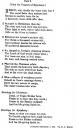
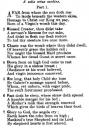
@ Kathy Here is an acrostic and rhymed hymn for St Agnes,
https://archive.org/details/analectahymnicam5253drev/page/88/mode/2up
Has any one managed to translate an acrostic hymn into English keeping the acrostic? -
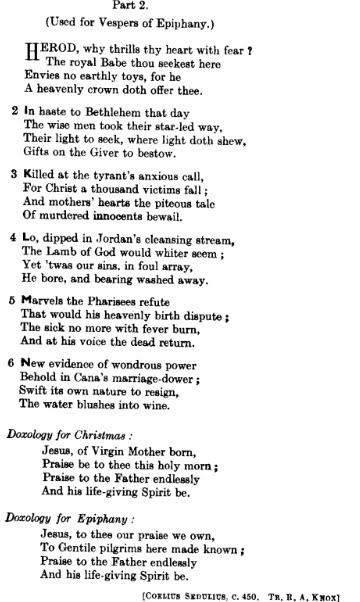
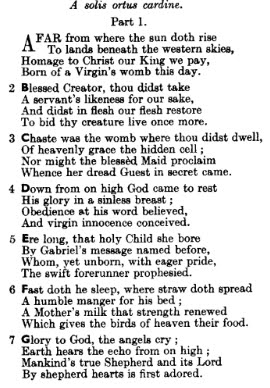
Msgr. Knox excelled at acrostics (his translation of Psalm 118/119 is amazing).
 360 x 602 - 53K
 270 x 388 - 38K
 -
The Summa is not really for beginners. But:
And sure, they can sing the hymns of Aquinas. They also sing the Vespers hymns that don’t rhyme, at least the ones we get at least multiple times a year. (Like, we have weekly Vespers; only rarely do the regulars not even attempt the hymn.) This feels like an odd attempt at a dunk tbqh.
But again:
As I said. I can understand the position that English hymns should rhyme anyway. ICEL and Fr Weber do not agree, and I also understand that position.
What I don’t understand is the other point, that the Latin hymns should rhyme anyway, as a memory aid. But they don’t. You have to sing them regularly (another reason to lament the abolition of octaves I suppose)
As to your point @tomjaw the rhymed hymns are of a very uneven quality. -
Aquinas said the Summa was for beginners.
Can your congregation sing the Tantum Ergo from memory? -
As I habitually do here I am going to write for future readers as much as anything else. No, the Summa is for beginners in theology, who have already studied the liberal arts. People habitually mistake “beginner” for “novice” and if not “uninitiated” then “neophyte” in the real sense of that word.
As I said this is just an odd attempt at a dunk, or I’m just not understanding something. Most congregations are not doing anything close to what we do, and yet they sing the Tantum that rhymes and sometimes well, sometimes poorly. I’m sure people sing these from memory, but I am almost not worried about this; I have far more on my plate, most of which is a good problem to have. In fact I’d rather people memorize the (famously not rhyming) psalms of Sunday Vespers and the first fifteen or so verses of John if they memorized any one part of the liturgy.
I truly do not understand your point: I’m not saying not to use rhyme; you can make the case that it should rhyme in English, even when it doesn’t in Latin, but if both ICEL and Fr Weber disagree, that’s nothing to dismiss out of hand.
As I said, and even if you want to take into account the inherent conservatism of the Roman office (so conservative that a new hymn was used for Mary Magdalene after Trent instead of the well-known Lauda Mater Ecclesia, which has an odd rhyme scheme anyway) those of Aquinas and Bernard of Clairvaux (or someone in his circles and of similar genius) stand out. There are hymns, including rhyming ones, that were not in the Roman office which were and still are very good. But even the massively expanded (overly so) corpus of the Liber Hymnarius is a fraction of the medieval corpus, and of course Lentini bungles almost every single change therein (even where the hymn isn’t questionable in the first place). (Cf. this article.)




Welcome to the MusicaSacra Forum!
To participate in the discussions on Catholic church music, sign in or register as a forum member, The forum is a project of the Church Music Association of America.
Categories
- All Discussions21,844
- General Music Discussion8,548
- Job Openings292
- Management of Music Programs862
- Choral Matters539
- Church Documents and Rubrics540
- CMAA Notes307
- Events760
- For Newcomers: Read First26
- Sacred Polyphony567
- Hymnody898
- Gregorian Chant: General2,749
- ↳ Graduale Romanum and Liber Usualis372
- ↳ Graduale Simplex61
- ↳ Semiology65
- Vernacular Plainsong704
- Anglican Use and Anglican Chant73
- Organ, Other Instruments and Repertoire452
- New Composition/Works in Progress1,342
- Recordings238
- Music for Hispanic Ministry163
- Music Education: Children217
- Music Education: General223
- News Items247
- Positions Wanted3
- General Discussion: Catholicism742
- Amusements185
- General Discussion1,048
- Opinions119