
Representing Chant on the Modern Staff
-
Hello all,
As a music director with a Dorico license, working at a parish with no previous exposure to the modal melodies of Gregorian chant, I often find myself transcribing square note melodies into stemless notes on the modern, treble staff so the congregation can digest the new music more easily (and frankly, to give them less to complain about). It is a fun exercise for me, it scratches my itch for uniformity of format, and it has led me to learn so much more about the Gregorian modal systems than I ever knew before.
Though I know it is not important for accomplishing what I am doing at the parish, I wanted to ask those more knowledgable than I about the use of key signatures when transcribing modal, Gregorian melodies onto the modern staff. Whenever I have encountered chant melodies on the modern staff, I have seen key signatures incorporated in the following two ways:
1) they major or minor key signature that most closely fits the mode is used; or more rarely
2) they are completely omitted, and case-by-case accidentals are employed to indicate a flattened Ti.
One example that illustrates this perfectly is the Gloria from Mass VIII. It is a classic mode 5 chant in the Lydian mode that recites on Do and cadences to Fa. Of course, to our modern ears, the Lydian mode with a flattened Ti is simply our diatonic major scale: my problem.
When this chant is notated on modern treble staff, I have noticed something peculiar. Usually, the reciting tone is set as A and the final tone D. This setting gives us the mode 5 Lydian scale starting on D (Fa): D-E-F#-G#-A-B-C#-D. However, the chant almost never uses Ti, as I have noticed with many mode 5 chants. In fact, it is only found once in the whole chant, in the final "Amen." Even then, so as not to create the tritone with Fa, it is flattened to Te. Thus, practically speaking, the scale used in the chant is: D-E-F#-G-A-B-C#-D. Because this is just our modern major scale, the chant, therefore, is usually assigned the key signature of D major. Even in the Kyrie from the same mass, I encounter the same problem. The universally flattened Ti effectively creates the major scale. Thus, Fa becomes Do and the appropriate key signature is slapped on.
However, I wonder: does this not do damage to our understanding of Gregorian chant to identify the chant as a D Major melody? In the Major scale, the "final" tone (what we understand as the tonic) is Do. In no Gregorian mode is the final Do. Even though in modern terms, the Gloria from Mass VIII is a paradigm major melody, this simply is not how it would have been understood. When I have transcribed the Kyrie and Gloria from Mass VIII, I have opted to assign it the key signature of A Major to respect the fact that A is indeed Do. Sure, this requires me to naturalize all the G#s I've just created (a whopping 2 in the Kyrie, thanks to the accidentals carrying through the bar, and 1 in the Gloria), but I think this preserves the modal nature of the melody rather than trying to squeeze the melody into our modern conventions.
Of course, I know I also need to take into account that these chants only date back to the 15th and 16th centuries when our modern musical framework was beginning to develop into the structure we have today. Perhaps this accounts for why the chant was written to be so characteristically "Major" even within the modal framework of Gregorian chant, and why we might actually be doing the melody a favor by unearthing it from its medieval encasement. I am unsure of how this plays into the debate, however.
I know this issue is extremely unimportant to the Church's work for the salvation of souls, but it is something that has certainly peaked my curiosity. I especially wanted to get some other people's thoughts before I continue putting my homemade "Mass VIII in A Major" into worship aids and look like an idiot! :P
What do you all think? -
I'm not convinced arranging it in A maj with naturals on every g# would make me sing it any differently. Depending on the system of solfeggio being employed, Do can change too. Ask me to sing a Lydian scale, and I would say " do re mi fi sol la ti do", not "fa sol la ti ... etc"
And the meaning of keys is so divorced from that of modes that I don't thing any historicity is preserved. If anything, marking "mode V" somewhere on the arrangement would help me more
-
It would be easy to overthink this. You have two goals that are in competition: giving people less to complain about by dumbing down the format, and learning more for your own pleasure. The first is better served by keeping things simple, in 'D major'. For the second, I would recommend a quill and vellum ;-)
-
Bite the bullet and leave the material in square notes. I'm a year and half into my current parish. I started with the neumes. Yeah, there was some complaining but it went away after about 6 months. Now people are getting confident in understanding it. it helps that I have taught sessions on how to read it. Feed them good meat, not pablum.
-
You're right, liampmcdonough, the A Major Kyrie with G naturals isn't sung any differently than the D Major Kyrie. And if we don't sing it any differently, then the congregation certainly won't understand the subtle nuance.
You made me realize its important to note that I'm coming from the perspective that fixed is much more useful for understanding chant as a whole, since becomes confusing (to me) to say that modes 1 and 3 both final on Re (but a different Re). I suppose that makes sense then why I'm so interested in the idea of preserving the fact that A is do by a key signature. Perhaps people who like fixed Do will agree with me and those who prefer movable Do will say it's not worth the time and thought. I do agree the description of "Mode V" is necessary and 100% accurate, and doing anything with key signatures will be lacking in accuracy of what we're describing.
I suppose my question might be of a practical nature, wondering what the common practice is and why. It makes sense to me to notate it in D Major simply because it's very simple to do so. To notate the same pitches in G flat major would be a grave mistake by this token, and F major less so. I suppose I am wondering if notating the chant in A major creates more problems than it actually solves, if my question is a worthwhile one to explore. -
kevinf, that is certainly my instinct, and I've had great success teaching my choir to read chant notation by just going for it. The pastor at the parish has a very Salesian approach, that good changes occur unnoticed, which I respect. We are trying to "soften" the blow of introducing Mass VIII this Christmas by putting it in a semi-familiar format so that, a couple years down the road, they'll be singing neumes without even knowing it. So I do see the value in your approach, I am just working with the pastor to find the via media that will get us to our goal over a longer period of time.Thanked by 1novusgordo
-
1. I agree with @kevinf: whenever possible, just use square notes!
One advantage that hasn't been mentioned yet of starting out with square notes is the greater ease of reading/learning new chants in chant notation, as opposed to something like stemless modern notation. The earlier you make this leap, the sooner you'll be able to get into some of the more complex parts of the chant repertory.
2. For things like incipit cards where I have to use modern notation, I try to place it on the five-note staff in such a place as to have as few sharps or flats in the key signature as possible, regardless of where I'll actually be pitching it.
3. If I were typesetting an accompaniment or otherwise transcribing the chant at the pitch in which I intend to execute it, I'd probably set the key signature based on the mode, so that accidentals in the chant notation are also accidentals in the accompaniment. I find that people used to reading modern notation aren't as familiar with the modal character of the music in the first place, and so I suspect that putting it in the "wrong" modality to simplify accidentals would only confuse them.
(Then again, I'm just a schola director and not an organist - what do I know? :p )Thanked by 1probe -
Novusgordo, so if Do is C with flattened 7ths, you'd write it in C with Bb accidentals rather than in F to avoid accidentals? Interesting.
-
I'm not necessarily against 'overthinking' per se, though. So, is the G-natural an 'accidental' or a regular part of the hexachordal system? It is tempting to see the Lydian raised 4 or the Dorian raised 6 as characteristic of modes v & i, but would a b-flat key signature change the mode?
My first approach to understanding mode was to consider the tetrachords as sets of 3 intervals: wsw, sww, www, wws. It was rather confusing that b was usually flatted, making the F & G tetrachords indistinguishable. A more fruitful way to think about things is to look at which of the 4 notes is above a semitone: 3 in the D tetrachord, 2 in the E, 1 in the F, and 4 in the G modes. I've even read there are pieces with a C finalis that are classified as Lydian.
A caution about the Solesmes 'dates': these refer to a principal source rather than the age of the chants themselves. De angelis is a lot older than "XVI. s."Thanked by 1CHGiffen -
Whenever I transcribe chant onto a modern staff, which is not all that often admittedly, my first concerns are the singability and appropriate expressiveness of the range and chroma. Then I assign the key signature that follows from that, and mark in any accidental that may occur.
This is all for the schola though, where it doesn't matter so much if the key signature is odd or if the range is a little extended from pure congregational singability.
Whether this could conceivably damage somebody's understanding of modality has never occurred to me. The schola singers are already well aware that a chant Do doesn't truly correspond to C=261Hz, whatever expedients we might use, and if I ever tried to explain something like "the Mass 8 Gloria is not really in D major" to the congregation I'd receive blank stares.
Anyway, for whatever it's worth. -
My own personal chant transcribing philosophies (in no particular order) are:
1.) use stemless notation (I can't stand the syllabic beaming with 8th flags all over the place!). Stemmed transcriptions risk encouraging people to read rhythms according to modern music training, rather than simply letting things flow. Stemless avoids the issue almost entirely.
2.) black for "short", half note head for "long". I will also accept quarter note heads with and without dots, but I think the white notes make it way more obvious.
3.) key signatures that make the most sense. Congregants aren't thinking in terms of modal theory. And the whole point of transcribing it is to make it easier for them to sing. KISS--Keep it simple, ______.
4.) translations are a MUST. I prefer to do literal linterlinears whenever I can, because then no one can complain they don't understand the music.
5.) try and make it beautiful whenever you can (drop caps, etc.) to honor the tradition your trying to keep alive
6.) condense the default note spacing so that the neume groups are still intelligible in the modern notation. Personally, I like to slur neume groups together. If I have more advanced chanters at my disposal who understand such things, I'll also keep quilismas and episemas where appropriate. Some modern editions are very difficult to read because of how spaced out the notes are, and this is so easily avoided, especially if you're willing to permit system breaks in the middle of bars (as was done in chant!).
7.) respect original bar line types. I'd rather provide plenty of information that novice chanters may ignore, but more advanced chanters will still be able to decode. Quarter & half bars all stay.
(As an aside, as do bi & tristrofa. To wit: in Dorico, use the interval pop over to add an interval of 1 as many times as needed and suddenly you have a multi-headed unison that stays together regardless of note spacing!)
8.) upstream from all of the above, I keep in mind the group I'm transcribing for. Sometimes "long and short" are all that's needed for a basic antiphon for a congregation. A transcription for your schola that will be rehearsed is a different matter. Sometimes this shifts your approach a little and the resolution of the details you try and indicate in the transcription.
At a certain point, you reach diminishing returns and it's worth it to simply learn the square note notation.
9.) keys must make sense. This manifests in two forms: sometimes you need the chant to sit well within the staff, even if you don't intend to sing it in that key. Often you need to avoid excessive notes popping out above or below a stave (thereby bumping lyrics down) to fit it all into a cramped worship aid. In general, though, the keys should match and be a comfortable tessitura. The good news is: in general WYSIWYG works pretty nicely since the original "keys" of the chant often make sense to keep. Re in chant usually maps to D pretty well.
10.) where applicable (and I know this is a hot take!) I prefer reciting tones to an endless array of puncti. Reciting tones encourage more natural speech rhythm when chanting a long phrase. When necessary, I'll indicate the last word with its own note in parentheses before the pitches begin to change on the next syllable so that way it's easy for the eye to figure out where to go from where you've been. I try to avoid making you scan backwards to the beginning of a line to remember what note you're on.
___
To see all of these ideas in practice, take a look at my recent transcription of the gradual Requiem Æternam
https://catholicsacredmusic.com/blog/7v6ef3y8vt4nwrk2s5memo67uerwhj-2026
Or Justorum Animæ:
https://catholicsacredmusic.com/blog/iustorum-anim-but-in-english-2026 -
2.) black for "short", half note head for "long". I will also accept quarter note heads with and without dots, but I think the white notes make it way more obvious.
Note heads without dots... I've encountered music publishers (!) and choir members misinterpreting this. White notes, for sure!Thanked by 1ServiamScores -
I have a collection of St. Hildegard chants from Antico Editions that uses black noteheads and no dots. No idea what the manuscripts look like, but for my own study and use I really like the rhythmic 'blank canvas.' This edition converted me to a greater tolerance for chant in modern stemless notation. I think it's a niche but real option, though obviously not useful for a group that includes less experienced/specialized singers.
-
definitely my preference, too.White notes, for sure!
there is definitely room for tabula rasa transcriptions too. They are a horse of a different color, in a certain sense at least. Again, I think it comes down to scope: is it for you to apply your own markings and interpretation? Or are you trying to give indications to a schola or even a congregation so everyone stays together. The goals and needs of those scenarios are different, and the transcription should shift accordingly.but for my own study and use I really like the rhythmic 'blank canvas.'Thanked by 1Chant_Supremacist -
Bite the bullet and leave the material in square notes
Thank you. I’m so tired of the powers that be thinking we’re all too dumb to sing square note notation. When I was in university back in the early 2000s there was a video game called SingStar that was all the rage (along with DDR and Buck Hunter for all your nostalgic memories). Anyways, it’s “notation” wasn’t that much different from Gregorian Chant (see attached screenshot), and some how high school and university students managed to read it and sing along with relative accuracy.
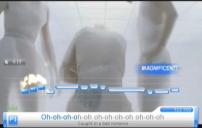 1396 x 886 - 150K
-
Transcription for polyphony is not the best but it’s less inelegant than flipping page or inserting a graphic unfortunately. I can’t afford Dorico and don’t like its solution anyway.
-
I certainly don’t think we are too dumb to sing square notes. My worship aids are replete with square note notation, and I transcribe all my psalm refrains into it too, barring the odd metered psalm for special days like Christmas. I’ve taught all my choirs to read it, and we chant from it at every rehearsal. But there is a place for transcriptions. You need to onboard people, for starters. But you need to onboard both the notation, and the style. Using transcriptions allows you to work on one issue at a time.
Ironically, for many things I’m convinced that square note notation is easier to read. For starters, the density of the neume groups makes seeing intervallic relationships much easier.Thanked by 1novusgordo


Welcome to the MusicaSacra Forum!
To participate in the discussions on Catholic church music, sign in or register as a forum member, The forum is a project of the Church Music Association of America.
Categories
- All Discussions21,875
- General Music Discussion8,564
- Job Openings297
- Management of Music Programs862
- Choral Matters539
- Church Documents and Rubrics540
- CMAA Notes307
- Events765
- For Newcomers: Read First26
- Sacred Polyphony567
- Hymnody900
- Gregorian Chant: General2,750
- ↳ Graduale Romanum and Liber Usualis372
- ↳ Graduale Simplex61
- ↳ Semiology65
- Vernacular Plainsong706
- Anglican Use and Anglican Chant73
- Organ, Other Instruments and Repertoire452
- New Composition/Works in Progress1,341
- Recordings238
- Music for Hispanic Ministry163
- Music Education: Children217
- Music Education: General223
- News Items247
- Positions Wanted3
- General Discussion: Catholicism742
- Amusements185
- General Discussion1,049
- Opinions119