
Cantai - the new impressive vocal synth on the block
-
Has anyone heard of Cantai? I downloaded the demo and it is quite impressive.
It's a vst that plugs directly into Sibelius and other scoring apps.
https://cantai.app/demo -
Have a look at the Discord channel where the users complain about the problems.
It certainly promises to be something good, with a wide range of voice types but there is much to be improved for classical singing.
It's $10/month, lifetime licence $149 is good value if you intend to go on using it.
A cheaper alternative is cantamus.app at €5/month but limited to one voice per staff. Adequate for its stated function of preparing rehearsal tracks for singers, not a synthesised choir which is the aim of Cantai.
-
Discord is a chat app.
-
Yes, it's the community discussion board. Cantai don't provide support there, any more than Cantamus do on their Discord channel. It'll only cost $10 to try Cantai for a month to see does it work with your specific music and desired voice types. You'll probably need to sign up (free) to their Discord channel to post problems and get the workarounds from those who have been there before.
-
I have it (was an early supporter for 2 years before a product dropped) but as of yet don't use it much. There are still rough edges. The good news is that development is happening at a breack-neck pace, and it is getting better. Early iterations had vibrato that would have made a billy goat blush. Recent choir voices have toned that way back (thank God). But there are still issues being worked out.
-
-
Dorico
-
Are we really talking seriously about music made with artificial voices? How is this possibly ok for religious use???
-
This is for playback and notation software purposes, which is not a religious use
-
correct. no one said anything about it replacing real singers during Mass. It's just so you can hear your score playback in notation software and possibly generate practice tracks for your choir.
-
A friend of mine pumped one of my recently finished scores through Cantai. Hearing "actual voices" sing it (cue AI debate) was crucial for the next step of editing. It's a powerful tool that I would highly recommend for the composing and editing process. I would not put the sample it produced out there for the world to hear because it was *bad,* like, a sloppy and sometimes drunk-sounding. However, the consonants and vowel noises made a world of difference listening to my score. So for personal use, great. For good sounding recordings, not a chance.
-
FWIW, while it takes manual intervention, SynthV choir voices can make a very acceptable demo for the world to hear after the composing process is complete.
Here's one of my 7 last words through Synth V. Not perfect, but perfectly acceptable and great to give amateurs an idea of how it should sound: https://youtu.be/Yh40OOS3as8 -
This is a great tool... I have just scanned in all the PAPER (with ink or pencil) comps I have composed in my lifetime... (have everything back to when I was seven years old) (see score attached).
It took three weeks, eight hours a day to get it done. 98% of them have never been performed. This tool will let the world hear a close simulation of these works. It really is an audio documentation of what exists on paper. This does not include all the works I composed in Sibelius which is probably also a thousand or so. The ones that are in Sibelius can now be turned into audio simulations so people can hear them too.
We (composers) would never promote using AI to replace real voices. God wants 'worshippers in spirit and in truth'. That comes from a human 'heart, soul, strength and mind'. That happens through lungs and voices supported by minds and hearts filled with love through dulia, hyperdulia and latria.
@ServiamScores
Nice!
I hail thee...
http://www.myopus.com/preview/sitio2026.mp4
One of the settings of Seven Words in my arsenal premiered in 2009 with string orchestra and choir.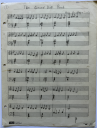 2502 x 3308 - 14M
 -
I'm finding Dorico WONDERFUL for my uses, especially for learning tracks. I'm using it in Dorico and am not having the problems that many people have. The Sibelius support is pretty new, and I've noticed it's the "new kid" that has the most glitches (it was MuseScore first, then Dorico). v. 3 was really the first useable product, and there have been 2 updates since.
-
I've been composing for just over a year, always in MuseScore. As an adult learner of violin and bass viol, with a few years lessons but otherwise self-taught in both playing and music theory, I find composing in MuseScore an excellent way to learn about making music. I've written some things that would have been impossible for me to play a year ago, but because every note is instantly rendered as I type it, my ear has led me to write things that have forced me to become a better player, such as shifting higher on the violin, or rhythmic challenges that hearing the machine-rendered phrase teaches me to play what I couldn't quite sight-read.
Now about Cantai. After learning in this discussion that Cantai exists, I did some online reading and decided to get it. I've never paid for any MuseHub sound libraries but Cantai is included in the MuseSounds Pro bundle so I paid $149 for a year's subscription, and spent most of yesterday trying to get Cantai to work.
WARNING to anyone considering Cantai: to properly run, Cantai requires certain processor chips in your computer. For example, on my 2020-era iMac (that runs perfectly, including every MuseScore use until yesterday), the intel core i5 processor will not handle the rendering of the vocal notes on the score into audio sounds in an audio file. So Cantai reverts to an online processing by their server, which takes many hours and often shuts down (giving "check connection" notifications despite my internet running fine and being logged-in to both MuseHub and MuseScore). After all day yesterday the online processing continues today, a rather brief score still incompletely rendered, so upon reaching the end of the rendered part, the vocal notes sound like a piano rather than sung words. So, for a viable work flow, do not pay for Cantai unless you have first verified that whatever processor is in your computer is suitable for "local" (in YOUR computer) rendering of the sound by Cantai. I have never experienced my computer processor being unable to run a program that is compatible with my MacOS, so I did not even know to check whether the processor will run it.
However, those passages that did successfully render via the online processing are, except for some small glitches, very beautiful! Real words sung instead of oohs and aaahs, so consonants and vowels give a realistic sound in playback and therefore better feedback for me as a composer trying to decide if it is right or needs revision. Just hearing those glimpses makes me want this Cantai software to really work in my MuseScore sessions --so much that I am already thinking frivolously of upgrading to a Mac that has an M-series processor instead of an old intel processor. If I were rich I would have ordered the new computer last night already, that's how much of an upgrade to vocal rendering Cantai is compared to the free MuseHub sounds I'd been using until yesterday.
Funny enough, the other libraries like Vienna Symphonic or Spitfire instruments I did not like more than the free instruments I was already using, although in different scores I will have different instrument voices and might revise that opinion as I explore those libraries.Thanked by 1probe -
WilWilkin, YESTERDAY they came out with a Dorico/Sibelius version that supports Intel Macs. I'm assuming that's coming to MuseScore at some point (apparently the architecture is a little different, which is why they can put both on the same installer, and not MS)
-
Well, I have to say, my initial skepticism has been put in its place. The updates of the last few days have really resulted in a marked difference from the last time I tried it. I arranged Remondi's O Sacrum Convivium into English and made English and Latin demos of the piece. WOW. wow. These aren't perfect by any means, but entirely passable, and perfectly adequate for a practice track. I'm gobsmacked.
Latin:
https://youtu.be/8QvFKmQEeDI
English:
https://youtu.be/bxkkupsACrk
Links to free scores of both the Latin and new English adaptation:
https://catholicsacredmusic.com/blog/lets-celebrate-5k-free-remondi -
@ServiamScores
What skepticism did you have prior to today? What computer and operating system and music software are you employing? -
The last time I tried it was a few months ago, and it was still terrible at that point, IMHO. The early releases had vibrato wide enough to drive a barge through. (the developer is an opera man) thankfully, he reversed course and recorded some normal singers (lol). There were many more intonation / pronunciation issues earlier on as well. These have also drastically improved. Now with their otteto voices (renders more than one person per part) It's genuinely passable.
I'm on an m2 mac pro with 32gb ram running Cantai in Dorico. -
I’m looking to get a new MacBook soon and the 16gb on an M5 or 6 chip is already an improvement from my pre-M series machine lol.
-
That is terrifyingly good. We used to think recordings ruined the ability to appreciate live performance. AI voices will sideline new recordings because recordings will be too expensive to produce.
-
I don't know, davido... I will always prefer to 'listen' to humans. For informational or instructional purposes, AI is a good tool, but that is as far as I would prefer to ever go in terms of aesthetic listening and 'breathing' in the music... don't you agree?
-
Francis, “prefer” is also the word I would use. But as the kids grow up into a world we’re AI voices are ubiquitous, I think human voice recordings of new music or new recordings of old music may become just an expensive preference. Sort of like collecting and preferring vinyl in 2026Thanked by 1ServiamScores
-
Nope.
-
as the kids grow up into a world we’re AI voices are ubiquitous, I think human voice recordings of new music or new recordings of old music may become just an expensive preference. Sort of like collecting and preferring vinyl in 2026
I absolutely hate contemplating this...but unfortunately I could easily see it happening. -
This comment from Youtube is what I think: I have been quite impressed by Cantai. Not perfect but it does give a good idea of the music.
it's an uncanny valley, which is why it won't replace recordings of real humans. Why bother with new interpretations and research if we can't even sing it, we just feed it to the AI? It also fundamentally misunderstands who is listening to classical and early music…people who might use AI, but who, you know, have reasons to not use it in artistic production to the point of trading off the conveniences of AI tools for shutting it all down if the art isn't produced by real humans. Millennials (my generation) aren't immune from AI slop, but we certainly are more sensitive to it than boomers, surprisingly. -
I think it should be a tool for arrangers/composers to hear what they've written. And by no means should it replace ANY performance. So far Cantai has helped me proofread some of my works. I probably won't purchase it and use it long term, but trying it for a month I've been impressed by the advancement of Cantai.
Here's a sample of my Nunc Dimittis in Cantai. There are probably some problems with the Latin pronunciation
-
Me too. I caught an error before publishing a work just last week when I realized a chord was off upon hearing it sung. I was suddenly very grateful.So far Cantai has helped me proofread some of my works.Thanked by 1probe -
I think it is a great ‘realisation’ tool. Good for composers and arrangers to perfect a score. It is also good to ‘demo’ the score for those who might perform it. It is probably a good tool for practice tracks. eg… practice your part with your part up in the mix for learning, then back it off or remove your part for drilling it home. I absolutely believe it should NEVER be used in a live performance of a concert or a liturgy.
I have hundreds of vocal comps that no one has ever heard. Now everyone can hear a simulation without imagining how the vocals are going to sound. -
I returned to this discussion to praise the new version of Cantai for MuseScore, which I installed last night. I am running Cantai through MuseScore on a 2020-era iMac with Intel processor. I wrote above two weeks ago how terrible it ran on my computer, but the new improved version of Cantai runs BEAUTIFULLY and fast on my old iMac! They fixed it! So I retract the warning I typed here in a message above. They really fixed the software nice, it now works on MuseScore even on an old Mac. Of course you should still check whatever technical requirements might remain before buying it for your computer. But those tech requirements just loosened up to include mine!Thanked by 1CHGiffen
-
tbh this is a good time to point out that it’s now past the end of the line for most Intel Macs (whether it’s fair that you could have purchased one in 2023 and gotten 3/5 or less of a typical lifespan is another question). But six years is typical so you should consider upgrading to a newer M-series computer.
As an aside, I don’t like Muse Hub (it’s also tricky to remove despite the drag and drop to Trash that should work trivially), the sounds are slow to install and the MS Studio program doesn’t make turning on Muse Sounds or switching back easy especially if you’re mid-project, and we still haven’t gotten MS Studio to run in a single program instance so it breaks keyboard window shortcuts, Stage Manager, and the dock (I can’t see what is in a given window, as it attempts to show me every window, and program tabs were removed, but I can’t use the bar to create tabs as conceived by the OS either).
The Muse Group offer also makes it really hard to figure any of the money things out, and I’d be concerned that they’re going to mess it up just like the dot com website (which is a scam). -
"musescore .COM scam" sounds a bit strong - after all they do have license agreements with Hal Leonard and the rest for the official scores. But it certainly attracts negative reviews like as on reddit composers.
Checking my account, I have a "PRO+/Learn Lite" account for €54.99/year which allows download of Community scores, not Official (copyright) ones so that looks OK to me.
Now that I read the T&Cs, I don't actually need PRO+ to be able to download Community scores . But bizarrely PRO (no plus) is "from €5.99 weekly" which is €300/year so that makes no sense. I'll let it stand, due at the end of this month.
-
It’s not a bit strong, it is simply true. Their dark patterns and refusal to give refunds in full is exactly what a scam is. Also, it used to be that you could download things for free…and then they wouldn’t let you log in without subscribing unless you knew how to click around things. It’s bad!
I also don’t really like the behavior of some of the people involved. Go read over on r/Musescore anything to do wit my what is described in the r/composers post. Maybe my conscience should be pricked more, but I’m too invested to be able to switch right now, especially without paying (and they don’t build software correctly on Mac: you have all of these other programs much like Adobe…) and MuseScore Studio makes presentation of early music that way that I do it somewhat better than in Dorico (although the meterless option is attractiv).Thanked by 1probe -
The Musescore Studio (MSS) notation software itself is an open-source project created by many unpaid developers. I find it to be an excellent app for composing modern music (ie, in regular measures and played back at A=440). Some of those gracious developers also dwell in the discussion forums at musescore.org, just to help users of MSS. Confusingly, Musescore at musescore.com is a for-profit operation that sells digital sheet music, and which, judging by the myriad complaints of unwary subscribers who feel duped or abused, wrongly end up at the musescore.org forums to complain. Part of the confusion stems from the MSS app being inherently connected to Musescore (.com) in order to facilitate easy (and free) cloud storage of your MSS scores (you also can and should store those files on your computer, so the cloud versions are just backup). When first setting up MSS, you are prompted to create a Musescore.com account just for that cloud storage function. You can select the basic level for free, which is what I recommend. Having read so very many complaints about inadvertently signing up for subscriptions that are hard to cancel, my advice is to not give it your credit card or at least be very careful.
-
Well, originally everything was more clearly connected Musescore, then the dot com site became a source of funding…and while MS Studio is open-source, Muse Hub and Muse Sounds are closed and proprietary. Moreover the teams are separate.


Welcome to the MusicaSacra Forum!
To participate in the discussions on Catholic church music, sign in or register as a forum member, The forum is a project of the Church Music Association of America.
Categories
- All Discussions21,844
- General Music Discussion8,548
- Job Openings292
- Management of Music Programs862
- Choral Matters539
- Church Documents and Rubrics540
- CMAA Notes307
- Events760
- For Newcomers: Read First26
- Sacred Polyphony567
- Hymnody898
- Gregorian Chant: General2,749
- ↳ Graduale Romanum and Liber Usualis372
- ↳ Graduale Simplex61
- ↳ Semiology65
- Vernacular Plainsong704
- Anglican Use and Anglican Chant73
- Organ, Other Instruments and Repertoire452
- New Composition/Works in Progress1,342
- Recordings238
- Music for Hispanic Ministry163
- Music Education: Children217
- Music Education: General223
- News Items247
- Positions Wanted3
- General Discussion: Catholicism742
- Amusements185
- General Discussion1,048
- Opinions119