
New chant inspired Magnificat for women's choir
-
Although there might not be many here that sing in or direct a women's choir, but for those wo are, my new three part Magnificat might be of interest. I have made a video with score underlaid (sung by Julie Gaulcke, accompanied by me) and the sheet music is available from my website.
I had written this piece for the "Music Award for Choral Music" presented by edition49 and Musikwerkstatt Siegburg, where it was awarded a shared third place out of approximately 300 submissions from 19 countries, which is quite a honor for me. -
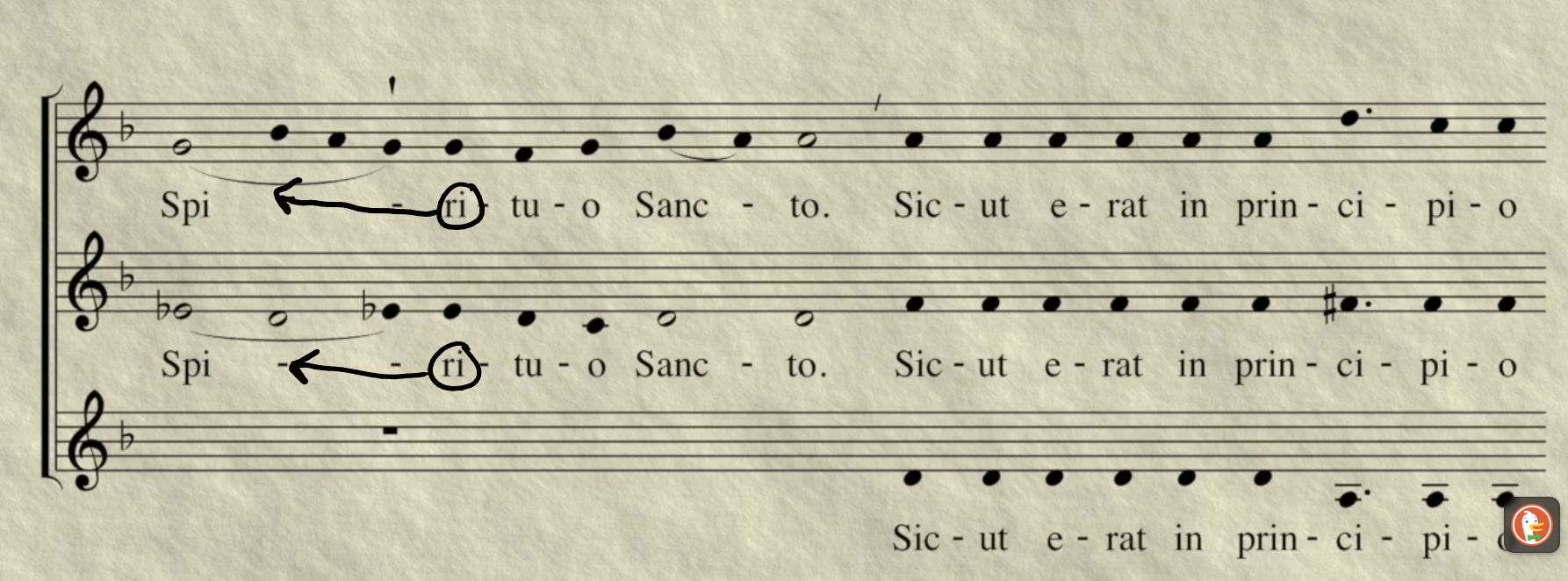
Its very nice, but note that some of the accents on the latin words are incorrect. For example "Divites" is not di-VI-tes, but DI-vi-tes or another example "Spirituo" in the Doxology has should have the accent on spi-RI-tu-o, not SPIR-i-tu-o... these are of course common mistakes world wide- and its just nitpicking.... but it is very nice, very medieval flavor.Thanked by 1CHGiffen
-
@monasteryliturgist Many thanks for having such a close look at the piece. Concerning "DI-vi-tes", the stress is marked in the score by means of an ictus, and Julie actually observes it. If this does not make clear how it is meant to be sung, I would greatly appreciate suggestions how to notate it instead.
Concerning "SPI-ri-tui" versus "spi-RI-tui", it seems that both variants are common. Out of curiosity, I have checked all (?) doxologies in Monteverdi's "Selve morale" and counted nine times with the stress on the first syllable (SPI-ri-tui) versus seven times with the stress on the second syllable (spi-RI-tui). This is almost a tie, albeit with a slight favor towards SPI-ri-tui. Schütz in his Latin Magnificat also set it as SPI-ri-tui. -
It’s complicated. The word accent is what it is. The musical accent is always a bit problematic, because the nominative and other declensions have the accent on spi-, by virtue of being three syllables with the long vowel being where it was when vowel length was observed.
Almost everyone gets it wrong. Ditto Ádjuva. -
No problem. Yes, as Matthew stated--its complicated. I believe a lot of this has happened because of ecclesial latin being sung by memory in different language regions...so sometimes depending on the country where a chant might have originated accents and pronunciations can change... for example in spanish countries they often pronounce "Mihi" as "Miki"...I've attached a picture of one of the tones with Magnificat accents printed if its helpful.
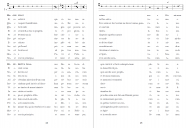 1968 x 1352 - 199KThanked by 1Xopheros
 -
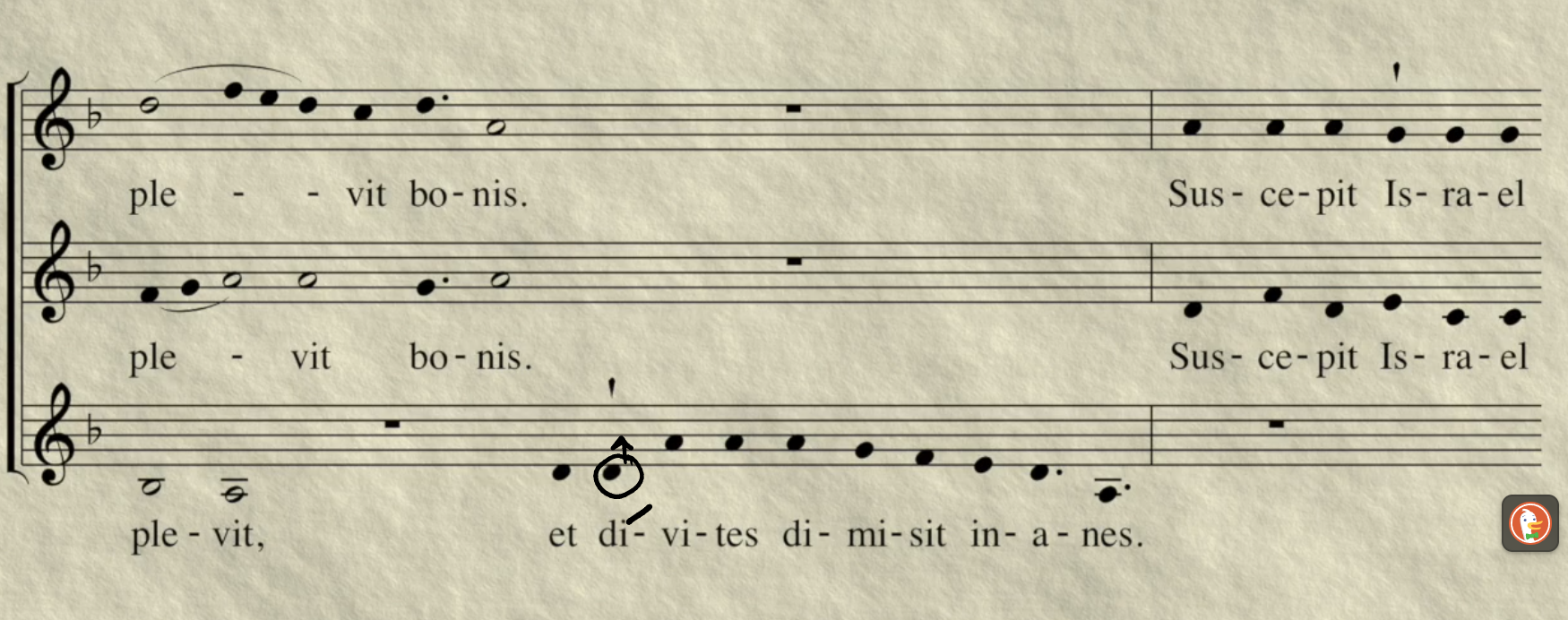
In addition, here is one way you could fix it--as you asked... but of course you would prob. have to play with it--this is just my first inclination. God Bless!
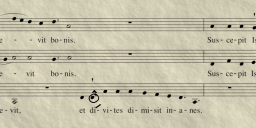 1750 x 692 - 1M
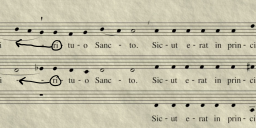 1786 x 662 - 1M
 -
Tbh I would love to do it here. As I noted elsewhere I am interested in lute accompaniment. It’d be fun for communion on a Marian feast (I’m okay with occasionally removing this from the office especially as it is simple enough and through-composed).
-
@monasteryliturgist Thanks for the suggestions. Why do you think that it is not possible to stress "DI-" when it is sung on a D instead of an A? I understand that intuitively one whould give a leap a particular stress, but that is the reason why I added the "ictus" (vertical stroke) so that this does not happen. Is the problem that the music is non-metric?
-
I guess its a little complicated to explain without recording myself, but typically when you have a note change like that--singers automatically will put the stress on the note change-whereas if you keep it on the same note, it can have a more obvious stress on the di by voice stress... Yes, it might be more problematic with non-metric music. You have to think about people who might not necessarily know where the accents are when the sheet music is handed out and that they are going to interpret it in the most intuitive way, by note change.. Not sure if that makes sense?
-
It becomes more complicated if you take into account that the meaning of "Et divites dimisit inanes" is illustrated by a circulatio (they have come, but he sends them back) which is even exaggerated by a subsequent downward leap. This means that there must be a stressed low note (D) and the most logical way is to put it on the stressed syllable of "divites" which then corresponds to the same note for the stressed syllable of "inanes".
The only way to circumvent this deliberate stress on a low note inherent to the circulatio is to use a different musical figure. In this case a katabasis would also make sense:A A G G G G F E D2 A,2
w:Et di-vi-tes di-mi-sit i-na-nes.
OTOH, I would rather first see how it works out in practice. Immediately after I published the piece on my website, I have been contacted by a (good) singer that she will sing it with some friends in the very near future and she promised to send me a recording. Let's see whether the problem that you conjecture actually is a problem at all. The identical possible problem occurs at "Sicut locutus est", so this is another place to check whether this musical figure might be misleading for unwary singers. -
Yes, I think you are just going to have to experiment and hear what different groups do with it. There is never a perfect solution to these types of things... but good to be aware of them. God Bless you and Onward!

Welcome to the MusicaSacra Forum!
To participate in the discussions on Catholic church music, sign in or register as a forum member, The forum is a project of the Church Music Association of America.
Categories
- All Discussions21,849
- General Music Discussion8,551
- Job Openings293
- Management of Music Programs862
- Choral Matters539
- Church Documents and Rubrics540
- CMAA Notes307
- Events761
- For Newcomers: Read First26
- Sacred Polyphony567
- Hymnody898
- Gregorian Chant: General2,749
- ↳ Graduale Romanum and Liber Usualis372
- ↳ Graduale Simplex61
- ↳ Semiology65
- Vernacular Plainsong704
- Anglican Use and Anglican Chant73
- Organ, Other Instruments and Repertoire452
- New Composition/Works in Progress1,342
- Recordings238
- Music for Hispanic Ministry163
- Music Education: Children217
- Music Education: General223
- News Items247
- Positions Wanted3
- General Discussion: Catholicism742
- Amusements185
- General Discussion1,048
- Opinions119