
Preface to the Graduale Romanum (1974)
-
What do you think about the points below compared to today’s rubrics? I am aware that the rubrics since 1974 have changed. Just looking for commentary on the changes.
1. After the people have assembled, and while the priests
and ministers are approaching the altar, the entrance
antiphon is sung. Its intonation may be shortened or protracted,
or even better, the chant may be begun immediately by
everyone. In that case, the asterisk, which in the Graduale
indicates the cantor's part, is only to be taken as an indicative sign.
Before the final repetition of the antiphon, the Gloria Patri
and the Sicut erat may be sung together as the final verse.
If the singing becomes too protracted through the repetition
of the Gloria Patri and the antiphon, the doxology may be omitted.
When the procession is very short, only one verse of the psalm
need be used, or the antiphon alone may be sung without adding any verses.
8. When the sequence occurs, it is sung after the final 'alleluia
by the cantors and choir alternating or by two parts of the choir alternating.
Amen is omitted at the end. If the Alleluia and its verse is not sung, the sequence is omitted. -
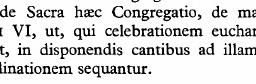
People seem to be distracted by the reference to the "New Gradual" in deo27's attachment (an image from Sacred Music).
[I've deleted the off-topic comments for the sake of clarity.]
But what was deo27's post about? Did he have a question or a comment on the rubrics he quoted? -
I can't think of any rubrical changes after 1974 that affect those two elements (the introit and the sequence). Of course the introit can be replaced by a vast number of "other suitable song[s]", but that's been in place since 1970.
Can anyone point to changes since then?
And for what it's worth, my own translation of the Graduale introduction is here:
https://media.churchmusicassociation.org/pdf/ordo-cantus-missae.pdfThanked by 1deo27 -
Chonak
The placement of the sequence - from post-Alleluia to pre-Alleluia - changed in this century with the third edition of the Roman Missal.
GIRM #64: The Sequence which, except on Easter Sunday and on Pentecost Day, is optional, is sung before the Alleluia. -
As has been explored before on this forum and also at CCWatershed, there was a word changed ("post" to "ante") between the 2000 and 2002 versions of the GIRM. See this link:
https://www.romanrite.com/j040402.html
One might add that in the older versions of the sequences, "Amen. Alleluia" is included at the end of the sequence. I think one can make a reasonable case, when singing the Gregorian melodies, for retaining the traditional order (Alleluia-Sequence), following the Graduale and also the Gregorian Missal. But if you want to adhere strictly to the GIRM (2002, replacing the more historically consonant 2000 version), the Sequence should come before.
Similarly with the introit, one could reasonably make the case for singing the doxology, following the rubrics quoted in the original post, when singing the Gregorian melodies. It is certainly part of the tradition of the Roman Rite that can probably be incorporated in the Pauline Rite without too much difficulty. I think this case is especially strong in communities that celebrate both forms of the Mass.Thanked by 1novusgordo -
Right, and it’s apparently in the appendix. St Louis Abbey did, so we do too, even if the incensation would not take long enough to otherwise justify it, because it’s what our folks know.
We will probably never have the question of order on. a day with sequences, but we will follow the trad one if we ever find ourselves in times of trouble. -
I've heard the sequence dilemma explained as that if you are doing the latin gregorian melody (the proper one in the GR) then the sequence should be before, but if you do it in the vernacular and/or to another tune then the sequence should be after. The GIRM and the GR are both right. If this is incorrect, someone please correct me
-
The principle of non-contradiction suggests they can't both be right. Rather, the instructions in the GIRM ought to be definitive. However, this particular ordering (Sequence before Alleluia) is so silly, that it seems entirely sensible to retain the traditional ordering. There is a fitting Italian phrase for this situation: "Non si può, ma si fa."
-
The norms in the front of the Graduale '74 are reproduced from the 1972 Ordo Cantus Missae, and its letter of approval by Cdl. Tabera and Abp. Bugnini (reproduced in the Graduale also) says that the norms apply whenever the celebration of Mass is carried out in Latin.
So it might be reasonable to treat any differences between the OCM/Graduale norms and the GIRM as an exception to be applied when the liturgy is celebrated in Latin or (perhaps more broadly) when the chants of the Mass are sung in Latin.
 493 x 84 - 21KThanked by 1deo27
 -
FWIW, when it comes to sequences, the Latin of the IMGR of the current (2002) Missale Romanum does not make or grandfather, as it were, such a distinction, and specifically covers singing them:
64. Sequentia, quæ præter quam diebus Paschæ et Pentecostes, est ad libitum,
cantatur ante Allelúia. -
Yeah but they clearly don’t anticipate the Gregorian Alleluia. The Sequence ante Alleluia arrangement only makes sense if you use a triple congregational Alleluia.
-
It was called the sequence because it always just followed another particular liturgical movement. Any rubric would have been superfluous. The sequences were “explainers” of each mass. They read much like the lives of the saints and connect them, as well as other theological constructs, to the gospels.Thanked by 1CHGiffen


Welcome to the MusicaSacra Forum!
To participate in the discussions on Catholic church music, sign in or register as a forum member, The forum is a project of the Church Music Association of America.
Categories
- All Discussions21,851
- General Music Discussion8,551
- Job Openings293
- Management of Music Programs862
- Choral Matters539
- Church Documents and Rubrics540
- CMAA Notes307
- Events762
- For Newcomers: Read First26
- Sacred Polyphony567
- Hymnody898
- Gregorian Chant: General2,749
- ↳ Graduale Romanum and Liber Usualis372
- ↳ Graduale Simplex61
- ↳ Semiology65
- Vernacular Plainsong704
- Anglican Use and Anglican Chant73
- Organ, Other Instruments and Repertoire452
- New Composition/Works in Progress1,342
- Recordings238
- Music for Hispanic Ministry163
- Music Education: Children217
- Music Education: General223
- News Items247
- Positions Wanted3
- General Discussion: Catholicism742
- Amusements185
- General Discussion1,049
- Opinions119