
Do congregations prefer the contemporary slop?
-
My parish, as with many parishes, struggled a bit with congregational singing. They often just leave it to the cantor or the choir. One of my coworkers who has been here for a couple decades just told me that it’s because the music has changed. She remembers when this parish had more of the sappy contemporary stuff that was familiar to people of a certain generation; but as it has gradually veered more traditional, thanks in large part to my predecessor (though certainly exacerbated by me), the people don’t sing anymore. Do you hear this story in your parishes? Does this ring true of your congregations? How do you approach something like this? I am hoping to offer a music-reading course one of these summers, since part of the complaint is that if it’s not familiar by ear, they won’t bother. But I partly expect that if I offer something like that hardly anybody will show up. Not sure what to do about it.
By and large, the parish has been very receptive to the direction that I’ve taken the music program here. I’ve received hardly any grief about it; occasionally people do wistfully long for what they’re familiar with, and usually that’s more contemporary stuff from OCP or wherever, but occasionally it’s a classic like Holy God, We Praise Thy Name, or Lift High the Cross, which they love. But I feel like I should be doing something more to encourage them to refamiliarize themselves with the huge reservoir of traditional hymnody.Thanked by 1Don9of11 -
It's a good question. When I get compliments about the music, it's almost always about a more contemporary piece (usually the music). When I get complaints, it's usually about a more contemporary piece (invariably the words). LOL
I find that a lot of contemporary music is musically simple. It's mostly I-IV-V progressions, with the odd ii thrown in. That makes it easy for the ear, I think, because that's what most of them will be accustomed to with popular music. I am not great at doing things by ear, but even I can pick out an upper harmony on the second or third pass on the refrain. It's also structured with a refrain a lot, which makes it easier to pick up and remember.
Older music tends to be more musically complex, such as more complex harmony, or it's modal, or it's from Bach or something like that (those "harmonized by Bach" hymns are the bane of my existence). It also tends to be more theologically dense. So it is harder to just "pick it up" vs. a song that resembles a pop or folk song.
The reality is that most people have virtually no music education, so unless it's musically spoon-fed to them they're not really interested. And we, as a whole, tend to be poorly catechized, so more theologically dense and appropriate text isn't a priority.
-
IME, it varies.
One issue that looms huge in this discussion is generational turnover, and by that I don't principally refer to the supposed preferences of Silents-Boomers-early Xers versus late Xers-Millennials-Zoomers. Rather I principally refer to: the intersection of (a) education (and the lack thereof) x (b) technology.
(a) The ability to read music confidently and the ability to sing or play an instrument with at least a threshold level of skill appears to be far less widespread than it used to (the decline is multi-generational).
(b) The advent of mobile devices that could carry your entire music library, followed by streaming subscriptions, greatly intensified the cultural pattern that music is something heard passively.
Traditional musical idioms/forms that sound good and inviting to join without any need for accompaniment are, in my experience, the best threshold for making it possible for more people to sing. But that doesn't mean people will feel compelled to accept the invitation; it's merely a more plausible invitation.
As for vernacular texts, that can be mixed regardless of traditional vs contempo. For example, in the latter category, there's a fair representation of text choices that raise eyebrows and titters even among people who prefer the contempo idiom; that's a function of insufficient time to sift/winnow that chaff out (what we have kept in repertoire of the older idiom represents the fruit of a much longer sifting/winnowing process that we are largely unaware of). In the traditional category, I would not lead with choosing old texts that could readily come across more as twee than having gravitas.
In practical terms, a few other issues:
1. Pew Catholics (unlike Pew Lutherans, Methodists, Episcopalians and some others) typically avoid what I refer to as "singing naked" - that is, they are shy about hearing themselves sing, and more confident when there are confident singers not too far away from them in the pews. I am a huge believer in not sucking all or most confident singers out of the pews into the choir and in encouraging choristers who are not singing with the choir for divers reasons to seat themselves in the middle to front-of-back of the congregation. On the other hand, said Pew Catholics are much more prone to bow out of singing on all but best known hymns if the instrumental accompaniment (or ampified cantor) is too loud or overbearing; they don't take it as a challenge to match, but as a "why bother?" moment. (That is, shy Pew Catholics want to hear *voices* near them, not instruments overpower them.)
2. Acoustics: not all acoustics are equally suited to congregational singing, musical idioms, and instruments.
3. More subtly - Tempo: the "spaciousness" beloved in some Episcopalian musical traditions is rarely well received/executed among American Pew Catholics. The late great Theodore Marier evinced some well-founded knowledge about this by choosing traditional tune melodies whose verses lines could be sung through by congregations without breath-catch pause or a break in the energy of the line (think of arsis and thesis in chant melodies; Marier certainly did in this regard) so long as the tempo didn't invite sagging or breaks. Not all tunes are equal on this point, but it's worth diagnosing one's choices from this perspective. -
After having spent nearly 50 years as a choir member and now finding myself in the pews, I can say that only a few parishioners are singing — and I don’t think the reason is as simple as “the music got more traditional.”
I recently wrote a study, A PASTORAL LOOK AT THE HYMNS WE SING: Past & Present — The Parish Hymnody Study, along with its companion document What Is a Catholic Hymn?, after watching a parish slowly lose its shared musical voice over time. What struck me most in that process is that congregational singing is less about style and more about musical memory, stability, and trust.
In the parish I studied (my parish) , people once sang robustly — not because the music was “easy” or “contemporary,” but because it was consistent, doctrinally clear, and repeated year after year. The hymns became part of the parish’s lived prayer. When that stable repertoire disappeared (often unintentionally, through new hymnals and rotating selections), people didn’t stop singing in protest — they stopped because the music no longer belonged to them.
One thing I’ve learned sitting in the pews is this: most people won’t sing music they feel they’re only visiting. They sing what they feel they own. I’m also sympathetic to your instinct about offering a music‑reading course — but I suspect you’re right that attendance would be thin. In my experience, formation works best indirectly: by patiently rebuilding a core repertoire of truly Catholic hymnody, sung often enough that people recognize it not as “new” or “old,” but simply as ours.
The irony is that many of the hymns people now describe as “traditional” were once unfamiliar too. They became beloved because they were sung regularly, supported confidently, and chosen for the liturgy they served — not because they were immediately accessible by ear.
So yes, I hear this story often. But I’m no longer convinced the solution is moving backward stylistically or forward pedagogically. I think it’s pastoral patience: fewer hymns, chosen carefully, sung repeatedly, and allowed to take root. When that happens, congregational singing usually returns — quietly at first, and then all at once. -
When I took my last music position -stayed there 20 years - my predecessor had thrown in new music nearly every other week. The congregation rarely learned anything before it all changed again. Who says the so-called contemporary 70s stuff is easy to sing? It is not. I chose approximately 30 or so traditional hymns that would get us through the liturgical year and work within the limitations of the hymnal. They learned those hymns and sang them well. It just takes a little time and as the previous poster indicated, consistency.
-
I appreciate the previous comment — it closely mirrors what I’ve observed as well, particularly regarding the role of consistency over time.
One factor I don’t hear discussed very often is the difference between how musicians and congregations experience repetition.
What can feel boring or excessive to those planning the music — for example, repeating hymns within a season or using more than one Marian hymn — is often exactly what allows the congregation to gain confidence. Parishioners rarely stop singing because they’ve heard something too often; more often, they never hear it often enough for it to become truly familiar.
Musicians are understandably trained to value variety and contrast. Congregations, however, learn to sing through stability. When a repertoire changes frequently, even good and worthy hymnody can remain silent simply because it never has time to take root.
In my experience, congregational singing grows most reliably not through novelty or instruction alone, but through patient repetition — a smaller body of strong hymnody, returned to often enough that it becomes shared prayer rather than something new to navigate each week. -
I served for 10 years in a parish for a Sunday evening (last gasp) mass. Because it wasn't in a particularly "good" part of town (there were visible bullet holes in the parish hall), the attendance varied widely according to the seasons. In the dead of winter, we were lucky if we had 30 people. But in the height of summer, sometimes this mass would have 75 or more people.
When I arrived, I took a very conservative approach to hymn selection. If we had to repeat 2 or 3 hymns every Sunday in Advent, or in Lent, I thought it was worth it, because the hymn singing continued to improve. I always soloed out the melody for the introduction, and the intros were not always short!
The pastor was very pleased with what I did. I would add about one "new" hymn every two or three months. I thought I was being adventurous when I scheduled "The Church's One Foundation," but was pleased that they sang it reasonably well. So I scheduled it for three more Sundays, and the confidence increased.
By the end of 10 years, I always had robust singing. It broke my heart that a change of pastors brought all of my hard work to and end. But, the few folks who knew me back then still great me fondly when I attend the parish festival.
I had to remind myself, this was a struggling parish, not a major parish. -
She remembers when this parish had more of the sappy contemporary stuff that was familiar to people of a certain generation; but as it has gradually veered more traditional, thanks in large part to my predecessor (though certainly exacerbated by me), the people don’t sing anymore. Do you hear this story in your parishes? Does this ring true of your congregations? How do you approach something like this? I am hoping to offer a music-reading course one of these summers, since part of the complaint is that if it’s not familiar by ear, they won’t bother. But I partly expect that if I offer something like that hardly anybody will show up. Not sure what to do about it.
Yes this rings true of many congregations. My two predecessors pushed traditional hymnody and chanted English propers on a congregation that is mostly boomers and up. I'm still mending fences and apologizing on behalf of the parish to people who were told they were less than entirely good Catholics for their musical tastes.
I've brought back some of the old songs and introduced some contemporary ones while keeping the most important hymns and chants. Congregational singing and choir participation is up significantly.
No one should play slop of any genre at Mass. There are many modern style songs of high artistic value to choose from.
Likewise, no one should be playing slop Gregorian chant at Mass, but that has absolutely been happening with the proliferation of half-baked English chant propers I currently see being marketed.
In my experience people want to sing at Mass. By and large people want to sing familiar songs. -
I’m struggling with introduction even one new hymn per week of the Easter season. This is all the more problematic without an organ. Some of the tunes are too chromatic even if we had an organ, and they don’t know the texts. There are also not many Paschal Time options; the St John of Damascene texts are explicitly for Easter so I feel a bit discouraged. And that’s looking at the two Episcopal hymnals of the last century, to Liam’s point about the winnowing process.1. Pew Catholics (unlike Pew Lutherans, Methodists, Episcopalians and some others) typically avoid what I refer to as "singing naked"
Yes and we have some problems. Our 8:30 NO Mass with hymns might as well not have any, and while the phenomenon described means that the organist and lone chorister have full freedom aside from the final Marian antiphon always sung, it’s a bummer that the people hardly sing even carols.
On the other hand I’m going to have to speak to someone in the congregation who sings flat and loudly and sings out of turn on Gregorian hymns that the cantor alone (me) intones at benediction; everyone else understands this. There are written instructions and frankly the possibility of flubbing it was made worse when I realized that I then had to sing over someone.
The late great Theodore Marier evinced some well-founded knowledge about this by choosing traditional tune melodies whose verses lines could be sung through by congregations without breath-catch pause or a break in the energy of the line (think of arsis and thesis in chant melodies; Marier certainly did in this regard) so long as the tempo didn't invite sagging or breaks.
We have never formally had this discussion but we always breathe in time when there’s a question of a breath in a hymn such as Lead kindly light (SANDON) where you need one but it might lead to a pause or sagging tempo if you don’t do it right.I think it’s pastoral patience: fewer hymns, chosen carefully, sung repeatedly, and allowed to take root. When that happens, congregational singing usually returns
My situation is different because we already have congregational singing. But we have a monthly (or seasonal) hymn: it might change for feasts or special occasions (and it is sometimes the same on feasts: we use the devotional months tied to feasts as a guide sometimes). But we use it multiple times a month. I now add a different hymn each week after Vespers to build our repertoire. For example we did Jerusalem the Golden to AURELIA (more reusable than EWING, and I love the tune) for Laetare.
I hope to go approximately every other week within a year. -
Also
What can feel boring or excessive to those planning the music — for example, repeating hymns within a season or using more than one Marian hymn — is often exactly what allows the congregation to gain confidence. Parishioners rarely stop singing because they’ve heard something too often; more often, they never hear it often enough for it to become truly familiar.
Musicians are understandably trained to value variety and contrast. Congregations, however, learn to sing through stability. When a repertoire changes frequently, even good and worthy hymnody can remain silent simply because it never has time to take root.
I agree but I also don’t, because hymns are secondary for me, as much as I like the congregation singing anything that we invite them to sing. The upshot is that they seem to sort of know the melody for v 1 and hearing parts for interior verses doesn’t kill them when we finish in unison.
As to too much variety that is a real risk and a problem right now as we don’t have the organ, but I know of parishes that do the same O Salutaris and Tantum concluding with Holy God five times a week or more. The singing is still not good (and it’s not acceptable quality-wise to me even before we consider the congregation’s enthusiasm). So I’ll take singing DUGUET and ST THOMAS “only” approximately thirty Thursdays versus almost 50. -
Oh, and while we are considering possibly unnecessary obstacles to singing-shy Pew Catholics: key/pitch and whether the shape of a melodic line invites or discourages participation by such singers. What works for singing-confident Pew Lutherans Et Al. does not readily swim the Tiber except for Christmas standards and the like.
Consult the voices of your very weakest mezzo and baritone* choristers in terms of what keys/pitches and melodies are most plausible to for Pew Catholics to sing in early through mid-morning vs midday through evening AND early in the Mass vs later in the Mass (Pew Catholics get NO warmups).
* Why them? Because they represent over a majority of typical voice distribution, while true soprano, contralto, tenor, and bass voices are significantly less typical in the pews even if they are more typical among music directors and organists (who, if they have perfect pitch, must be able to transpose according the singing needs of the pew singers - I vividly remember a TA in my second year of music theory (after a year in high school) deliberately transposing his sight-singing exercises by a tritone after taking first attendance of those in the classic who identified as having perfect pitch - Mr Giffen, did you ever have reason to encounter a different Chuck in the Music Department at Mr Jefferson's University? Being a hornist drilled to do all manner of transpositions on a dime, including the dreaded tritone - hey, Brahms' Second!, scored in B for horn but played on an F instrument - I could not help but love that).Thanked by 1CHGiffen -
I have taken down a hymn or two from the 1982 key.
We do the Willcocks Hark with the descant in G. I know why some would take it down to F, but it really does not sound right. I’d rather not do the descant in that case. -
CS Lewis had this riff in one of his books, maybe Screwtape, about a lady who complained about her toast not being what it once was. She wasn't taking into account how much younger and healthier she had been back then, and how much more involved in other things that made her happy and put less pressure on the toast.
-
I don’t. I also ran into a few families from the Mass I attend at my Verdi’s Requiem performance with our Philharmonic Orchestra and Chorus last weekend, so clearly there are families who are familiar with quality music.
-
Musicians are understandably trained to value variety and contrast. Congregations, however, learn to sing through stability. When a repertoire changes frequently, even good and worthy hymnody can remain silent simply because it never has time to take root.
In my experience, congregational singing grows most reliably not through novelty or instruction alone, but through patient repetition — a smaller body of strong hymnody, returned to often enough that it becomes shared prayer rather than something new to navigate each week.1. Pew Catholics (unlike Pew Lutherans, Methodists, Episcopalians and some others) typically avoid what I refer to as "singing naked" - that is, they are shy about hearing themselves sing, and more confident when there are confident singers not too far away from them in the pews. I am a huge believer in not sucking all or most confident singers out of the pews into the choir and in encouraging choristers who are not singing with the choir for divers reasons to seat themselves in the middle to front-of-back of the congregation. On the other hand, said Pew Catholics are much more prone to bow out of singing on all but best known hymns if the instrumental accompaniment (or ampified cantor) is too loud or overbearing; they don't take it as a challenge to match, but as a "why bother?" moment. (That is, shy Pew Catholics want to hear *voices* near them, not instruments overpower them.)
I think these are really important observations. I know I sometimes fell into that novelty trap, but I've really come to learn to value of a stable hymnody.
I started a job a few months ago that has as part of my duties to support the music program at our school. The actual music teacher is only 0.5 and we share her with another school (and our enrollment has increased 20% over last year), so there's no time for additional things outside of the government-mandated curriculum, which we MUST meet to keep our government funding (I am not in the US, so our funding structure is very different).
We've only recently returned to having the kids coming in cohorts to what we refer to as "class Mass", with a different cohort each week for 3 weeks, and then "school Mass" on the fourth week (it was suspended during Covid and we are only now able to return to this format - School Masses continued to happen all along). I am responsible for these. Our kids have only been singing Praise & Worship type music at Mass for the past few years, because that's what was familiar and easy for our music teacher (who, while Christian, isn't a Catholic). Part of my job description was specifically to teach these kids from the Catholic hymnody.
So I've structured the Masses so all the Masses sing the same hymns all month, and then the subsequent month I might change 1 or 2, but keep 2 or 3 the same. Each student will have exposure to it at 2 Masses during the 4-week block (one class Mass and one school Mass).
I also started a lunch choir club and we sing those same songs then too, plus some additional material. Only a couple of months in, and the kids have gone from not knowing these songs at all to singing things like Holy Holy Holy with gusto. Having that choir club has really helped, because I'm seeing those kids several times a week and they are in the pews as confident singers. -
What regularly amazes me is how a parish I used to sub for has a congregation that would sing St. Louis Jesuits stuff a cappella when they lacked a musician, but the moment someone introduced a vernacular chant, which sounds better without a guitar and tambourine backtrack, oh... I won't go there.
@Adam Wood
Precisely. -
@Charles
What you’re noticing touches on something I’ve written about in a short paper called What Is a Catholic Hymn?—not so much questions of style, but questions of parish musical habit and continuity.
Every parish develops a musical vocabulary over time. When people can sing something a cappella—even repertoire that originally came with a particular instrumental sound—it usually means that music has become part of how they pray together. Introducing something new, even chant or chant‑like material that may be well suited to unaccompanied singing, can feel disruptive if it hasn’t yet had time to become their prayer.
One of the things I try to emphasize in that document is that musical change in parishes is rarely just about what sounds better in theory. It’s about how a community has learned to participate, and how carefully new music is introduced into that lived tradition.
So I hear your observation less as a critique of chant, and more as a reminder that congregational singing depends as much on pastoral patience and formation as it does on repertoire. -
I would say that, yes, a lot of Catholic congregations, especially here in the States, prefer the contemporary slop. There seems to be sentimental value with that genre of music, and that’s why our NO funerals are often filled with what I call the “Boomer Hits.”
The thing that bothers me with the contemporary stuff is how syncopated a lot of it is. Just the other weekend when I had to cantor a Mass with “Be Not Afraid” in the lineup, I could’ve sworn people were singing the same thing 20 different ways.
-
I would just caution adhering this complaint like a piece of jumping cholla cactus to the Boomer generation, which is a lazy piece of rhetorical Velcro. Members of that generation were not in "charge" of much in the way of American Catholic parish life until the last decade and a half of the 20th century; the die was cast by earlier generations (in parish life, especially the Greatest and Silent generations; in the prelature, it at least goes back into the Lost generation).
-
The thing that bothers me with the contemporary stuff is how syncopated a lot of it is. Just the other weekend when I had to cantor a Mass with “Be Not Afraid” in the lineup, I could’ve sworn people were singing the same thing 20 different ways.
Would reframing this as being a type of chant be helpful? Chant is in a sense highly syncopated, as everything is sung to the natural rhythm of the text. If you tried writing chant out in strict time, you'd have all kinds of crazy 16th note syncopations. And trying to play it from that mindset would be really hard (let he who can play 16th note syncopations perfectly every time cast the first stone).
Similarly *good* folk and praise and worship music has syncopations that follow the rhythm of the text. The information to play these syncopations accurately is already encoded in our mutual understanding of the English language.
Bad folk and praise and worship music has syncopations that are unrelated to the text. This is contemporary slop. Flee from this stuff as fast as possible!
When we do any kind of contemporary music with syncopations, I start working on the given song by having us all read it together. That will get you very close to the written rhythms. Where the written rhythms don't match this, it's often to draw greater attention to an important word or phrase than would occur in spoken English.
Conceptually, there are really only a small number of ways to deal with the fact that most liturgical texts are prose of uneven meter. Gregorian Chant takes the approach of eliminating the meter. If you want to keep the meter, your options are to paraphrase the text into even meter, which is what hymnody does, or to separate the text from the meter, which is folk and praise and worship do. This mimics the feeling of timelessness of Gregorian Chant, as the words in a way float above the underlying meter. -
The Solesmes style is not syncopated and if you do proportionalism it is a strict 2:1. I do not consider the weak downbeat to be syncopation. And natural rhythm does not completely override the music.
-
having just sung the repertoire of holy week, including Tenebrae, I think the only stones we’d be throwing is at this highly inaccurate assessment of chant rhythm.If you tried writing chant out in strict time, you'd have all kinds of crazy 16th note syncopations. And trying to play it from that mindset would be really hard (let he who can play 16th note syncopations perfectly every time cast the first stone). -
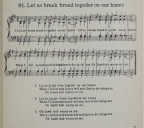
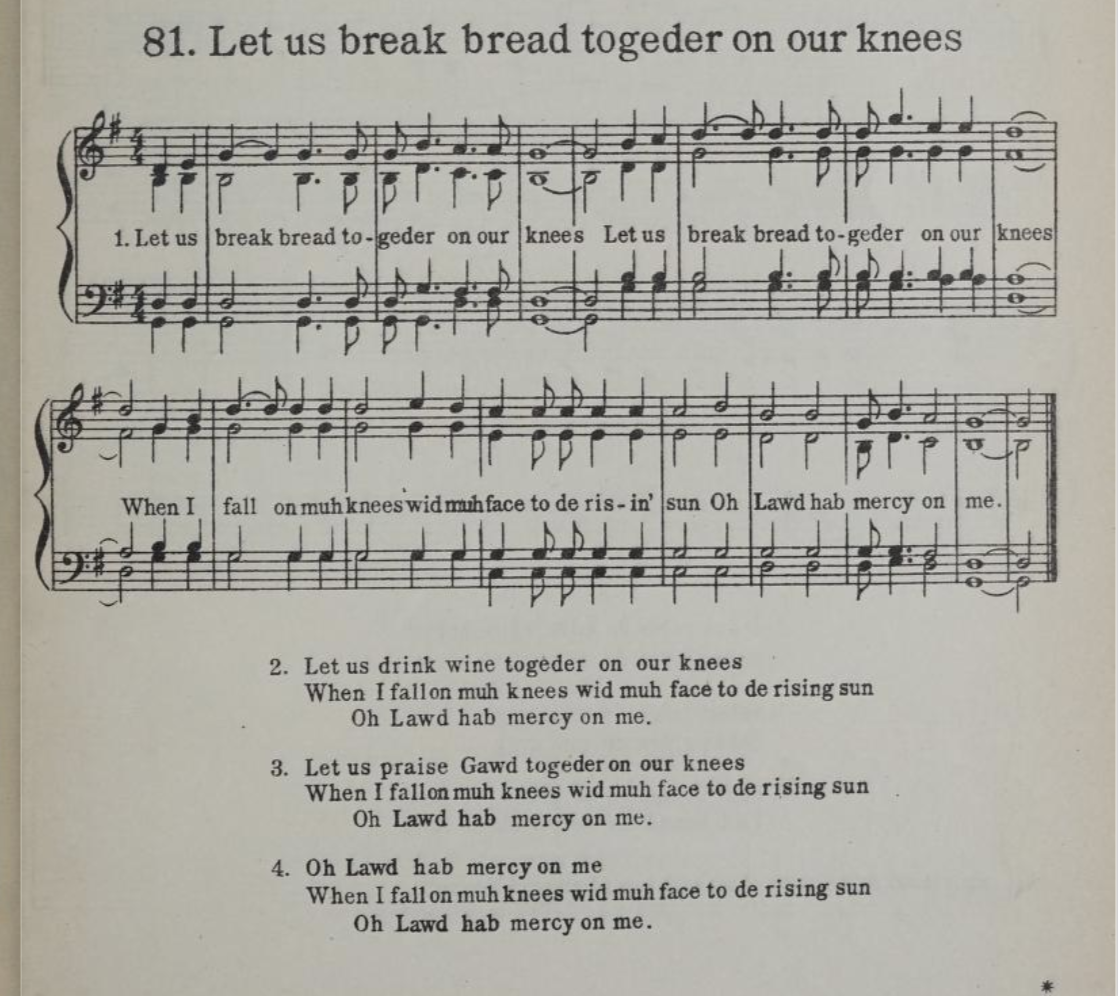
The Offertory hymn chosen for this month is "Let us break bread together on our knees ". The choir don't know it and I'm wondering should we rehearse it rather than sitting there mutely while the organist plays.
It’s not a Catholic hymn in any way, shape, or form. Personally, I would be morally obligated to boycott it since it’s a sin to sing heretical hymns, especially during Mass.Thanked by 1probe -
When I was still active in church music, the pastor banned that hymn. He said it isn't bread but the body of Christ
Send Us Thine Asteroid, O Lord is more theologically sound than the aforementioned song. -
Well, that's pretty clear, thank you all. I searched for that title in this forum and found a link to Catholic Hymnody at the Service of the Church: An Aid for Evaluating Hymn Lyrics which explains it under "Deficiencies in the Presentation of Eucharistic Doctrine".
-
I once commented this choice by saying: "Fine! I really didn't expect you suggesting a song that promotes celebration ad orientem and to recieve Communion kneeling."
It’s not a Catholic hymn in any way, shape, or form. Personally, I would be morally obligated to boycott it since it’s a sin to sing heretical hymns, especially during Mass.The Offertory hymn chosen for this month is "Let us break bread together on our knees". The choir don't know it and I'm wondering should we rehearse it rather than sitting there mutely while the organist plays. -
A prayer I quote often.Send Us Thine Asteroid, O Lord
I'm late to the party on this thread, but to answer the OP's original question: I think people like slop because it's more familiar to them. It is more like the music the listen to on the radio. It makes very few demands on them and is immediately comprehensible in terms of musical and literal language. Elevated liturgical music makes demands on people. It is different stylistically. It is often free-meter. It involves Latin or elevated poetic and mystical language. All of these things are "barriers" (so I'm told, but I don't buy it) to the average "Joe".
Of course, in reality, they aren't if "Joe" has even the slightest modicum of good will and is catechized even the tiniest bit. I've worked very had to catechize my current cathedral parish, issuing full letters in the bulletin, as well as frequent music minutes. Every month or two I get up in front of the congregation and speak about things before Mass starts, especially if something special happens at that liturgy, such as during Triduum, etc. etc. I have been told my numerous people that they have really appreciated learning all this stuff, "because they've never been taught it before."
I had one parishioner tell me after Chrism Mass that it finally clicked for him what I had been meaning when I spoke of "liturgical" music, and how it was supposed to be "set apart"; "Jesus words are not enough to make something fit for Mass." He had recently visited another parish, after two years of conditioning from me, and immediately realized what a poverty there was because of the music choices, and how they all felt very secular by contrast. But he had to swim in our waters for two years before it finally registered, once he was jolted out of that environment, suddenly confronted with typical suburban parish fare. I had a parishioner at my last parish report the same experience.
I was so grateful that he had shared this with me, as it was yet another data point in my theory that many (not all) people are capable and willing of being led to richer fare. It just takes time and repeated catechesis.
Experiencing good music is ultimately biggest lesson, however.
No one could have described fully sung orthodox vespers to me in a meanginful way. I could comprehend it on paper well enough. Then I experienced a seminar at a seminary, which was attended by other competent musicians who really sang it as intended, and the whole experience was so glorious that I had to stop singing because I was crying so hard from the beauty. I sat in silence and just let it wash over me. Sadly, these types of moments are almost nonexistent at "St. Typical's". And yet, these are exactly the types of moments of transcendent beauty that we need to be striving to create. You don't think much of a candle-lit vigil until you experience one. Then you realize viscerally how they are so amazing. You might not give a rip about Allegri or Latin until you experience his Miserere during adoration of the Holy Cross.
We once sang a moteted version of O Salutaris Hostia and I had the school secretary come up to me a few days later during the week and exclaim, "WHAT WAS THAT PIECE DURING COMMUNION!? I don't know what it was, but it was GORGEOUS. Sent chills down my spine." She's not a trad, doesn't care for Latin, and is your very typical american catholic. But it touched her because it was beautiful, and fit for the liturgy. If you had asked her before hand if she wanted the choir to sing a motet in Latin, I rather imagine she would have said "no". She would have preferred the familiar fare. And that's the point: most people prefer banal / familiar because its comfortable. But our Lord didn't waiver when people began to leave after his Bread of Life discourse. And those who stayed received richer fare, and those who went away, left empty handed. -
It is more like the music the listen to on the radio.
(Speaking here of English-language repertoire:)
Perhaps that's somewhat true of items in the P&W idiom of music that has only made limited inroads into American Catholic parish life, but in all my years of being in mixed-repertoire choirs that included songs from the idiom of contemporary liturgical music intended for Catholic use, what I noticed more and more over time as more remarkable was how much of it was in something of a stylistic no-man's land.* While the Minnesota Trinity and its ilk tried to draw from the patterns they chose to observe in the style of the Great American Songbook, that style is not something one has heard much of on radio in too many years to count.
There was a virtue to early work in the idiom: it made room for an ensemble of musicians - which can evoke eschatalogical symbolism. Yet there was/is an underside of that virtue: a temptation (which seems to have been very strong for composers who at least mentally composed from the keyboard in ways their compositional predecessors did not yield to) to treat voice and text merely as one component of an ensemble concertato. (To which the meet and just response is: JUST SAY NO. Or, to put it in more technical jargon, Nuh-uh.)
*Mind you, there are composers in the idiom who have taken considerable lessons from the styles of chant and strophic metrical hymnody, so in terms of pure music without consideration of lyrics, there's a wider array of styles in that idiom. The issue of ripeness of lyrics - in an age where good editors are few, and the ability to green-light publication has never been easier - remains a perennial Achilles' heel in the idiom. Too many lyric writers in the idiom do not appear to recognize the limits of their gifts in that regard, and manifest a severe lack of immersion in, and learning from, gifted hymn lyric writers of the 18th to mid-20th centuries**. A refreshing resource from the mid-20th century (1965, to be exact) is something of a bookend to that historical practice: https://archive.org/details/anatomyofhymnody0000love
** We could crowdsource a list, I am sure. Isaac Watts, the various Wesleys (Methodist & Catholic), translators like John Mason Neale, Catherine Winkworth, et cet. One has the sense that such gifted lyric writers were so deeply practised and fluent in their craft that they they were like the best instrumentalists who practice not until they merely got it right but until they could not get it wrong - and not betray the amount of work involved. (Tiny example of craft: the seemingly effortless ability to pen perfect doxologies in virtually any regular meter. The comparable work of today's writers in the contemporary idiom is not as seemingly effortless.) -
@serviamscores that sounds familiar. I did once get a note in the parish newsletter (one side of which has the English text of the Mass that Sunday) naming the communion hymn we were going to sing and giving the first line and translation. We also printed parallel Latin+English A4 pages for the Ordinary of the Mass to be left out with the newsletters and and they disappeared. Standing in front of the choir I can't hear if anyone in the church is singing but I've asked people in the pews and they assure me they have heard some voices around them and they do like to hear the chant. I recently started facing the congregation and 'conducting' them in the second-time verses of the Kyrie, in the hope of encouraging participation and I think I do hear something; some mouths are moving anyway. We've just started six months ago so I'm happy with small steps.Thanked by 1MatthewRoth
-
This is because the music is solo music (with the rhythm of the notated music only an approximation of the rhythm of the original singer / songwriter). There's a reason why it sounds like a congregation is just "singing along" with the cantor / soloist - or attempting to do so - the music is designed for a solo voice, not a group. Having an entire congregation sing it is like them trying to sing the Schubert "Ave Maria" all together.The thing that bothers me with the contemporary stuff is how syncopated a lot of it is. Just the other weekend when I had to cantor a Mass with “Be Not Afraid” in the lineup, I could’ve sworn people were singing the same thing 20 different ways. -
PLEASE READ - Good Music, Sacred Music & Silence by Peter Kwasniewski. This book gave me so much wisdom and insight about the history and tradition of sacred music, how it went astray not only post Vatican II but through the centuries, and how to confidently adhere to tradition by reviving chant.
Another good one, maybe a little less sophisticated is Why Catholics Can't Sing by Thomas Day. Gives good examples of 'contemporary slop' that actually discouraged participation by turning liturgical music into a pop performance of sorts.
The only Mass that still might include some Praise and Worship slop of choice at my parish are Funerals now, because so many boomers are attached to this music, that it's hard to go into a funeral planning meeting without someone asking for On Eagle's Wings, Be Not Afraid, Bread of Life, etc., Even then, I limit those options to offertory and communion only.
Antiphons are commonplace at all of our liturgies now, and even school children are embracing the responsory nature of them. -
lolthe Minnesota Trinity
On the one hand, I agree with you. It has a certain "style". My point was just that this style (however you describe it) is closer—writ large—to secular music. Guitar or piano, basic chord progressions, sometimes a vamp, sycopated rhythms, mediocre poetry, etc. etc.a stylistic no-man's land.*
All of those things are a heckuva lot closer to soft pop than traditional hymnody and certainly chant or polyphony.
Oh wow do I think you're spot on with this. Just as not all music is created equal, neither is all poetry—nor liturgical poetry. And some of the great hymn writers were absolutely superior to others, especially those whom you mentioned.We could crowdsource a list, I am sure. Isaac Watts, the various Wesleys (Methodist & Catholic), translators like John Mason Neale, Catherine Winkworth, et cet. One has the sense that such gifted lyric writers were so deeply practised and fluent in their craft that they they were like the best instrumentalists who practice not until they merely got it right but until they could not get it wrong - and not betray the amount of work involved.
As an aside, there's also the issues of theology; many modern hymns are "squishy" (to use a dear friend's descriptor) rather than hard-hitting or precise. The old poets mention things explicitly that many today would reject due to poor catechesis. -
SponsaChristi 5:37AM
Posts: 719
When I was still active in church music, the pastor banned that hymn. He said it isn't bread but the body of Christ
Send Us Thine Asteroid, O Lord is more theologically sound than the aforementioned song.
LOL. Another favorite of congregations is "Were You There" No, I wasn't. I am old but not that old. :-)
Thanked by 1CHGiffen -
And some of the great hymn writers were absolutely superior to others, especially those whom you mentioned.
we also have to be honest: sometimes the greats turned out not-so-great things. The hymn for the poor souls by Newman is nowhere near as good the hymns for which he's really well known… -
Oh sure; you can’t win every time. Not every hymn will be a hit. But some people have lots more hits than misses.Thanked by 1tomjaw
-
When I was still active in church music, the pastor banned that hymn. He said it isn't bread but the body of Christ.
Given this Sunday's gospel, I'd be wary of ascribing heresy to the phrase "break bread." Fractio panis is one of the oldest names we have for the Eucharist (unless one wants to deny that what the Church was doing in Acts was actually the Eucharist). And it is how the Missal describes what is taking place during the singing of the Agnus Dei (n. 130).
My main objections to the hymn are 1) we aren't actually on our knees when breaking bread and 2) I for some reason always want to sing "When I fall on my face/ with my knees to the rising sun...", which is hardly an edifying image, though certainly something that might make me say, "O Lord, have mercy on me." -
It’s a relative circumstance-in-time reaction to the protestant view of ‘bread versus flesh’ that makes us want to steer clear of any ambiguity in theology. And I do believe it is an entirely protestant creation… isn’t it?
This article zeros in on the point. It also mentions LUBBTOOK in particular.
https://www.newliturgicalmovement.org/2020/12/is-usccb-planning-on-getting-rid-of-bad.html?m=1 -
It’s a relative circumstance-in-time reaction to the protestant view of ‘bread versus flesh’ that makes us want to steer clear of any ambiguity in theology. And I do believe it is an entirely protestant creation… isn’t it?
Yes. It’s an African Spiritual written by Baptists. It also has verses about “the cup”. It just doesn’t give Catholic Eucharistic Sacrifice vibes.
It’s stuff like this that causes us to get announcements before Mass that the Precious Blood “will be served as well” during communion. I cringed when I heard that on Holy Thursday. Language matters.Thanked by 1davido -
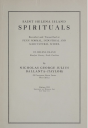
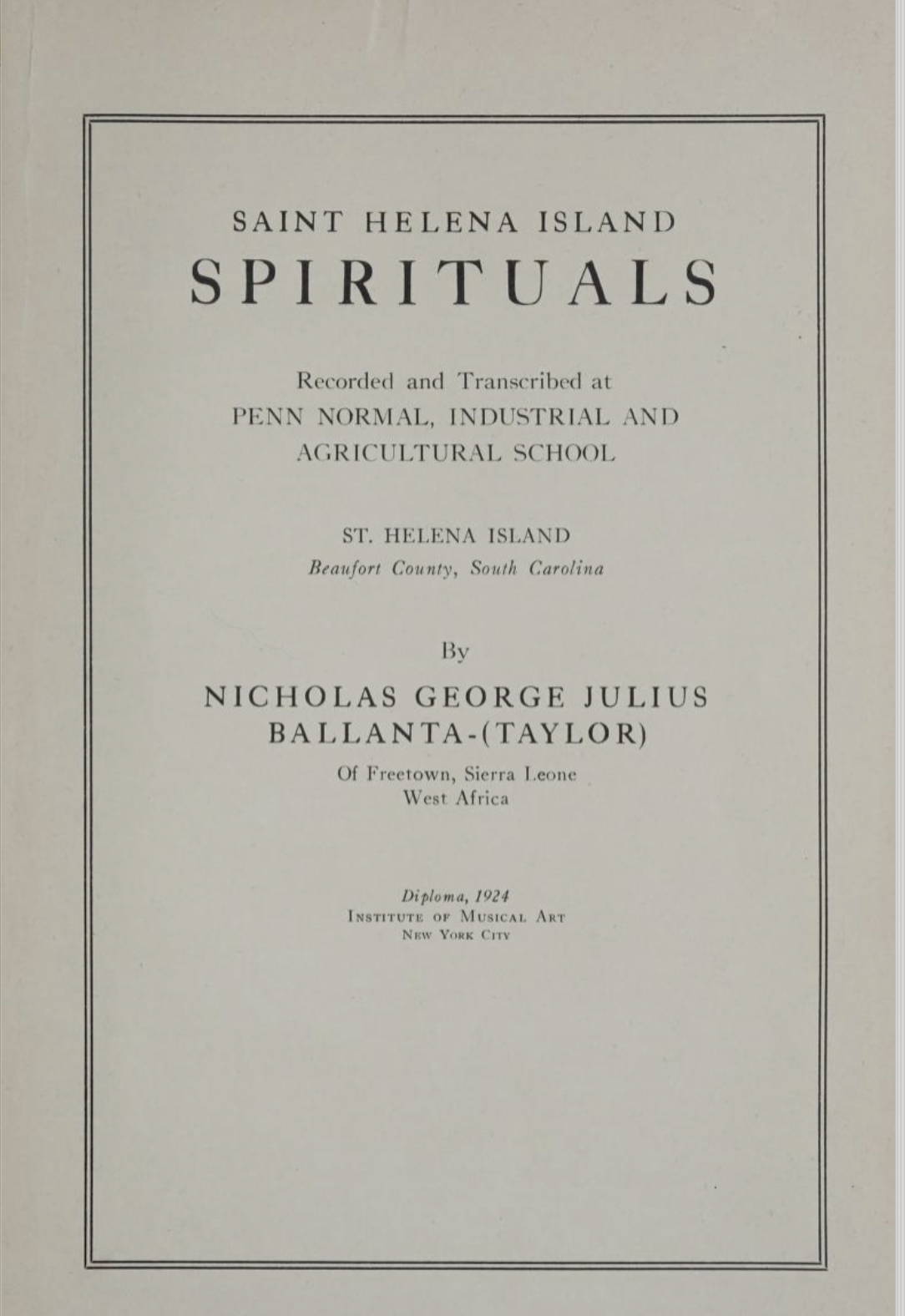
First collected and published, in Gullah-Geechee (https://en.wikipedia.org/wiki/Gullah_language), which is not merely bad or non-standard English:
 1084 x 1576 - 1M
 1118 x 996 - 1MThanked by 1Charles
 -
Which is why I bothered to clarify the language used in its original publication. It's Gullah-Geechee.
Thank you clarifying. I felt like I was mocking an accent while reading it. -
Well it is certainly easier to read than some English I have been given to mark. It also has fewer non-standard English words than several dialects of English.
Would love to hear it spoken, I suspect that it would be easier to understand than several dialects used in parts of England such as in the Black country, West country and Glasgow. -
Circling back to “contemporary slop” preference, I did notice today at Mass that, once again, traditional hymns get the most congregational singing compared to contemporary bubblegum praise and worship music gets. At the Lamb’s High Feast really gets the congregation going.


Welcome to the MusicaSacra Forum!
To participate in the discussions on Catholic church music, sign in or register as a forum member, The forum is a project of the Church Music Association of America.
Categories
- All Discussions21,844
- General Music Discussion8,548
- Job Openings292
- Management of Music Programs862
- Choral Matters539
- Church Documents and Rubrics540
- CMAA Notes307
- Events760
- For Newcomers: Read First26
- Sacred Polyphony567
- Hymnody898
- Gregorian Chant: General2,749
- ↳ Graduale Romanum and Liber Usualis372
- ↳ Graduale Simplex61
- ↳ Semiology65
- Vernacular Plainsong704
- Anglican Use and Anglican Chant73
- Organ, Other Instruments and Repertoire452
- New Composition/Works in Progress1,342
- Recordings238
- Music for Hispanic Ministry163
- Music Education: Children217
- Music Education: General223
- News Items247
- Positions Wanted3
- General Discussion: Catholicism742
- Amusements185
- General Discussion1,048
- Opinions119