
Scholas Actually Singing from the Graduale Novum
-
Is there a schola anywhere in the United States regularly singing complete Masses directly from the Graduale Novum? Dr. Edward Schaefer and Fr. Anthony Ruff may have had groups capable of doing so, likewise for Sven Olbash and Gloria Dei Cantores, but those are about the only ensembles I can think of, and I don't know that any of them sing full Masses on a regular basis reading adiastematic neumes. An introit and communion every Sunday might be easier to track down, but I'm looking specifically for ensembles—not solo cantors—that sing full Propers on a regular basis, regardless of whether they sing for TLM, novus ordo, Ordinariate, Anglo-Catholic, etc. Thanks.Thanked by 1[Deleted User]
-
After being absent from this forum for the better part of a decade, it's nice to receive a mention. However, I can assure you Sven Edward Olbash (i.e. me) doesn't direct Masses from the Graduale Novum anymore, either.
What I found was that those interesting in having chant at Mass are generally doing so either out of obedience or conservatism, and rarely have any interest in restoration of the earliest known oral traditions for the sake of musicology or what I consider to be more beautiful renditions. Their opinions about a historically informed approach to chant range from indifference to disdain.
Practically speaking, unless you have a group of completely untrained yet full capable singers, or a group of specialists who have been trained exclusively in medieval hexachord theory, the Guidonian hand, Latin (translation, pronunciation, and rhetoric), AND the time to devote to chanting the liturgy on a daily basis (or weekly for many years) to the point where the antiphons at least are sung from memory, it is nearly impossible—and prohibitively expensive—to achieve satisfactory interpretations of the chant.
What I HAVE found helpful is using knowledge of the 9th and 10th century traditions to challenge longstanding but erroneous beliefs about chant and polyphony in general—for example, that chant is always to be sung slowly and peacefully or that polyphony is to be sung without variety or expression. It is also helpful to understand which traditions are merely convention based on practical considerations (e.g. having a soloist sing the incipit, or having the full choir sing the second half of a gradual verse and omitting the repeat of the respond) and therefore can be ignored in certain circumstances, and which are a matter of liceity (e.g. the priest intoning the Credo in the EF).
I'd be curious to hear if any parishes have had success with singing propers from St. Gall or Laon neumes accurately on a regular basis. I can imagine an OF parish mastering the seven "ad libitum" communios or the full melismatic versions of the texts from the Graduale Simplex for the Introit and Offertory—but that's about it. -
Having been in the traditionalist movement for almost 25 years, I concur with your assessment and would say that there's very little interest among Catholics in Gregorian chant as a musical art to be taken as seriously as music written for the opera house or concert hall. It's respected as pious liturgical mood music at best. I know some on this forum will take issue with my opinion, but if chant were really appreciated artistically, singers and choirmasters would not be content with outdated 120-year-old editions any more than they would be for the works of Palestrina or Handel.What I found was that those interesting in having chant at Mass are generally doing so either out of obedience or conservatism, and rarely have any interest in restoration of the earliest known oral traditions for the sake of musicology or what I consider to be more beautiful renditions. Their opinions about a historically informed approach to chant range from indifference to disdain.
I have a completely different men's schola than I did a few years ago, but I decided at one point to try and get the previous group to learn the basics of the Laon neumes. Over the course of several weeks, I made no progress in getting them to recognize just two elements of the notation, the uncinus and virga. Only two signs to learn in several weeks' time, and complete indifference! The majority of the inquiries I get from outside my own choirs are from people wanting suggestions on how to rhythmize Gregorian hymns or the Kyriale. Often what they really want is the arbitrary application of some formula. I suppose that's more satisfying than a painstaking semiological study, but it's sure discouraging. We cannot accurately reconstruct the adiastematic neumes from a lot of performances that claim to be semiological. I believe it was in this forum where someone claimed that there weren't 30 people in the country really capable of reading adiastematic neumes. -
We can certainly infer that if there was only one copy of a particular chant book in a monastic library, and it was not gigantic choir book, the choir would have sung from memory. If we can get our choirs to sing from memory—without first using notation—there's a chance for a satisfactory performance according to the adiastematic neumes. But if anyone other than the director is trying to read them, it's going to be much more of a challenge.
-
Hi all,
I would agree that mastering the adiastemetic neumes is quite the process!
While I have never sung an entire Mass, weekly, with the Propers, I’ve had success teaching amateur groups a few Propers a month. I have a colleague who is currently in the process of learning Gregorian semiology and will eventually transfer his knowledge to his Tridentine schola. He’s learning it well - and quickly. The secular group out of Kansas City, Te Deum, regularly performs from the Novum. Last year, I had the privilege of singing with one of their members at a dear friend’s funeral. Again, I realize this is a one-off event, and he’s a professional singer, but my point is that there are grassroots movements happening in America. Starting small, celebrating the successes, and diligently working towards semiological fluency will help bring greater awareness in the States. I am optimistic for the movement.
I don’t think it’s impossible, and I think the largest issue in America is the lack of available materials and teachers in English. I’ve created a website, still in progress (I need to upload some videos when I return to the States after studying chant abroad), that hopes to bridge this linguistic gap, mora-vocis.com. I would love to teach anyone or any group interested in learning more about Gregorian semiology!
While it’s helpful for the schola members to fluently read the neumes, it’s not always necessary. There’s so much learning that happens by listening. Even covering the basics, like textual accent, help immensely. I don’t think we need to revert to singing via memorization, though it is helpful. In the times I’ve sung by memory, it has been interesting to see how I’ve internalized the text differently.
Just another perspective!
-
When I was in my formative years in Italy, we did use the Novum as our main book, but sometimes switched between the Novum and Triplex. We occasionally in our USA monastery do use the Novum but favor the Triplex.Thanked by 1FSSPmusic
-
For all the problems with some of the Vatican edition’s melodic choices (as in the numerous instances where the diastematic neumes contradict the adiastemstic ones), I still prefer the Triplex as a book for singing over the Novum. I still often consult both but for better or worse VAT’s melodies are the ones I live with day in and day out, and I don’t feel so bad about that. At times, the choices in the Novum are downright perverse, as I wrote about here: https://www.ccwatershed.org/2024/12/29/gods-in-his-holy-place-but-in-which-mode/Thanked by 1MatthewRoth
-
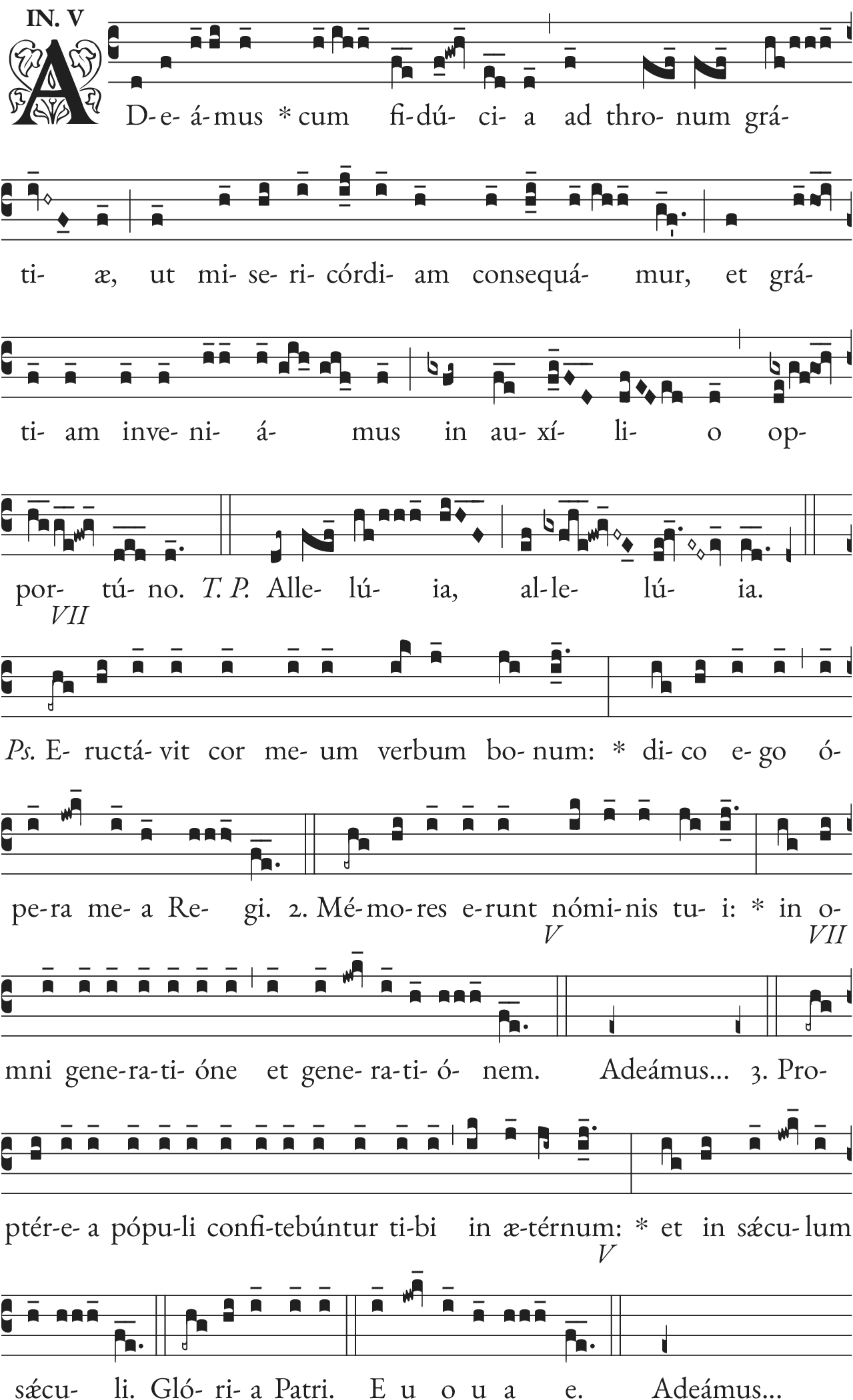
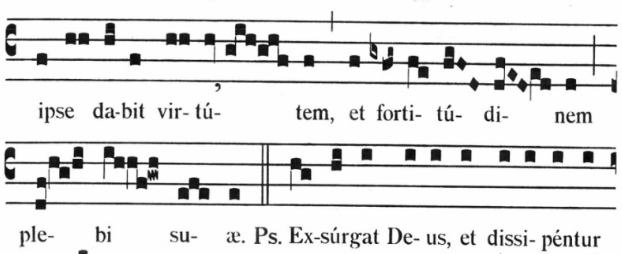
I recently had to revisit the chant in question, which is the source chant for the Immaculate Heart introit Adeamus. It looks different on the page (or screen), but it sings the same as the Novum version, doesn't it? I would say it's the Vatican edition that's "perverse" here when we get to the psalm verse—a perverse verse, if you will—which departs from the oldest sources.
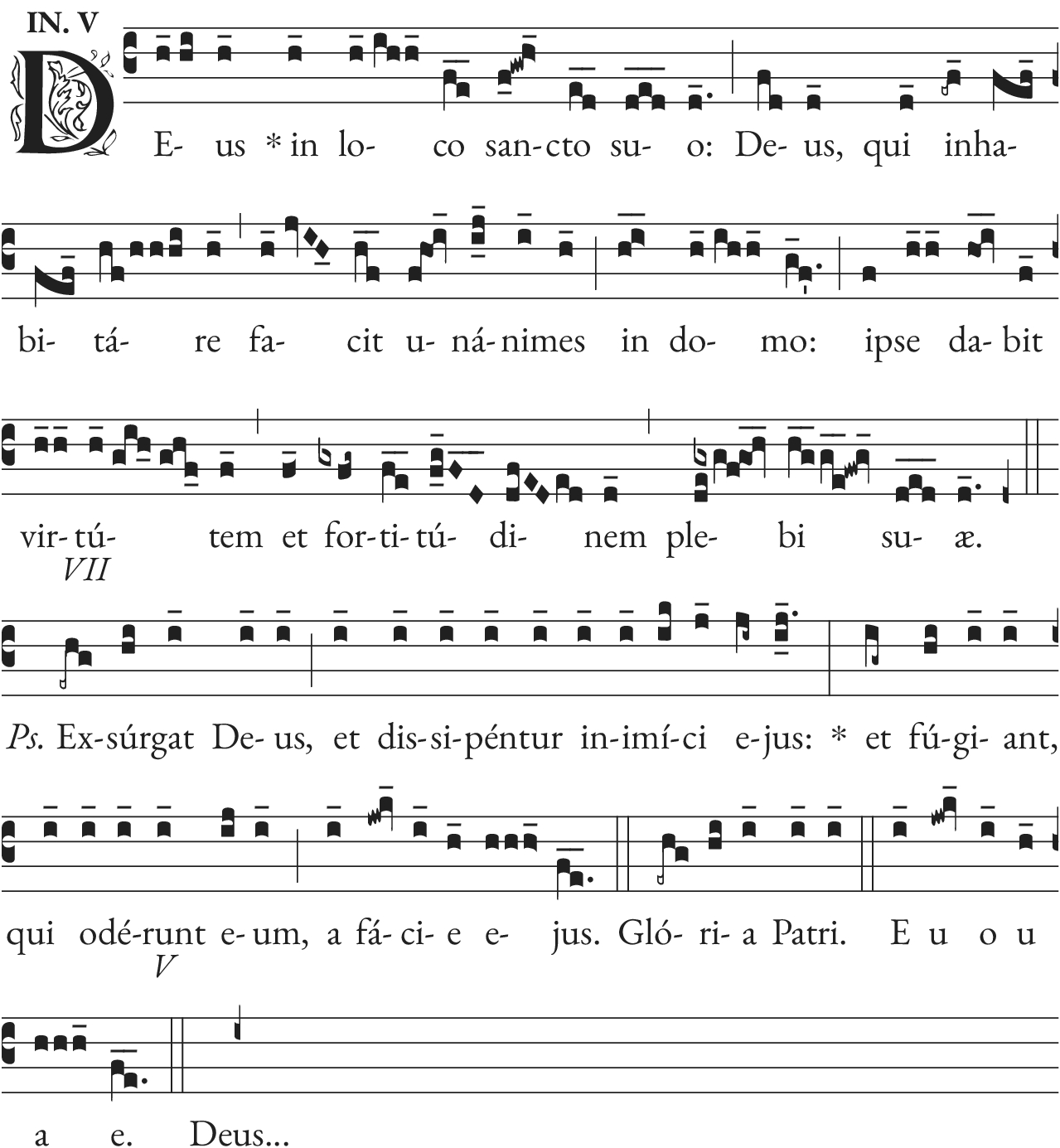
 1279 x 1385 - 402K
 1279 x 2100 - 638K
 -
Interesting…
Couldn’t you do away with about 80% of the rhythmic markings just by establishing a performance convention (punctum is long, two note neumes are short-short, three note neumes are short-short-long, etc.) and marking only the exceptions?
I feel like even a skilled music reader would be bogged down by so much information on the page. -
The number of rhythmic markings are the most common criticism I get, but my scholas have had no difficulty with it. They can look at any note and know whether it's long or short without a performance convention or analyzing the context. See this other recent thread where alternative styles of notation were discussed:
https://forum.musicasacra.com/forum/discussion/22540/ -
It’s wonderful that you’ve created an edition that is easy for singers to understand!
I have a couple questions about the edition, though. Episematic notes don’t always receive the same value - it depends contextually both on the syllabic placement and on the melody. The initial syllable, “DE-us” ought to receive something akin to a down-bow, since it is the tonic syllable and should then have an energetic value to the pes. The emphatic clivis on “lo-CO” ought to curve the word-melody to an end, since it is the final syllable. The weight-emphasis on those syllables isn’t the same, nor are the functions the same. Using the same symbol for those instances - and others throughout the chant- seems a bit simplistic. What was your thought process in using episematic values?
Could you also explain the choice to use episemas over all the virgas in the psalm verse? All of the neumes, except the final syllable of “e-JUS” ought to be light, surging to the mediant and final cadences while respecting the textual accents.
Just curious!Thanked by 1FSSPmusic -
FSSPMusic, an interesting observation re the collective disinterest in traditionalist circles in plainchant scholarship and musicology.
It’s a sad state of affairs, really.
Your observation about perceptions of plainchant as a kind of ‘mood music’ is apt. Along with mass-produced plaster statues, cheap fiddleback chasubles and everything conceivable bought out of a catalogue, alas, it’s too often par for the course. -
trads aren’t exempt, but this is one of my big complaints about reverent young priests hyped up by people online, and usually (not only because of TC) relegated to the conservative NO. Revealed preferences are real.cheap fiddleback chasubles and everything conceivable bought out of a catalogue -
Yes, it is a simple proportion of 2:1 for long to short. The "nuanced" durations are a much later phenomenon. Laon 259, which is, perhaps, 80 years older than Einsiedeln 121, uses the exact same sign for the each of the notes you mention:Episematic notes don’t always receive the same value - it depends contextually both on the syllabic placement and on the melody.... Using the same symbol for those instances - and others throughout the chant- seems a bit simplistic.
Weight-emphasis and function don't alter the durations, which are clearly notated in the oldest source. A dynamic accent doesn't need to become an agogic accent. The hyper-nuanced renditions of some of the Cardinian semiologists represent singing according to a theory, not the singing of the oldest extant manuscripts, and it often doesn't seem to matter to them whether their interpretations sound alike or whether the manuscripts can be reconstructed from the performance.The weight-emphasis on those syllables isn’t the same, nor are the functions the same.
Fidelity to the sources, pure and simple. The long in my edition corresponds to L's uncinus, regardless of whether E/C write an episema or an ordinary tractulus or virga.What was your thought process in using episematic values?
Can textual accents not be respected with recitation in longs? Laon has the means of notating recitation in shorts, cf. the Communion Videns Dominus flentes, but that is not what is used for Introit psalm verses.Could you also explain the choice to use episemas over all the virgas in the psalm verse? All of the neumes, except the final syllable of “e-JUS” ought to be light, surging to the mediant and final cadences while respecting the textual accents.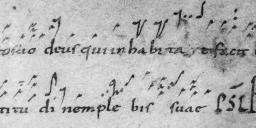 1824 x 341 - 302KThanked by 1Mora
 -
Why not listen and compare several "semiological" recordings? I think Rampi's gives us a good likelihood of reconstructing the neumes accurately, but even there, a faulty tactus-destroying principle is in evidence, namely, lengthening the last note of a neume at the first De-, at -ta-, and at -di-, but not at ha- and -bi- where it is justified, as well as a lengthening of for-.
https://www.youtube.com/watch?v=ykbz1qnP48Q
https://www.youtube.com/watch?v=toXsYdXEoCI
https://www.youtube.com/watch?v=NnMe8AvXH4A
https://www.youtube.com/watch?v=gStDoJdp5r0
https://www.youtube.com/watch?v=f6XKSs-aQug
https://www.youtube.com/watch?v=O5lyi4rpep4
And of course the perverse mode V psalm verse.Thanked by 1Daniel Bennett Page -
Yes, it is a simple proportion of 2:1 for long to short. The "nuanced" durations are a much later phenomenon. Laon 259, which is, perhaps, 80 years older than Einsiedeln 121, uses the exact same sign for the each of the notes you mention:
What is your take on the relative size of the uncinus, for example as the middle note of the long torculus or the penultimate note of a final long clivis? If there were a great variety of uncinus sizes randomly appearing through the Laon manuscript, one could write it off as unintentional. But the fact that they so consistently appear this way—often with the addition of an "a" in the already long torculus—must suggest some sort of different performance, no?
Also, just because notation doesn't indicate nuance doesn't mean the performance wasn't nuanced. Schubert doesn't write every ritardando and accelerando into the score of Ave Maria, but we know from mechanical instruments that rubato was part of that performance tradition. -
For the most part, I chalk it up to normal size variations in handwriting, and I would say, and in fact have said, that there is a great variety of uncinus sizes randomly appearing through the Laon manuscript, and the triplex editions don't always do a fantastic job of faithfully reproducing them. I think the addition of the letter a is nothing more than reinforcement, a reminder that the preceding and following notes are both equally long; otherwise I would expect nearly all of the the first-millennial manuscripts to show some indication of additional lengthening of the upper note, but they don't. In this introit, we see a non-rhythmic use of the letter a immediately after its first rhythmic occurrence, which I mention solely for the benefit of readers who are new to all of this and might otherwise be inclined to think, "Aha, every note with a means extra long!"
So to sing rhythmically means to measure out proportional durations to long and short sounds, not prolonging or shortening more than is required under the conditions, but keeping the sound within the law of scansion, so that the melody may be able to finish in the same tempo with which it began. But if any time you wish for the sake of variation to change the tempo, i.e. to adopt a slower or a faster pace either near the beginning or towards the end, you must do it in double proportion, ie. you must change the tempo either into twice as fast or twice as slow... (tr. Murray)Sic itaque numerose est canere, longis brevibusque sonis ratas morulas metiri, nec per loca protrahere vel contrahere magis quam oportet, sed infra scandendi, legem vocem continere, ut possit melum ea finiri mora qua cepit. Verum si aliquotiens causa variationis mutare moram velis, id est circa initium aut finem protensiorem vel incitatiorem cursum facere, duplo id feceris, id est ut productam moram in duplo correptiore seu correptam immutes duplo longiore... (Scholia enchiriadis, 9th cent.)
Unevenness of singing must not, therefore, be allowed to spoil the sacred chant; no note or neume is to be unduly quickened or retarded; neither may one be negligent and start to sing during a chant (a respond, for example, or any other piece) more slowly than at the beginning. Another point: Breves must not be slower than is fitting for breves; nor may longs be distorted in erratic haste and made faster than is appropriate for longs. But just as all breves are short so must all longs be uniformly long, except at the divisions, which must be sung with similar care. All notes which are long must correspond rhythmically with those which are not long through their proper inherent durations, and any chant must be performed entirely, from one end to the other, according to this same rhythmic scheme. In chant which is sung quickly this proportion is maintained even though the melody is slowed towards the end, or occasionally near the beginning (as in chant which is sung slowly and concluded in a quicker manner). For the longer values consist of the shorter, and the shorter subsist in the longer, and in such a fashion that one has always twice the duration of the other, neither more or less. While singing, one choir is always answered by the other in the same tempo, and neither may sing faster or slower. (tr. Bailey)Inaequalitas ergo cantionis cantica sacra non viciet, non per momenta neuma quaelibet aut sonus indecenter protendatur aut contrahatur, non per incuriam in uno cantu verbi gratia responsorii vel ceterorum segnius quam prius protrahi incipiatur. Item brevia quaeque impeditiosiora non sint quam conveniat brevibus, nec longa inaequalitate lubrica festinantius labanturquam conveniat longis. Verum omnia longa aequaliter longa [sicut] brevium sit par brevitas, exceptis distinctionibus quae [nihilominus] simili cautela in cantu observandae sunt. Omnia quae diu ad ea quae non diu legitimis inter se morulis numerose concurrant et cantus quilibet totus eodem celeritatis tenore a fine usque ad finem peregatur. Hae tamen ratione servata dum in cantu qui raptim canitur, circa finem aut aliquando circa initium longiori mora melos protendendum est. Aut cantus qui morose canitur modis celerioribus finiendus ut pro modo brevitatis prolixitas prolongetur, et secundum moras longitudinis momenta formentur brevia, ut nec maiore nee minore sed semper unum alterum duplo superet. Dum canente quolibet respondetur ab alio unum morositas servent utrique modum, nee unus altero impeditiosius aut celerius canet. (Commemoratio brevis, 9th cent.)
I couldn't track down the German original online, but it may be found in Otto Erich Deutsch's Schubert: Die Erinnerungen seiner Freunde.I heard [Schubert] accompany and rehearse his songs more than a hundred times. Above all, he always kept the most strict and even time, except in the few cases where he had expressly indicated in writing a ritardando, morendo, accelerando, etc. Furthermore, he never allowed violent expression in performance. (Leopold von Sonnleithner) -
I don’t have anything to say about the rhythm/performance practice stuff that I haven’t said before. But getting back to the perversity of the GN, what I meant is that they miscategorize the mode of the chant, transpose nearly every note of the chant up, and in the process, they create neumes that don’t exist like a strophicus on D. Your editorial decision is much better in this case, without question. But I also think the Vatican’s choice is reasonable, as I explained in the post. The worst possible choice in my opinion is what the editors of the GN chose.
But getting back to the original question, it occurred to me this morning that the Novum being based on the new calendar and the new liturgy obviously makes it less likely to be adopted by choirs that sing in the old rite. Don’t you think that’s the case? -
they create neumes that don’t exist like a strophicus on D
See, it’s obviously the case when you put it like that, but it’s a testament to how well you know the chant from years of chant and study that you know this and can articulate it. My mind was truly blown when I read that.Thanked by 1tomjaw -
I should be more precise. There is a strophicus on D in today’s introit at “eos,” but it’s in the context of the re-fa-fa type. The strophicus in general is on fa/clef notes like F and C.
-
Yes, which I why I asked the question regardless of rite. Chant discussions don't need to be restricted to traditionalists.the Novum being based on the new calendar and the new liturgy obviously makes it less likely to be adopted by choirs that sing in the old rite. Don’t you think that’s the case? -
I agree, but there is a certain overlap. Almost all the chant people I know are also traditionalists, although that is less true of the semiologists, perhaps for the very reason of the editions.Thanked by 1tomjaw
-
There was talk of an electronic version of the Triplex that would be cross-referenced to the 1962 calendar. I suspect that Solesmes would not authorize it now unless the winds blow in the other direction again.
-
Verbatim from my other thread ;)In the the US, scholas singing full Gregorian propers for the TLM vastly outnumber those singing for the novus ordo.... there may be a few solo cantors capable of doing so, but I'm not aware of a schola anywhere in this country singing complete Masses directly from the Novum, not a single one.
-
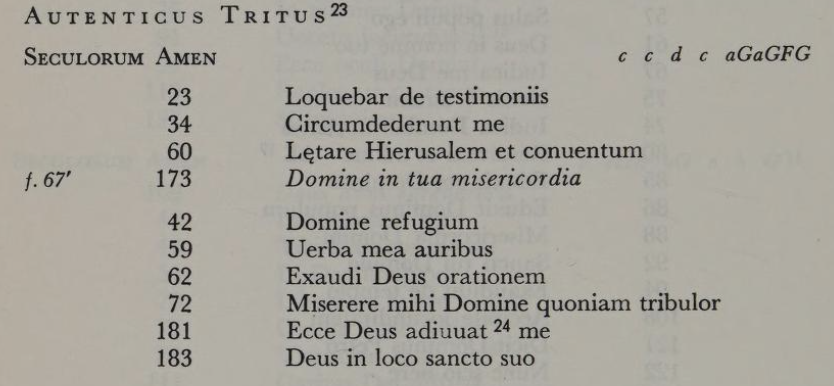
As an addendum on Deus in loco, it is grouped in (by verse termination no less!) with other mode 5 introits like Circumdederunt in the Metz Tonary, which is indeed from the ninth century.
-
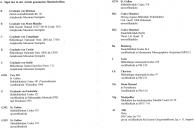
Here are the pertinent references from the Hermes Versicularium:
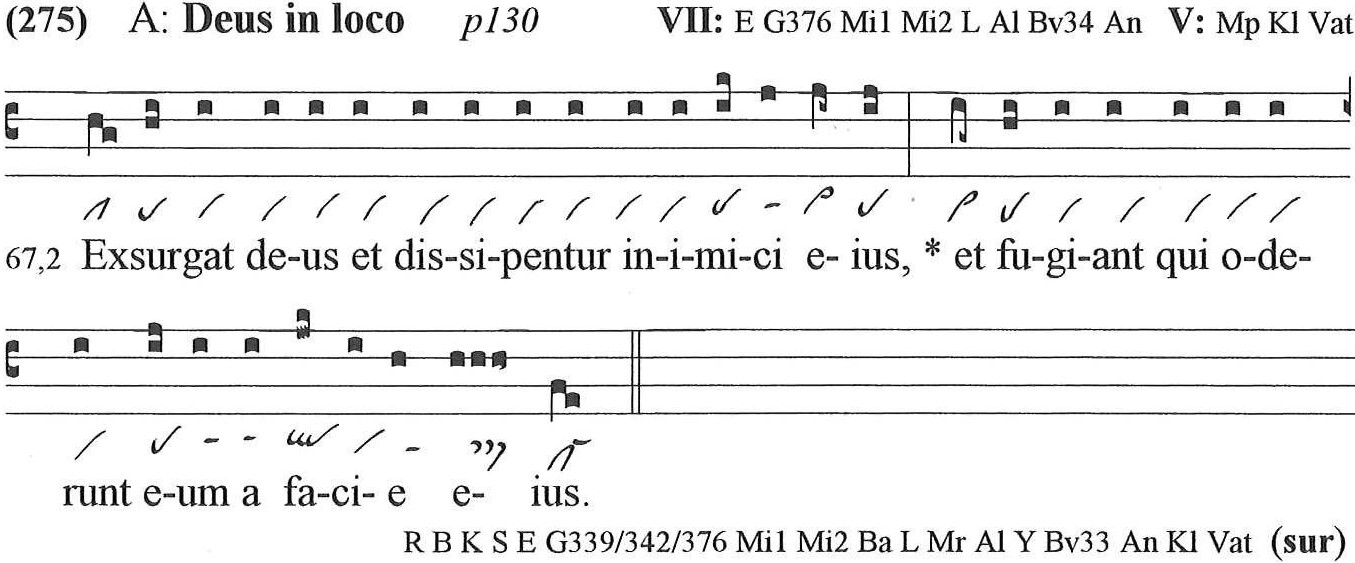
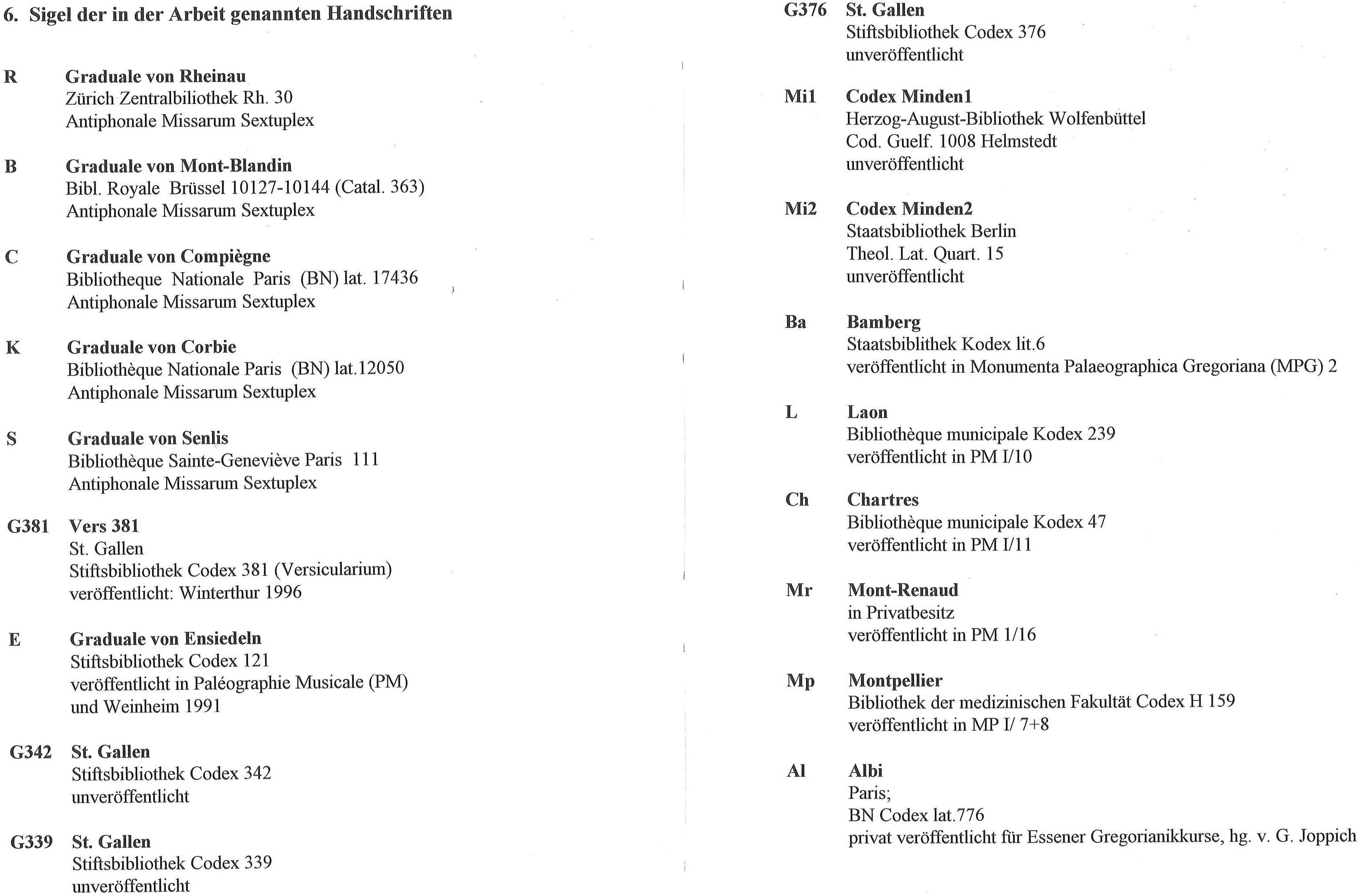
 1355 x 563 - 148K
 3157 x 2080 - 680K
 -
Thanks for your explanations! I’ll try to address your points over the next few days - lots of travel and study!Yes, it is a simple proportion of 2:1 for long to short. The "nuanced" durations are a much later phenomenon. Laon 259, which is, perhaps, 80 years older than Einsiedeln 121, uses the exact same sign for the each of the notes you mention
Yes, Laon 259 is older than E121. I’m wondering if a better comparison would be a soloistic chant, that way SG359 could be compared to L259, since SG359 is from circa 922-926. I really appreciate your dedication to the actual sources. Without relying on textual sources, could you explain the proportional 2:1 via just the neumes? In general, I still believe the text reveals something about the function of the neumes, the uncinus, in this case. I don’t understand how an uncinus could have the same function on the following syllables: “DE-us”, “IN”, and “lo-CO” (for now ignoring the first uncinus on “LO-co”): a tonic accent, a preposition that belongs to “loco”, and a final syllable. Proportionalism seems to add a theory on top of the text, which was the inspiration behind the melody to begin with. I would agree with incantu that nuance isn’t always written in notation - that notation is just an attempt to convey a musical phenomenon.
How could you explain syneresis and dieresis with the theory of proportionalism? Formulated melodies are exquisitely adapted to the text in order to render the proper placement of the tonic accent, such as the antiphons Ecce Rex veniet and Speciosa facta est, for a couple examples from SG390. There are about a hundred other examples of this formulated melody.
-
But getting back to the perversity of the GN, what I meant is that they miscategorize the mode of the chant, transpose nearly every note of the chant up, and in the process, they create neumes that don’t exist like a strophicus on D. Your editorial decision is much better in this case, without question. But I also think the Vatican’s choice is reasonable, as I explained in the post. The worst possible choice in my opinion is what the editors of the GN chose.
Dr. Weaver, I’m just curious, have you read through the explanation given in Beiträge zur Gregorianik? 23:7. I’m awaiting my copy via the ILL. I’m not as well-versed in modal theory as you are, but it seems to me that their work, 40+ years of combined scholarship, would warrant a second look at their editorial choices. Modal theory began to evolve after the creation of this repertoire, yes?But getting back to the original question, it occurred to me this morning that the Novum being based on the new calendar and the new liturgy obviously makes it less likely to be adopted by choirs that sing in the old rite. Don’t you think that’s the case?
Not necessarily! While it is certainly more amenable to the NO, there are some who do sing this in the Tridentine Mass. A friend of mine in Rome just sang the Propers yesterday for a Tridentine Mass out of her Novum and cross-checked it with the Liber. Another colleague works for a Tridentine parish and is learning semiology and has the approval from his pastor to purchase Novums for his choir.
-
Weight-emphasis and function don't alter the durations, which are clearly notated in the oldest source. A dynamic accent doesn't need to become an agogic accent. The hyper-nuanced renditions of some of the Cardinian semiologists represent singing according to a theory, not the singing of the oldest extant manuscripts, and it often doesn't seem to matter to them whether their interpretations sound alike or whether the manuscripts can be reconstructed from the performance
I saw your answer to my question in your explanation, thank you - lots of long days recently. Would you agree that these chants were originally part of shared oral tradition? Knowing that L239 and SG359 and E121 are congruent more than 90% of the time, couldn’t it be argued that the oral tradition lived longer at St. Gall than Laon? That perhaps the hyper-nuanced signs of St. Gall - diacritical signs, growing out of a system of oration - perhaps give more insight than the neumes of Laon and that the uncinus is broader than the St. Gall system? -
Mora, once your ILL arrives, please post it here. I haven't read it and I would be happy to continue the discussion.
The fact remains that the antiphon and verse seem to be in two different tonal realms according to the sources: a mode-5 antiphon and the verse in introit tone 7 (in the majority of neumed sources). While modal theory took a while to develop, even in the Metz tonary (copied sometime in the ninth century) this chant is listed as mode 5. In spite of all the hedging by Dom Saulnier etc., I believe that this is a real and meaningful category, and that it was included in that tonary for the purposes of memorization through modal classification, and indeed that this was very likely done right in the early years of the formation of the repertoire.
Faced with these facts, the options are:
1. Change the verse to tone 5 (Vatican solution, supported by the Metz tonary)
2. Keep the antiphon and the verse where they are and reimagine the pitch center (Patrick's solution, supported by the earliest neumed sources).
3. Move the end of the antiphon up a step so it ends in mode 7. See the attached image of the Norbertine version.
4. Transpose the entire antiphon up a step, creating a "mode 7" chant with C-sharp, F-sharp, and neume structures in positions where they never otherwise occur, like a distropha dd (GN solution).
I can see reason in all four solutions to what is undoubtedly a complicated problem. Plenty of chants don't fit neatly into modal categories, and the field of chant modality has been rife with confusion for some twelve centuries; I'm hardly exempt from that. But coming at it from the point of view of someone who teaches music theory and medieval music, number 4 seems like the worst solution to me.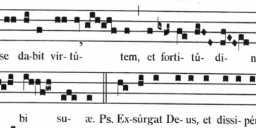 622 x 254 - 104K
 -
Attached is the listing for Mode-5 Mass antiphons from that tonary. I recently read in Busse Berger's book that the supposed exemplar that this tonary was copied from dates from around 830.
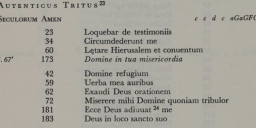 834 x 386 - 380KThanked by 1MatthewRoth
 -
It's a strange question. In modern notation, could we explain that the quarter and eighth notes are in 2:1 proportion from the notation alone, without relying on textual sources, what we were taught in our beginning music lessons, some other appeal to authority, or common sense?Without relying on textual sources, could you explain the proportional 2:1 via just the neumes?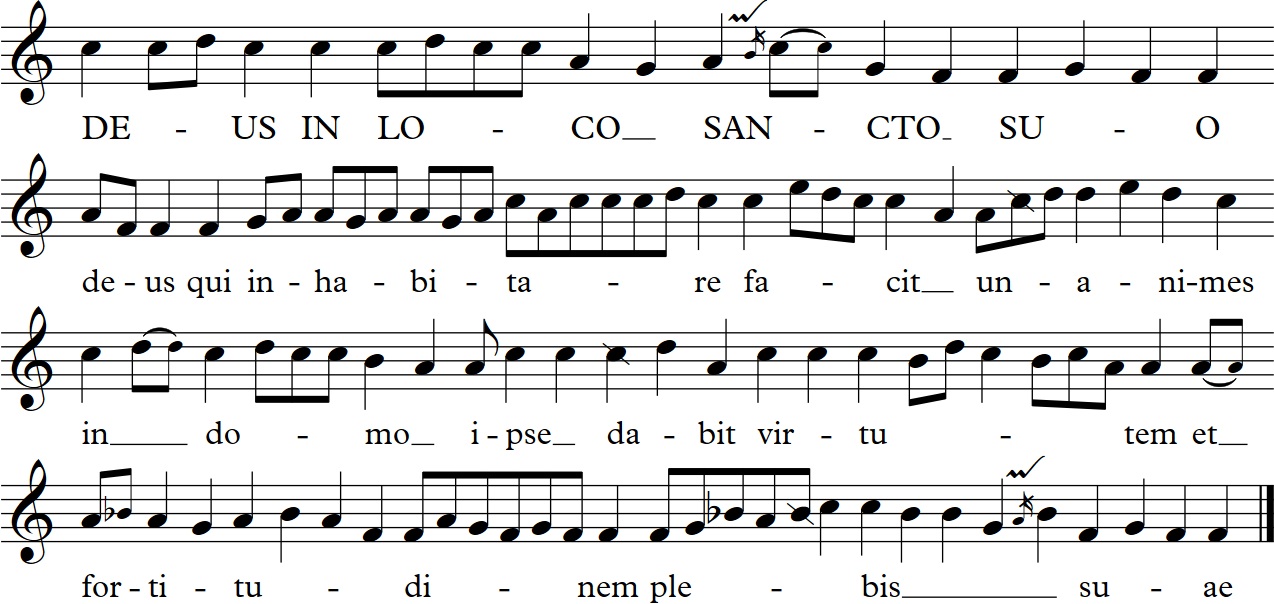
See Vollaerts, p. 122 ff.How could you explain syneresis and dieresis with the theory of proportionalism?
Not necessarily. By the time these manuscripts were written, the melodies were already fixed. There is too much precise agreement among sources from about 350 miles apart to indicate otherwise.Would you agree that these chants were originally part of shared oral tradition?
To the extent that the St. Gall manuscripts are later, I suppose it's possible.Couldn’t it be argued that the oral tradition lived longer at St. Gall than Laon?
You might have misunderstood me. Above, I referred to hyper-nuance performance, not notation. The first-millennial texts already cited warn us against speeding up, slowing down, making long notes short, and adding extra length except at the ends of disctinctions/divisions/incises/phrases. Jerome of Moravia (late 13th cent.) can be read as supporting a sort of nuanced interpretation. The oldest source that has been produced in this forum for a nuanced style of chant notation dates to 1753. Dr. Weaver traces the nuanced equalism adopted at Solesmes to Gueranger and Gontier in the early 19th century. I've seen no evidence in favor of nuanced, non-proportional lengthening in any of the adiastematic manuscripts. Besides the quilisma and oriscus, there are two forms of each neumatic element: long and short, and every semiologist knows this to be a fact. It's often the case that one can find an episema in one reliable St. Gall manuscript that's absent in another, hence the argument sometimes encountered that such marks represent slight nuances probably intended for individual cantors, or the likelier explanation that they are simply for reinforcement or precautionary.the hyper-nuanced signs of St. Gall -
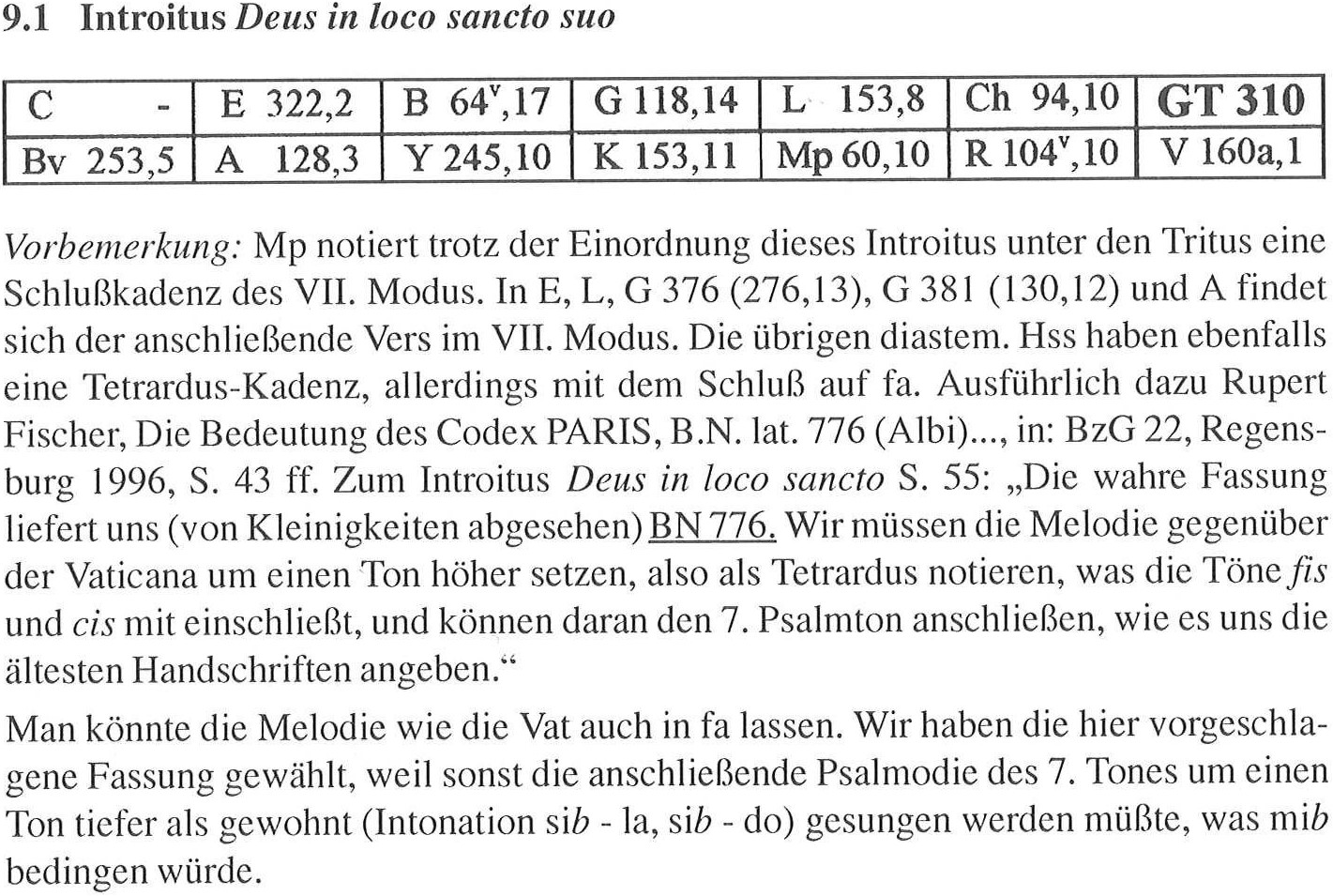
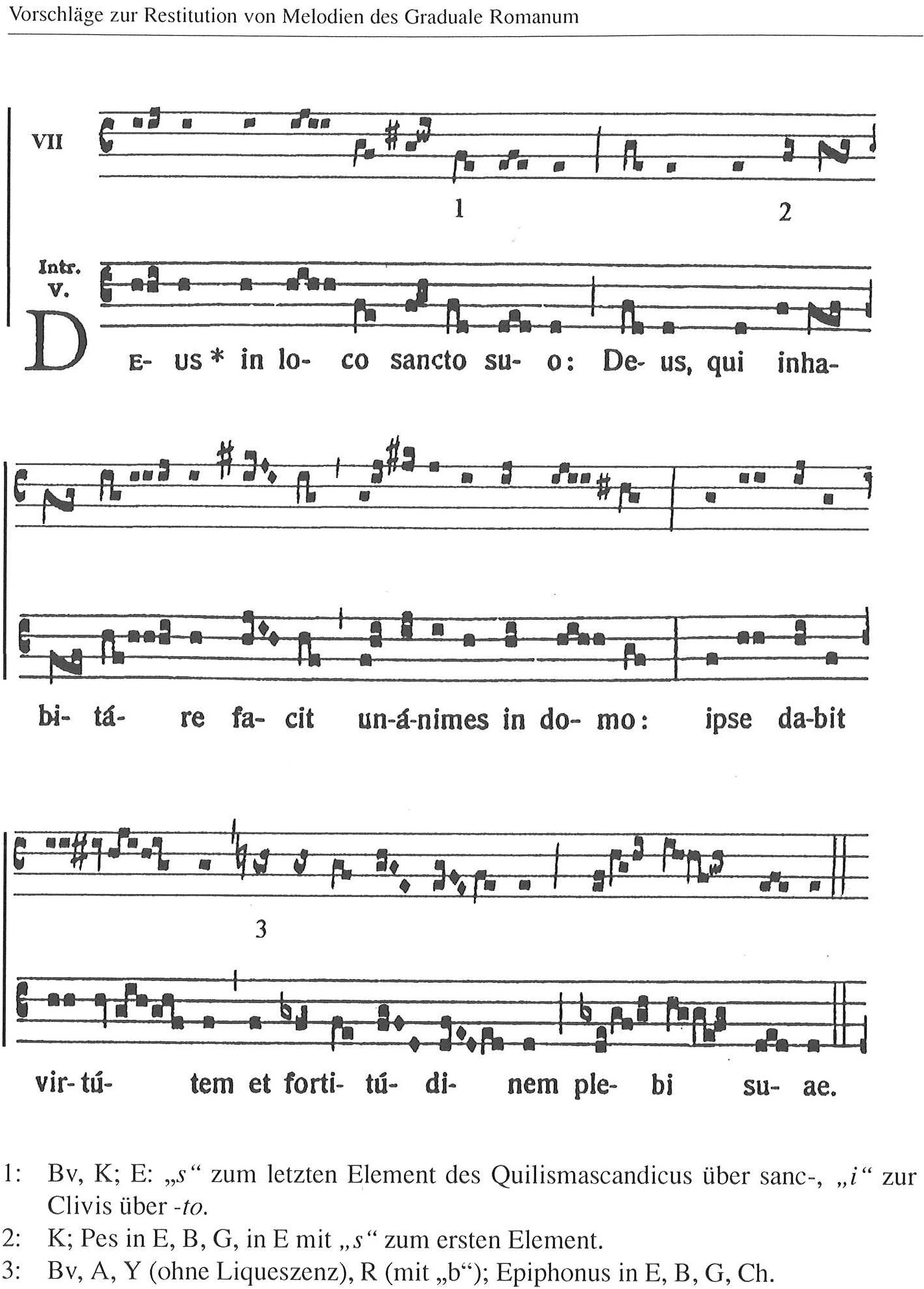
Preliminary remark: Despite the classification of this introit under the tritus, Mp notates a final cadence of mode VII. In E, L, G 376 (276.13), G 381 (130.12) and A the following verse is in mode VII. The other diastematic manuscripts also have a tetrardus cadence, but with the ending on fa. For more information, see Rupert Fischer, "The Significance of the Codex PARIS, B.N. lat. 776 (Albi)..., in: BzG 22, Regensburg 1996, p. 43 ff. On the Introitus Deus in loco sancto p. 55: "The true version (apart from small things) is transmitted to us in BN 776. We have to transpose the melody of the Vatican edition by one step higher, i.e. notate as tetrardus with the notes F-sharp and C-sharp, and follow it with psalm tone VII, like the oldest manuscripts." You could leave the melody in fa like the Vatican edition. We have selected the version proposed here, because otherwise the subsequent psalmody of the 7th tone would have to be sung a step lower than usual (intonation si-flat - la, si-flat - do), which would require mi-flat. 1425 x 1988 - 447KThanked by 1Charles_Weaver
 -
Thanks for posting that. I stand by my assessment. They chose what I was calling number 4 because the foundational editorial principle is fidelity to the earliest neumes. They rightly point out that the final cadence sounds characteristic of tetrardus. But for me the modal reality of the rest of it (in tritus) is too important to prefer their solution. I still think any of the other three options is better!
Thanked by 1MatthewRoth -
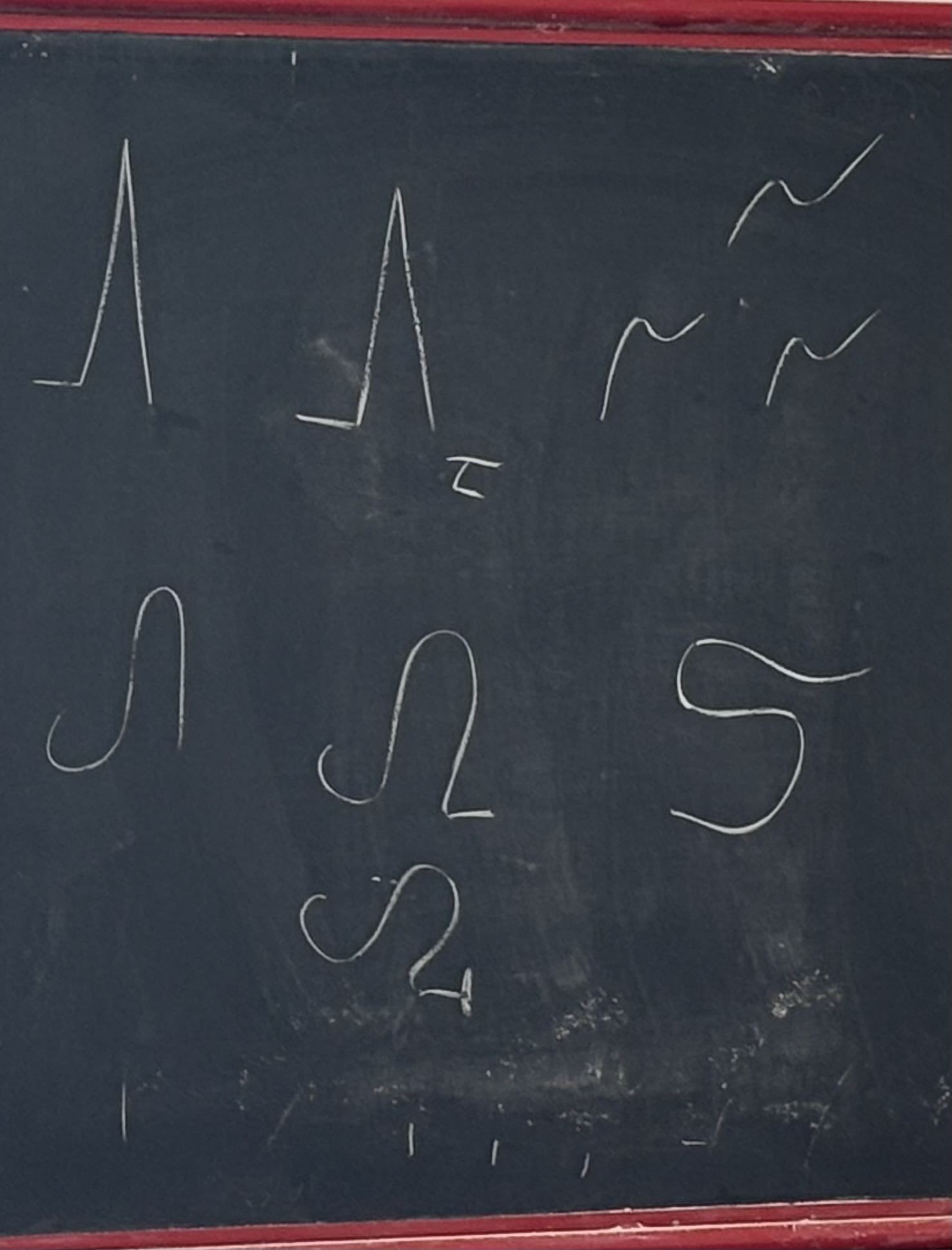
Patrick, I’ll address your points more substantially tomorrow or Wednesday. I would hesitate to call notes longs and shorts, though. In fact, there are more than two broad categories of notes:We have notes that are corsiva (fluid), semi-Corsiva (semi-fluid), and non-Corsiva (emphatic). Would the semi-corsiva notes receive 1.5 value? Photo attached of an example of the different torculi from Laon and SG.
Thanks for posting the ILL; mine is taking a while.
Dr. Weaver, I understand your reasoning, and if your expertise is in medieval music and music theory, I can understand your perspective. I’m still partial to the GN. Even if the clef was changed to a FA clef, melodic semitones would need to be adjusted. -
First column, entirely cursive: all short if followed by a punctum or strophicus, otherwise short-short-long
Second column, partially cursive: short-short-long
Third column, non-cursive: entirely long
It might be revealing to compare and see how many of the "partially cursive" torculus examples from one source are notated as a plain cursive torculus in another. It might be equally revealing to compare whether the liquescent forms are more typically used interchangeably with the non-liquescent cursive or partially cursive forms. -
Here, let's look at a good example:
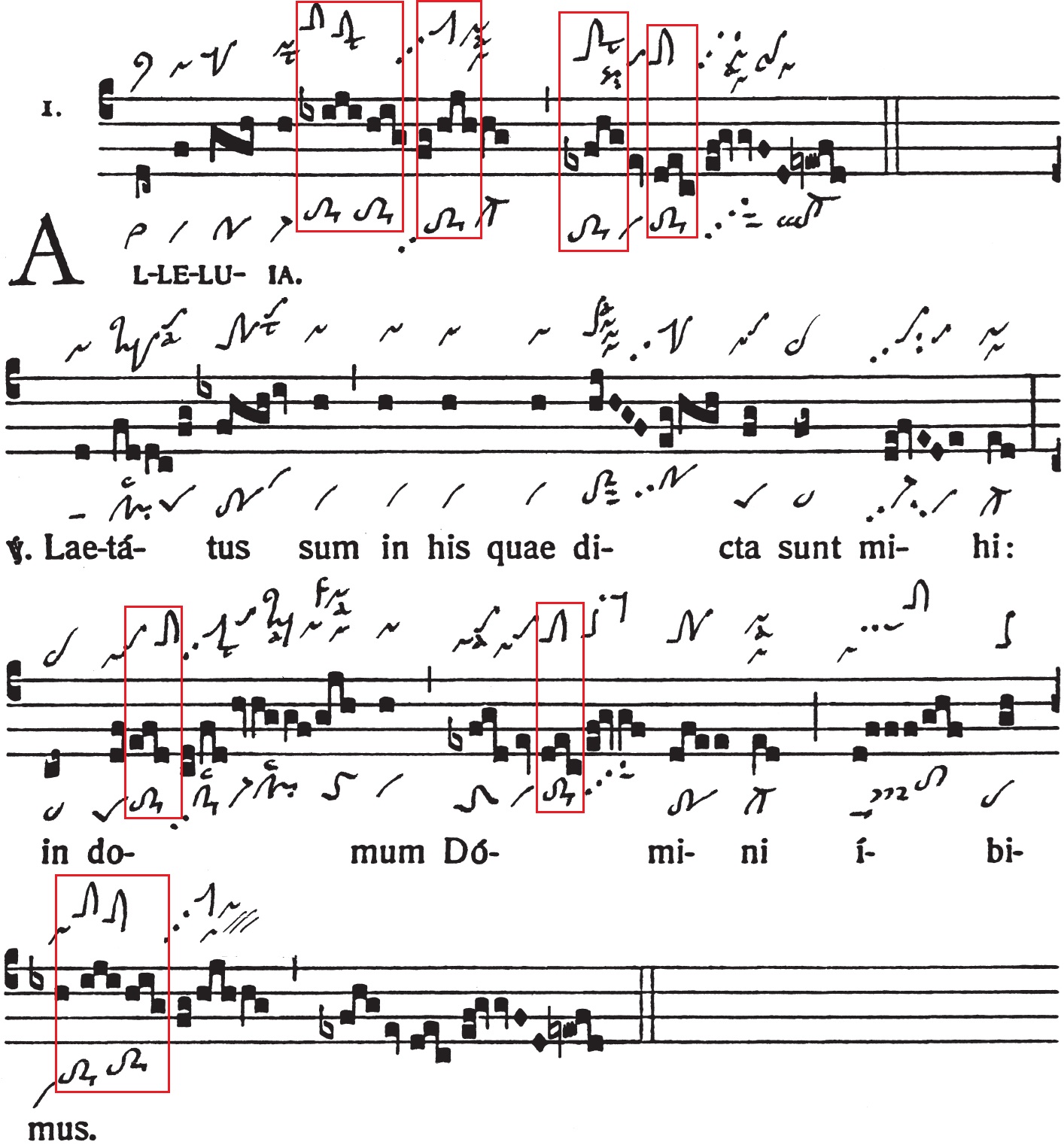
Each torculus is pc (partially cursive) in C (St. Gall 359).
1. c (cursive) in L (Laon 259); followed by neumatic break, so third note is already long
2. pc in both sources; followed by neumatic break, so third note is already long; separation is clear enough in L not to be read as the combination of torculus+punctum, but perhaps the letter t is a reminder
3. c in L
4. pc in both; followed by neumatic break, so third note is already long; this is essentially a pes subbipunctis, which is the commonest usage of the pc torculus in composition, but with a virga substituted here for the tractulus or uncinus
5. c in L; here the neumatic break follows the bottom of a melodic contour and (according to Cardine) is considered non-expressive
6. c in L; followed by neumatic break, so third note is already long; separation is clear enough in L not to be read as the combination of torculus+punctum
7. c in L; followed by neumatic break, so third note is already long
8. c in L; followed by neumatic break, so third note is already long;
9. c in L; followed by neumatic break, so third note is already long; separation is clear enough in L not to be read as the combination of torculus+punctum
Of these nine torculi, how many are pc in other St. Gall MSS?
E (Einsiedeln 121): 4 (#1-2, 4, 6)
G (St. Gall 339): 1 (#4)
B (Bamberg 6): 5 (#1-2, 4-6)
Among these five sources, the only point of perfect agreement is #4, which is notated as the ordinary pc pes subbipunctis in E, G, and B: pc torculus+tractulus. Whether the remaining torculi are written c or pc seems to be a matter of indifference. What can be concluded but that either the interpretation of both forms is the same, or that the discrepancies represent slight nuances probably intended for individual cantors? In a semiological hermeneutic, does the lengthening indicated by both neumatic break and episema represent a longer value than simply one or the other? What if t were also added?
The long components of partially cursive neumes don't represent some intermediate value between cursive and non-cursive, but rather neumes with some combination of short and long notes.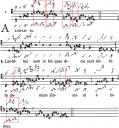 1414 x 1522 - 435K
 -
There was some discussion on this topic a few years ago.
At a previous parish I directed a small schola using the Triplex and sometimes Gregor und Taube (all Gregorian propers for the novus ordo).* I suppose one could say that we sang from the square notes, using the St. Gall neumes for some rhythmic and dynamic nuance. The group of singers varied in musical training and natural ability. What mattered was that, as far as chant goes, all but one were raised in the choir room on St. Gall and square notes together when it came to Gregorian chant.
I found this to be a great way to instill rhythmic flexibility from the beginning. It has the downside of being somewhat atomistic. The melodies sound a bit stilted in a certain respect at first, because the singers are focused on the particular gesture or "life" of each neume -- as if every tessera of a mosaic were a a vibrant color. After some years, this settles down.
*Though sometimes using Richard Rice's abbreviated verses for extraordinarily long graduals and tractsThanked by 1FSSPmusic -
Circling back to the Introit Deus in loco sancto suo, I have been preparing course materials for my fall semester, and in the course of that I reread John (formerly known as John Cotto) on music, ca. 1100, and i came across the fact that he mentions this disputed introit, saying that some call it mixolydian and others lydian. He comes down on the side of lydian, but he doesn't give any reasons for this. But it's interesting to see that these things continued to be confusing for centuries!Thanked by 1FSSPmusic
-
The communion of Saint Lawrence, actually from one of the Masses of the common of a martyr not a bishop, reminded me of the V-VII question since the incipit does not feel like familiar mode V territory, and yet the incipit is not mode VII either. Solesmes gives the alternate tone V ending for the verses, the one that ends on Sol, which, although the formula is not really the same and is otherwise tone/mode V, going down to Sol does take me to a different place — and at the same time, I felt like it’d be none the wiser with the usual to tone/mode V psalm tone.
(I’m hazarding a guess that it’s from the full book, as I can’t pull up the book myself at the moment).
Anyway, I think I’m now understanding your point from your blog post on the introit Deus in loco sancto suo that the modes have real characters so the shared intervals (or even identical motifs, I would argue) are different. Daniel Saulnier gives an example that I run into on feasts at Vespers: certain mode I and III antiphons have the same intervals at the incipit but for reasons (probably the half step) the mode III one always feels more daunting.


Welcome to the MusicaSacra Forum!
To participate in the discussions on Catholic church music, sign in or register as a forum member, The forum is a project of the Church Music Association of America.
Categories
- All Discussions21,849
- General Music Discussion8,551
- Job Openings293
- Management of Music Programs862
- Choral Matters539
- Church Documents and Rubrics540
- CMAA Notes307
- Events761
- For Newcomers: Read First26
- Sacred Polyphony567
- Hymnody898
- Gregorian Chant: General2,749
- ↳ Graduale Romanum and Liber Usualis372
- ↳ Graduale Simplex61
- ↳ Semiology65
- Vernacular Plainsong704
- Anglican Use and Anglican Chant73
- Organ, Other Instruments and Repertoire452
- New Composition/Works in Progress1,342
- Recordings238
- Music for Hispanic Ministry163
- Music Education: Children217
- Music Education: General223
- News Items247
- Positions Wanted3
- General Discussion: Catholicism742
- Amusements185
- General Discussion1,048
- Opinions119