
What's the source of this melody?
-
In the hymnal Ontmoetingen met de Heer (Turnhout, 1967) there’s this song, of which the melody is attributed merely to an ‘old song’. In another case, a melody from the same hymnal, attributed to a ‘16th century church song’, turned out to be a hymn tune from Catholisch Gesangbüchlein (Innsbruck 1588, p. 175-176), that is found today in Gotteslob 543 (‘Ihr Freunde Gottes allzugleich’).
So I wondered: could the melody of this song (‘Waar wij in liefde samenzijn’) also be identified? Does anyone recognize it, or does it ring any bells?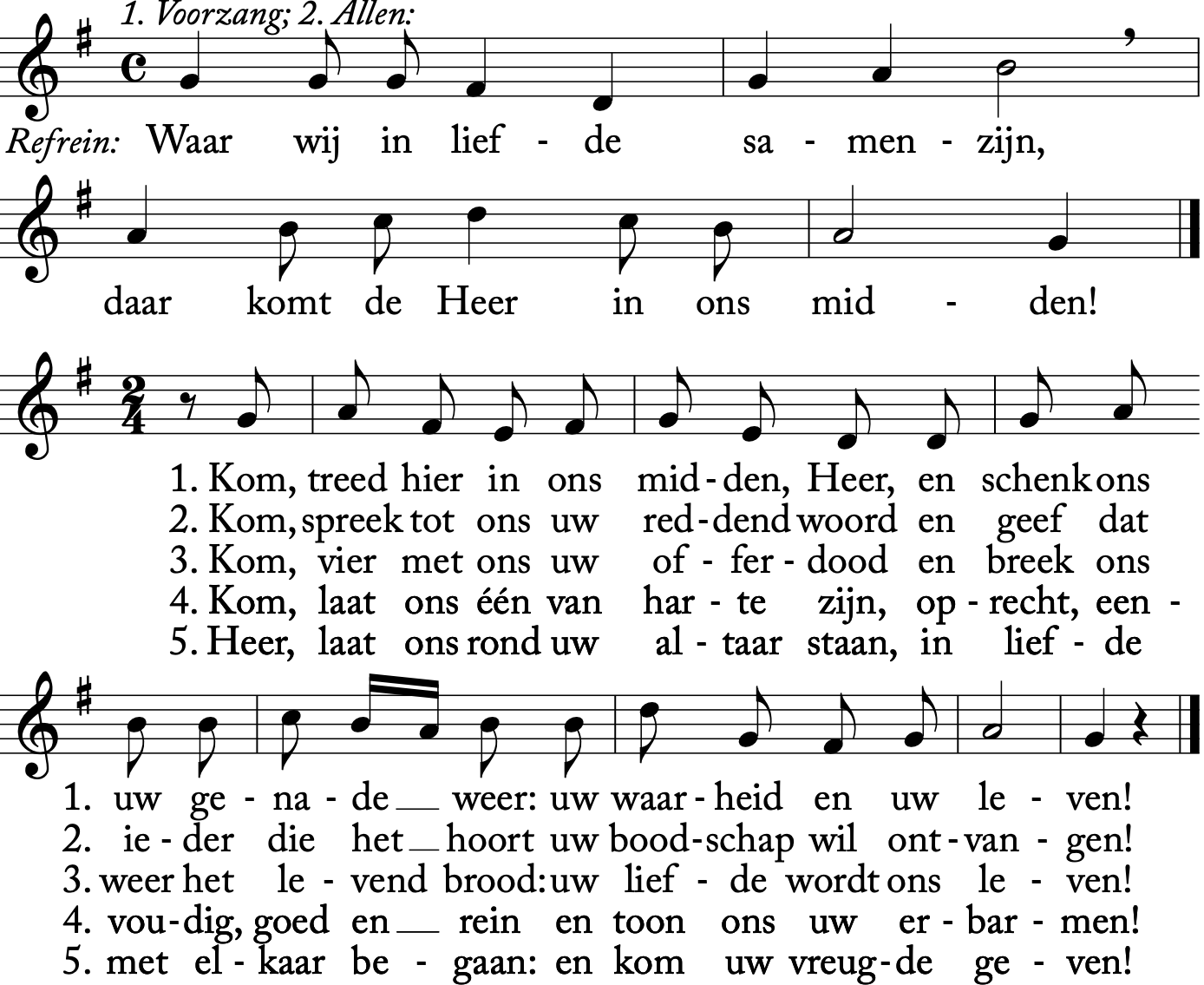
 1388 x 1135 - 226K
 -
-
Many thanks, Joerg! Michael Vehe 1537 it is, but a little altered with respect to ‘Aus Herzensgrund ruf ich zu dir’ from Katholisches Gesangbuch 381 and Gotteslob 780. See Ein New Gesangbüchlin Geistlicher Lieder for the original.
-
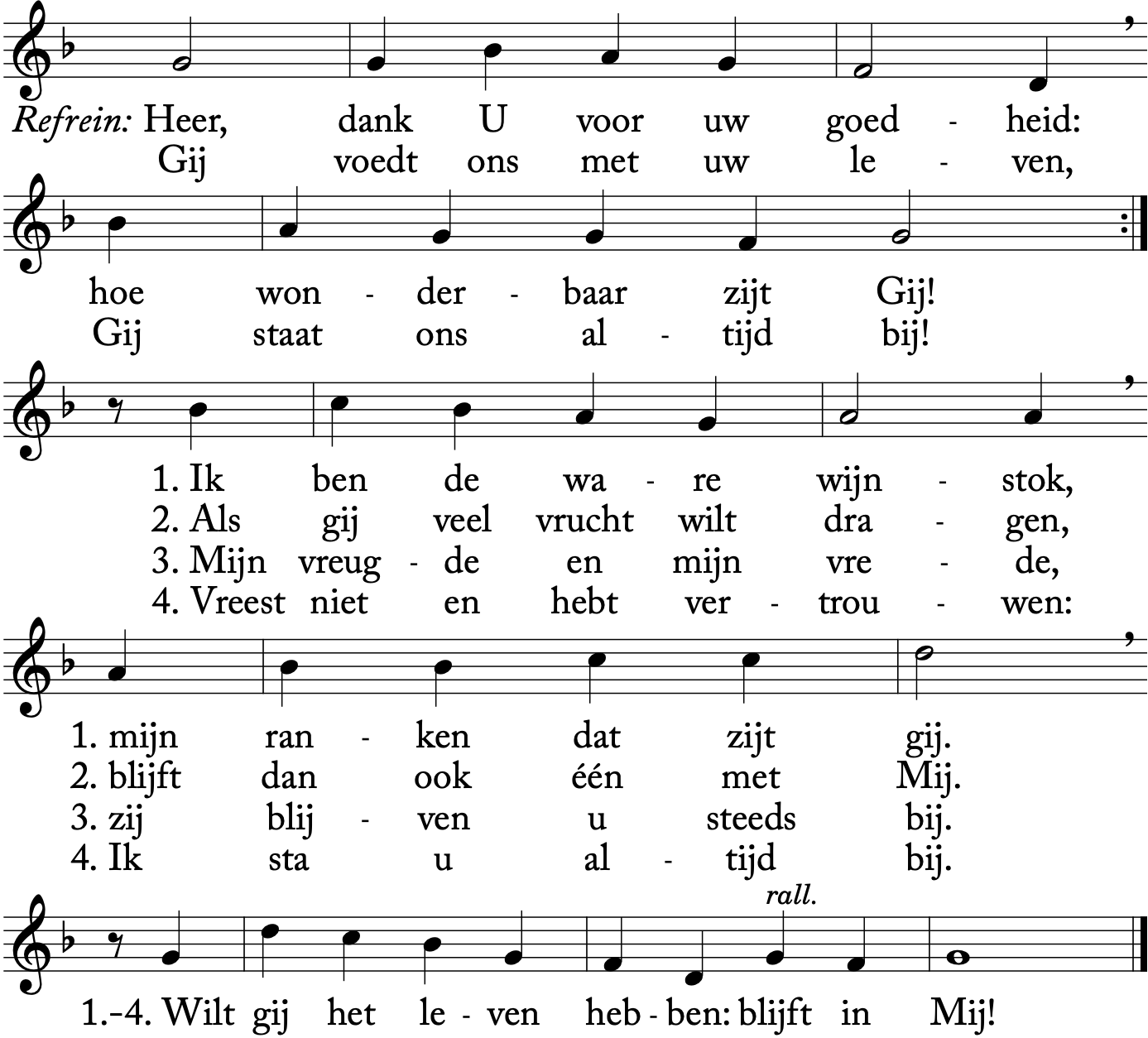
And what about this one? It’s from the same hymnal, but with no mention of the source of the melody.
 1387 x 1254 - 211K
 -
The second one is from Ulenberg's Psalter (1582), which was a catholic reaction to the popularity of the Genevan Psalter. Ulenberg wrote this melody for psalm 139 (Domine probasti me). You can find a new motet-like SATB setting of this cantus firmus with the original text and melody here.
-
Thanks! It’s also in Katholisches Gesangbuch 528 and Gotteslob 428. Now I'm searching for an online copy of Ulenberg’s 1582 Psalter…
-
Found something contemporary (1630).
-
Ulenberg's Psalter was very popular and was edited and reprinted many times up into the 19th century. There is an online facsimile of the first edition from 1582. Beware however that some of his psalm paraphrases still popular today (most notably "Nun lobet gott im hohen Thron") are the verions from the second edition 1603 and the versions in the 1582 edition were different (Ps 139 (138) did not change though).
Interestingly, Ulenberg not only wrote the famous psalter, but also was responsible for a reworking of the catholic German bible translation. A first translation had been finished by Johann Dietenberger 1534, but as the Latin reference translation ("Vulgata") was revised at the end of the 16th century, a revision of the German translation became necessary, too, because catholic translations were transaltions of a translation, and thus had to be reworked whenever the base translation was altered. Considering some threads in this forum, this is a perennial topic WRT liturgical texts, too ;-)

Welcome to the MusicaSacra Forum!
To participate in the discussions on Catholic church music, sign in or register as a forum member, The forum is a project of the Church Music Association of America.
Categories
- All Discussions21,844
- General Music Discussion8,548
- Job Openings292
- Management of Music Programs862
- Choral Matters539
- Church Documents and Rubrics540
- CMAA Notes307
- Events760
- For Newcomers: Read First26
- Sacred Polyphony567
- Hymnody898
- Gregorian Chant: General2,749
- ↳ Graduale Romanum and Liber Usualis372
- ↳ Graduale Simplex61
- ↳ Semiology65
- Vernacular Plainsong704
- Anglican Use and Anglican Chant73
- Organ, Other Instruments and Repertoire452
- New Composition/Works in Progress1,342
- Recordings238
- Music for Hispanic Ministry163
- Music Education: Children217
- Music Education: General223
- News Items247
- Positions Wanted3
- General Discussion: Catholicism742
- Amusements185
- General Discussion1,048
- Opinions119