
My thoughts on chant rhythm (and a few other things)
-
But if you want an equalist interpretation in "classic solesmes" style or Pothier's accentualist style, novalaon is useless
Thanked by 1FSSPmusic -
That most recent novalaon is surprisingly easy for me to read. Really, I am surprised, it looks pretty intimidating. Definitely more elegant than modern notation or Mr. Williams' edition. I'm sure there's some room for a little graphic improvement still, but I think it's definitely the right path. No melodic ambiguity, just a few places I question the rhythm, but that can be remedied by becoming more familiar with the neumes. Of course, a "nueme key" showing the neumes next to the modern notation equivalents would be essential for those who aren't familiar with Laon to learn it.Thanked by 1Lincoln_Hein
-
OMagnumMysterium, In what places you find problem with the rhythm ?
-
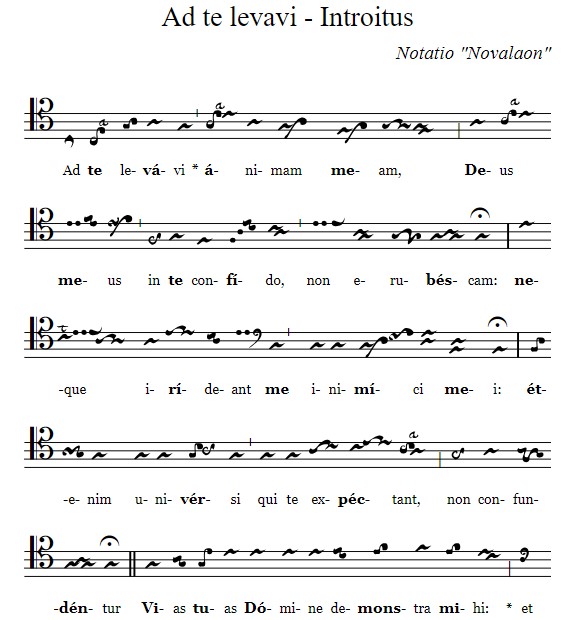
OMagnumMysterium, What do you think? Do I place the neumes closer together like this, including the long ones?
-
Well, it's simply that I only have a moderate familiarity with Laon (which is still more than most people), and I don't spend that much time with the Laon neumes. So for the uninitiated, it is not immediately obvious for every single note whether it is short or long. I can easily remember the difference between a single long and a single short, but for the multi note neumes, I am part examining the shapes, part remembering how Laon works, and part relying on my memory of the rhythm from singing it over the past couple of days.
I think it's pretty good, as long as the neumes are consistent and we have a key to memorize what each of them mean (like how we memorize the symbols for any other form of notation).
I assume that A, T, and the fermata all mean the same thing, the doubling of a note's normal value. I don't understand why the Ti in Neque has a T, since it is already a long note.
I think the graphics could be improved to be slightly more robust without altering the fundamental shape, but that's a finer point of detail which could be worried about later.
In answer to your most resent post, I like the neume spacing better in the former one (the further apart spacing), but maybe something in between the two would be good.Thanked by 1Lincoln_Hein -
the "a" I'm using only to clarify the rhythm of light pes with initio debilis (the high note is equal to an uncinus and the first low note with the curved shape is a grace note before the beat like an acciaccatura). The "t" I only copied and pasted from the original Laon. It can signify in this context to someone a slight agogic lenghtening. The fermata only in the double longs. I could use a horizontal episema (a tenuto) to signify a slight nuance and reserve the "t" for the notes (like some of the Ave Maria offertory) that are long+short in duration, like a modern punctuated note.
The "cursive form and connected" of the neumes indicates in Laon or all notes as breves ou all but the last (wich is long): here I always made the design of the last note similar to an uncinus when the last note is long (with the exception of the pes initio debilis wich is a special case because the first note is shorter than breve).
the virga (as the ones used in the long pes "mam" from "animam" "me" from "meam" "mi" from "inimici") and uncinus are always long and the oriscus if I made connected with a puntum (in "etenim") is short otherwise long (in "meus").Thanked by 1OMagnumMysterium -
Ah, I have no familiarity with Laon notation. I am a mere yeoman singer.
When I think of Laon, the first thing I think of this: https://tinyurl.com/ne6hcyw3 -
Like Fluxus, I find the Novalaon notation interesting and am able to read it without difficulty, but I question what advantages it offers over a duplex or triplex edition—or modern standard round notation. I'm also concerned that it makes the score unnecessarily esoteric instead of more accessible. If someone with a solid musical background must study six years to be considered a semiologist (according to Blackley), how long must one study to become a proportionalist? I fear these kinds of scores increase the study demands and might discourage some very competent singers who would do just fine with modern notation or my editions.
In a number of cases, you will have to "translate" St. Gall or other neumes for chants that are lacking in L. (Stingl has occasionally done something similar in "translating" Messine neumes to St. Gall.) Whether you're going to adhere to the Graduale Novum or the Vatican edition, you have to alter some of the neumes, which you've done in the example above at the first te and again at te exspectant. L doesn't notate the entire psalm verse, but you have written two longs at the mediant cadence, just as I do in my edition, where St. Gall has a short clivis. The added letters are helpful, but I don't think the n at universi should be neglected. The rather rounded initial stroke of the cursive torculus is problematic, as the Messine notation is relatively square there, just as for the pes, and reserves the rounded form for special cases involving ornamental notes. How will you notate the unison epiphonus? How will you notate the descending cephalicus or descending pinnosa? How will you notate the torculus when the third note is short, e.g., in the short pes subbipunctis? I admire all the effort you have clearly put into this! -
OMagnum raises another good point here. There are a lot of redundant letters in L (and others). In this example, you didn't include the t in (ex)spe(ctant), but you did include the a on the next syllable, albeit positioned above the upper note instead of between the notes. If you aim to produce editions that will also satisfy the Cardinian semiologists, inclusion of all letters is a consideration, but it opens other cans of worms too... will you attempt reproduce every slight variation in size and spacing as well? I rather like the fermata, because we immediately know it's editorial. I have used it in some modern notation examples, although not in the Thirteen Offertory Chants.I don't understand why the Ti in Neque has a T, since it is already a long note.
This can also be called clivis quassa.quick clivis beginning in oriscus -
The descending cephalicus I notated in the pdf above in the syllable "et" of psalmody. The pinnosa would be some curved form similar to this but maybe with the extra first note of the torculus. A short pes subbipunctis can be notated exactly as this, "a short pes with two punctis after" or as with a torculus without the third note similar to uncinus and with a third note similar to the last note of the porrectus flexus on "fun"(confundentur). The initial note of the quick torculus can easily be redesigned to more quadratic form and less curved and the torculus initio debilis would be with a design similar to the pes initio debilis. The liquescents and initio debilis basically need some type of spiral like the ones I did on the last note of tristropha on "ant", on the initio debilis in "te" and "animam" and in the epiphonus on "non", it's possible two spirals one to left and other to right in the same figure if it is initio debilis and liquescent simultaneously, and the "a" can be used if you need to differentiate between a long liquescense and a short.Thanked by 1FSSPmusic
-
I developed another type of notation: a compact version of the modern one ("round black" for breves, "round white" for longs and elonganted "round white" for double long) with added ornamental notes (short and long oriscus, quilisma, stropha, initio debilis and liquescents). The liquescent when long is at the same height as the previous note. The design of the initio debilis (with the curve to the right) can be used also in the cases of "grace notes" between notes of the neume in descending passages (inverted quilisma of montpellier).

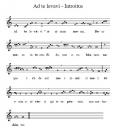 compact_modern_with_ornaments.jpg537 x 608 - 64K
 -
With larger notes, do clef and stave with 4 lines:
 compact_modern_with_ornaments2.jpg535 x 593 - 65K
 -
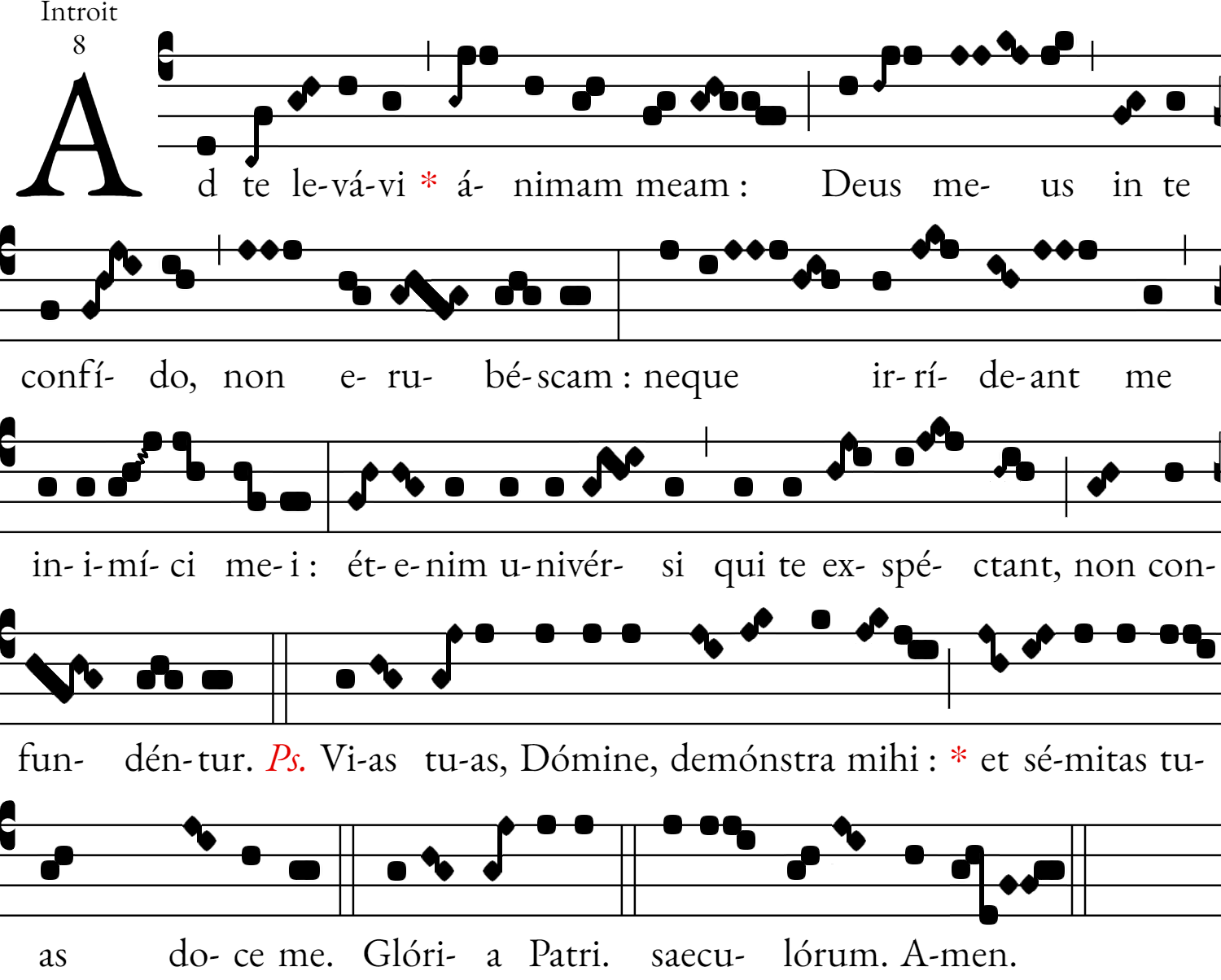
How about something like this?
 Ad Te Levavi, notation draft 3.png1500 x 1204 - 147K
 -
OmagnumMysterium, this last is great for people who are used to the square notation (but I missed some liquescents and the oriscus). How you did it? It's easy to apply on gregorio tex?
I liked very much the last I did, the compact modern with large black and white rounded notes, ornamental notes, and do clef, for my personal use I think I will make like that.Thanked by 1OMagnumMysterium -
I made it using the paint application, but it could be made to work with gregorio tex using FontForge. Adjusting the gregorio font would take a while for me to work through, but I might do it sometime, or someone better than me at FontForge could do it more quickly.
I didn't include liquescents or oriscus because I don't understand how they work or what they do. Maybe someone can give me a good simple explanation of what information they convey different from the simple long and short notes.
In your last edition above, it would actually seem more intuitive to me for long notes to be filled and short notes hollow, but either way I could get used to it very quickly. Your last edition is quite easy to read. Although it's not my favorite aesthetically, it works, and I think it is the best round note edition I have seen. I would need an explanation of what is going on with the hook notes though. Liquescents I assume? -
Liquescents and initio debilis, both interpreted as "grace notes before the beat"(acciacatura, an appoggiatura that doesn't alter the duration of the note after it but takes some time of what came before).
In the oriscus I Iike to do uppermordent or turn and in strophas I like to do pulsed vibrato in the repercussion, in quilisma sometimes an uppermordent, sometimes a turn, sometimes a glissando with vibrato, the main difference between oriscus and quilisma is that quilisma is interpreted as a grace between two notes and oriscus as a note with length (short or long duration) and a ornamentation tied to it. Van Biezen proposes to make an appoggiatura/acciacatura in the upper border before the main tone, I think it's easier to do the pitch of the oriscus, quickly move to the upper pitch and then return to the pitch of the oriscus.
But these ornaments are optional in the melody (maybe with the exception of quilisma as a light passing tone), it depends on the choir and soloist.Thanked by 1OMagnumMysterium -
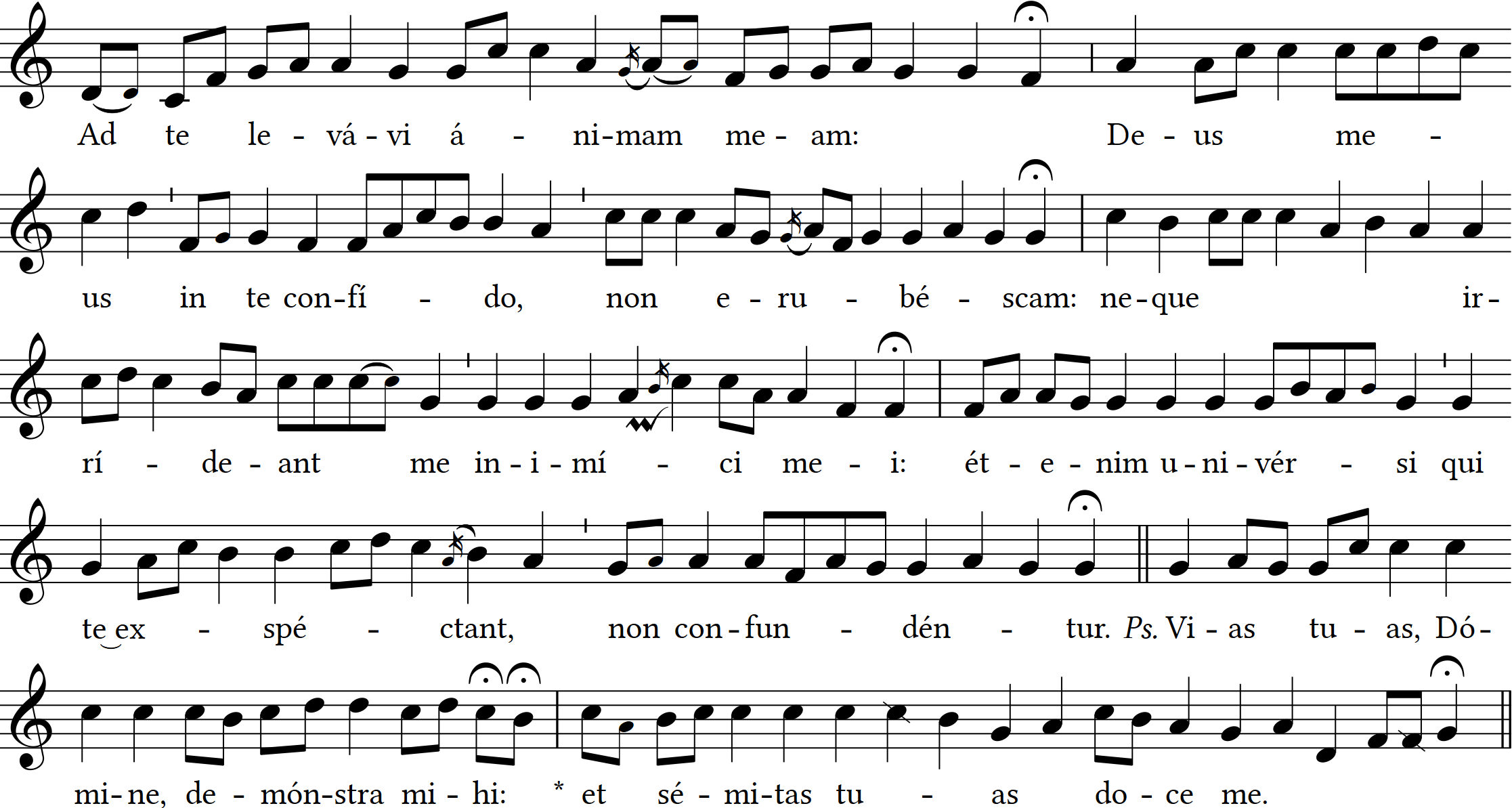
A rather literal transcription of the Graduale Novum into modern notation:
[see first image in following comment]
The same without slurs and word extensions, but with fermatas added:
[see second image in following comment]
I have used a slash through the notehead to indicated the oriscus.Thanked by 1Lincoln_Hein -
Corrected.
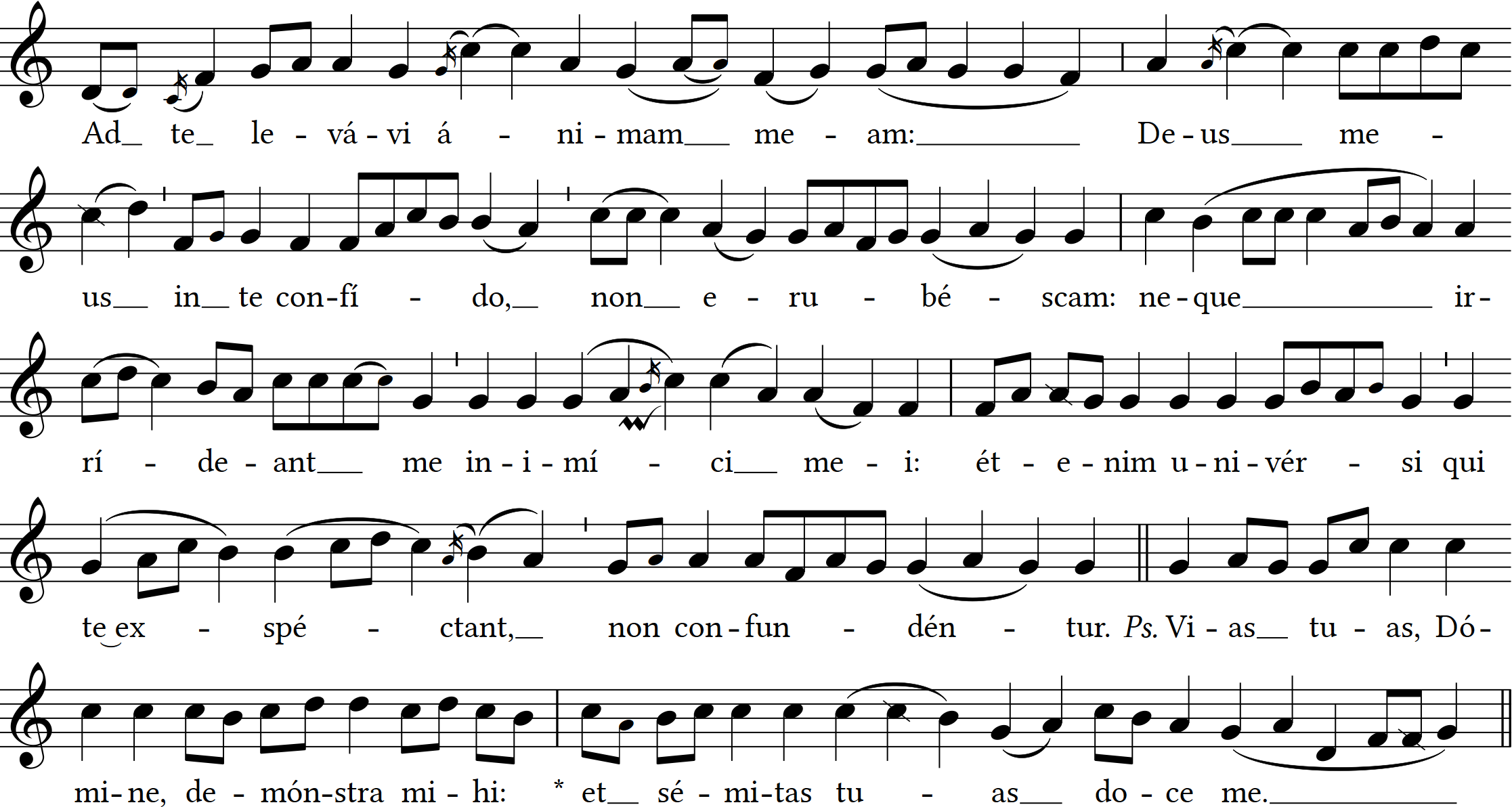
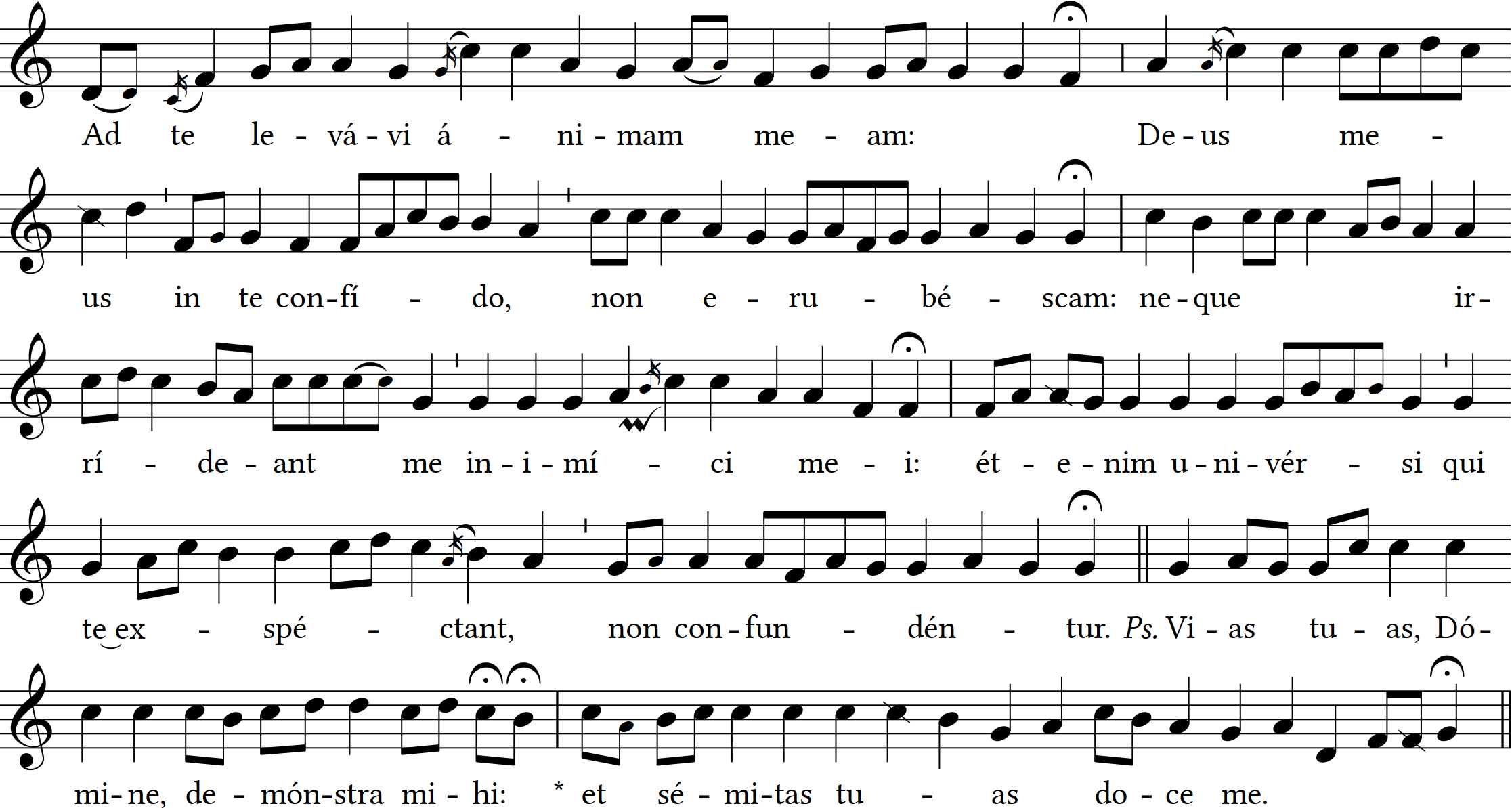
 In 8 Ad te levavi.png2233 x 1192 - 225K
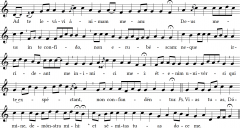 In 8 Ad te levavi ALT.png2233 x 1193 - 198K
 -
For demonstrative purposes, someone else could interpret the same edition as follows:
 In 8 Ad te levavi ALT2.png2233 x 1193 - 197KThanked by 1Lincoln_Hein
 -
In the modern notation I don't like the "disconnectedness " with large spacing of the notes in the same syllable, when using quarter notes and eight notes and didn't like to use the slurs to do the connection. Because of this I proposed to use eighth note and sixteenth notes beamed together; and because the eight in the syllabic parts would be excessive in visuals with the stem and flag, I made only with notehead. The proportion between quarter and eight and eight and sixteenth is 2:1 so either could be used if the performer know that the tempo isn't too rush. Also the modern notation have the excessive consuming of horizontal space, it's this and the fact of the controversies about the interpretation of ornamental notes that made me try a hybrid: as if the square and the modern have a baby but with ornamental characteristics of the neumatic grandmother.Thanked by 1OMagnumMysterium
-
I'm still a little confused, so let me try to clarify my understanding about a couple of points.
1. What is going on with the neume on "Ad" at the very beginning? Are the downward slant of the punctum and the mini unison note in modern notation both trying to indicate something about the pronunciation of the d in Ad? I don't see what useful information is being conveyed which couldn't be shown adequately by a simple long note. In the case of two notation options, I would always take the simpler one unless there was justification for the contrary, but perhaps there's something I'm missing here.
2. Are the "mini notes" (grace notes or inition debilis, or whatever they are) supposed to be sung before or on the beat? I remember previously reading that all grace notes are sung before the beat, but maybe I'm incorrectly assuming all mini notes count as "grace notes" when really they don't. If there are differences in value, placement, or quality, between notes of lesser duration than a short, the notation needs to reflect that in a way clear enough to the average Joe (if I struggle to understand it, the average choir member probably will to). If these instances (te, animan, Deus) are two notes, which added together equal the duration of one long, I would highly suggest just writing two shorts unless there is compelling evidence for the contrary. I would say the simplest solution is the most likely, all else being equal.
3. I think the oriscus also needs a better explanation for the uninitiated. It needs to be clear where it is in the music and how it should be rendered. At the moment though I understand it to be a note which begins with a short grace note one step above (presumably on the beat), followed by the note of the written pitch. -
1. It's a unison liquescent note, what Cardine calls an augmentative liquescent. Yes, it is a diction reminder. Make sure the d is voiced so it doesn't get lost and come out as a te.
2. I recommend always before the beat, but this is a matter of interpretation. As I said, I included the alternative reading as two shorts for demonstrative purposes. To be as clear as possible: these transcriptions represent two possible interpretations of the same chant, not different ways of notating a single interpretation. The compelling evidence to the contrary lies in comparison of the sources. The uncinus at te is a single note. If the examples are to remain transcriptions of the Novum and not a new edition, the lower note can't disappear entirely.
3. If you're interpreting the oriscus as an upper auxiliary note, I again recommend a before-the-beat rendition. -
Last alterations I made in the hibrid notation (the tenutos are slight agogic nuance indicating some "punctuation" and maybe quick breath in some places):
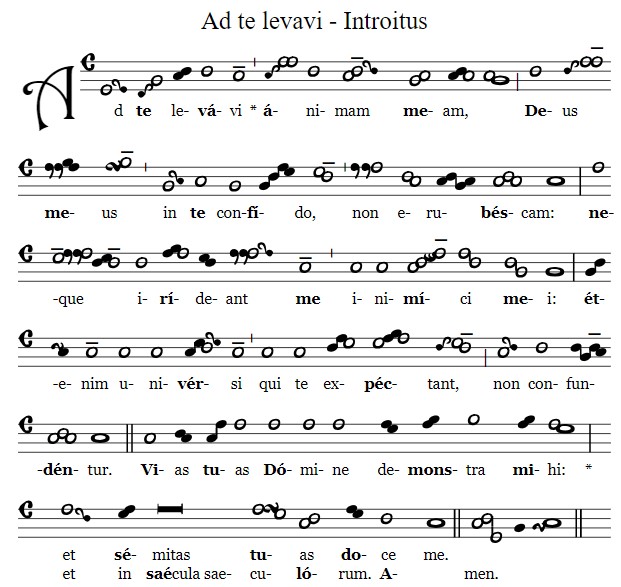
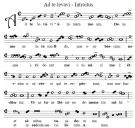 hybrida.jpg621 x 587 - 97K
 -
A follow-up posting to May 12 above: The Graduale Renovatum website now has a recording of the Gradual Liberasti nos from the 23rd Sunday after Pentecost, sung by the St. Blaise Schola Cantorum according to a semiological reading of the chant. The recording might be of interest to compare with the one posted above on Feb 3 demonstrating a proportionalist interpretation of the same chant.
www.gradualerenovatum.com
-
If I were a ninth-century copyist transcribing the St. Blaise Schola Cantorum performance, there are several places I would have to notate the chant differently from what appears in L and C. I have marked in red the notes where the recording (not necessarily the Graduale Renovatum) contradicts both L and C, and blue where it contradicts only L.

Certainly, there's room for interpretation, but I don't understand the singing of a note with an episema as short within a semiological hermeneutic. (For those reading, this is entirely separate from the issue of whether longs and shorts are in 2:1 proportion or not.) I also don't understand holding the first note of confudisti. I, too, interpret the cadential pressus major as long, but three longs, not one short plus two longs. I find the verse final on fa jarring when the respond isn't repeated.
This critique notwithstanding, I have personally found your site very useful, and I thank you for your work! Gr Liberasti.jpg6828 x 6476 - 2MThanked by 1Lincoln_Hein
 -
I spent some more time with this today. Based on the recording, I would expect the neumes in question to be notated like this:
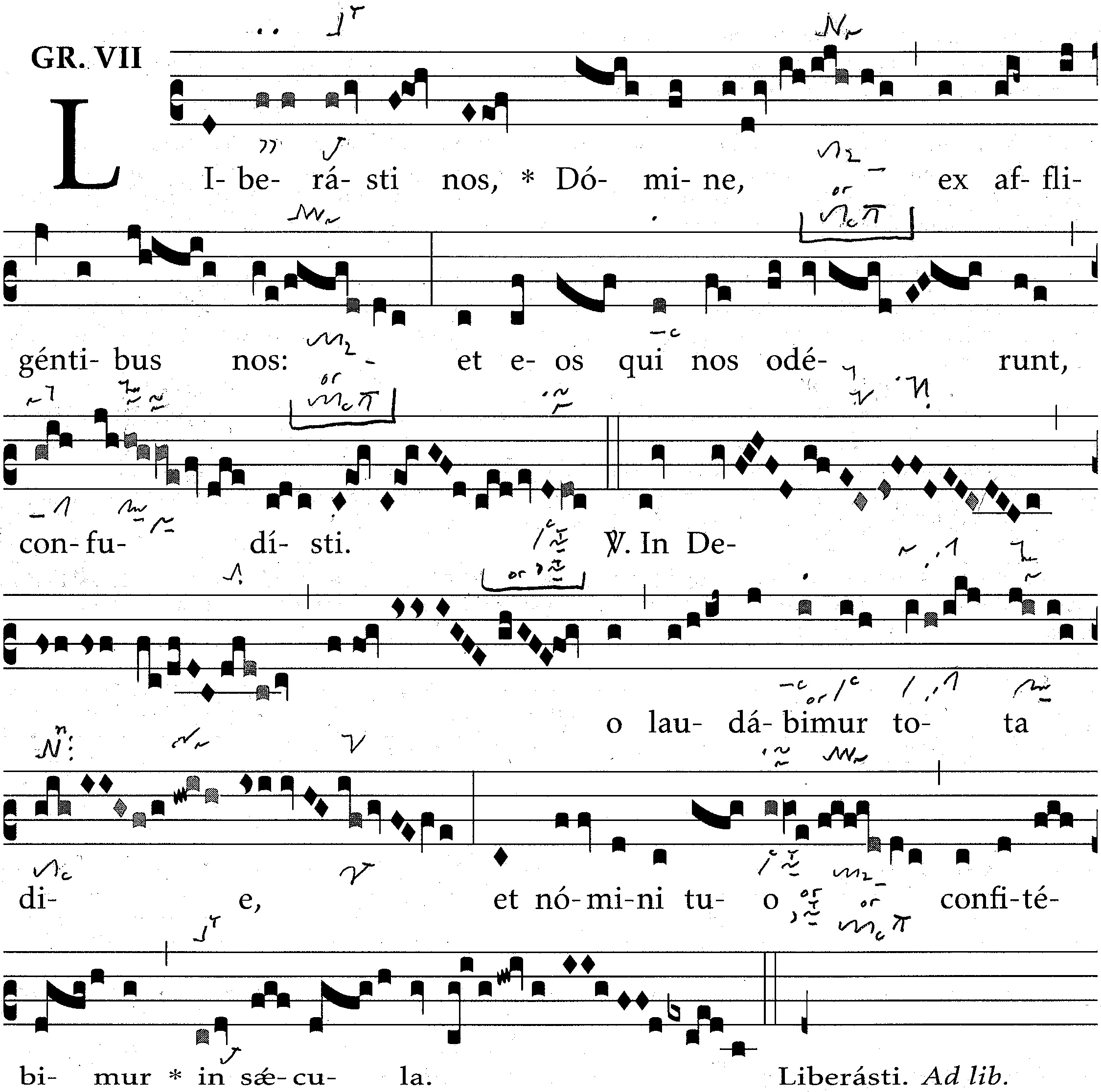
But they're not. Semiologists, what do you say? I count twelve instances of definite, unambiguous long markings being disregarded; the adiastematic neumes cannot be accurately reconstructed from the recording in those places. Now, if the rhythmic markings are only meant to indicate slight agogic nuances, I don't suppose it makes much of a difference, but if I believed that, I wouldn't have joined this discussion.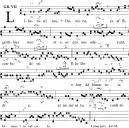 Gr Liberasti.jpg2250 x 2232 - 871KThanked by 1Lincoln_Hein

Welcome to the MusicaSacra Forum!
To participate in the discussions on Catholic church music, sign in or register as a forum member, The forum is a project of the Church Music Association of America.
Categories
- All Discussions21,096
- General Music Discussion8,211
- Job Openings197
- Management of Music Programs850
- Choral Matters532
- Church Documents and Rubrics524
- CMAA Notes301
- Events716
- For Newcomers: Read First26
- Sacred Polyphony546
- Hymnody872
- Gregorian Chant: General2,697
- ↳ Graduale Romanum and Liber Usualis368
- ↳ Graduale Simplex60
- ↳ Semiology63
- Vernacular Plainsong696
- Anglican Use and Anglican Chant68
- Organ, Other Instruments and Repertoire435
- New Composition/Works in Progress1,290
- Recordings230
- Music for Hispanic Ministry159
- Music Education: Children211
- Music Education: General222
- News Items245
- Positions Wanted2
- General Discussion: Catholicism739
- Amusements177
- General Discussion1,033
- Opinions117